Author: Nation Pulse 24

  • ‘Jigar Ka Tukra’, an extraordinary  journey of a liver transplant survivor

    ‘Jigar Ka Tukra’, an extraordinary journey of a liver transplant survivor

    Jigar Ka Tukra’, an extraordinary  journey of a liver transplant survivor


    B.D.Kasniyal


    Pithoragarh, April 19

    ‘Jigar ka Tukra,’  a 30 minutes short film based on a book titled, ‘Liver pratyaropan mere anubhav’,( My experiences of liver transplant)  by Dr Ashok Kumar Pant, a survival of liver transplant  from last 16 years, would be screened on April 19 in the evening , on the  occasion of World Liver Day at  Deputy Speaker’s hall, Constitution Club, New Delhi.

    BJP Rajya Sabha MP, Naresh Bansal will be the chief guest of the programe while another BJP MP and senior leader Pradeep Gandhi will be the guest of honour at the function.

    ” The heartfelt documentary drama captures extra ordinary journey of Dr Ashok pant, an ordinary citizen, who battled immense health challenges with unwavering  determination.” said Rama Nand Bhatt, director of Chandrica Designocomm , a company that produced  the film.


    “It is the extra ordinary story of  battle of a liver patient who successfully fought against series of life threatening illnesses culmination into complex and costly  liver transplant,  but with his strong will power to survive and contribute to family and the society,” said the director.


    Dr Ashok Kumar Pant is hale and hearty and running successfully his education group of ‘Manas’ group of  institutions.

    “The film, made with the motive of giving inspiration to other patients, who are struggling against the challenges to their lives due to life threatening diseases,” the director said.

    “After several wrong diagnosis by doctors in Pithoragarh and Haldwani, when I had gone to Singhania hospital in Delhi and was told by Dr DK Singhal that I was suffering from decompensated cirrhosis and need urgent liver transplant to survive, I, along with my family felt it as challenge to survive despite we had to arrange an amount of Rs 25 lakhs initially,” said Ashok Pant, the transplant survivor for last 16 years.


    His own son Shivasheesh, who was then a student of engineering, had donated his liver to save the life of his father.


    In the film, Dr Pant, a former state coordinator of Children’s Science Congress and a college teacher then, has described the trauma and agony that he faced to arrange the amount and strengthen his willpower to survive to be useful for the society.


  • ‘Supreme’ hearing on Wakf law: Status quo will remain till the next date

    ‘Supreme’ hearing on Wakf law: Status quo will remain till the next date

    ‘Supreme’ hearing on Wakf law: Status quo will remain till the next date

    The Supreme Court on Thursday heard the petitions filed regarding the Waqf (Amendment) Act, 2025. A bench of Chief Justice Sanjiv Khanna, Justice Sanjay Kumar and Justice KV Vishwanathan gave the government seven days to file a reply on the demand of the Center. The government also assured that till the next hearing, ‘Waqf on behalf of the user’ or ‘Waqf on behalf of the documents’ properties will not be denotified. The Chief Justice said that if any Waqf property is registered under the 1995 Act, then those properties cannot be denotified till the next hearing on May 5. After this, the court fixed May 5 as the next date of the case. Solicitor General Tushar Mehta, appearing on behalf of the government, said that the government is accountable to the people. The government got lakhs of representatives, included in Waqf in every village. Waqf is claimed on so many lands. It is considered a part of the law. On the opinion of interim stay, Mehta said that staying the law would be a harsh step. He sought a week’s time to file a preliminary reply with some documents before the court. The Solicitor General assured that there will be no appointment of the board or council during this period. He also said that this is not a matter which can be considered in this manner.

    The Supreme Court clarified, the court had said that there are some positive things in the law and it cannot be completely stopped. It does not want any change in the current situation. The court said that when the matter is pending in the court, we have to ensure that there is no change in the current situation.
    The Supreme Court took on record the statement of the Solicitor General that the Center will respond within seven days. The Supreme Court said that the Solicitor General assured the court that no appointment will be made in the council and board. The court said that the Solicitor General assured that till the next hearing date, the Waqf, which includes the Waqf-by-user already registered or declared through notification, will neither be denotified nor will the Collector take any decision regarding it. The Supreme Court said that the Center should file a reply within seven days. Till then the status quo will remain.

  • ’Doctors play an important role in the upliftment of humanity: JP Nadda’

    ’Doctors play an important role in the upliftment of humanity: JP Nadda’

    ’Doctors play an important role in the upliftment of humanity: JP Nadda’

    ’Degrees were awarded to 434 students in the convocation ceremony’

    ’Health services have expanded rapidly in the country in the last 10 years – Chief Minister’


    Amaanullah Usmani

    Rishikesh – Union Minister for Health and Family Welfare Jagat Prakash Nadda today presided over the fifth convocation of AIIMS Rishikesh. Addressing the gathering, JP Nadda said that “the convocation is a special occasion that recognizes the achievements of the students.” He said that providing affordable and quality healthcare to every poor person in the country is the priority of the Central Government.

    JP Nadda highlighted the achievements of AIIMS institutions across the country in medical education and services and said that “till the beginning of this century, there was only one AIIMS in India, whereas today, 22 AIIMS are operational in the country.” He said that AIIMS Rishikesh has created a unique identity among healthcare institutions due to its excellent services. He reiterated the commitment of the Central Government to provide world-class healthcare to the citizens. He said, “The government is focused on providing healthcare that is not only curative but also preventive, palliative and rehabilitative.”

    Highlighting the achievements of the Central Government in the health sector, Mr Nadda said, “Today, 1.75 lakh Ayushman Arogya Mandirs are operational across the country providing various services related to health and wellness. There has been a 101 per cent increase in medical colleges in the last 10 years, and now there are a total of 780 medical colleges across the country. There has been a 130 per cent increase in MBBS seats and 138 per cent increase in PG seats.” He further said, “Similarly, to meet the needs of paramedics, 157 nursing colleges are also being set up, which will be co-located with medical colleges.”

    The Union Health Minister lauded AIIMS Rishikesh, saying that the institute saved 309 critical patients by effectively using helicopter and drone services and became one of the best institutions in the country in providing service in remote and underserved areas of the state by using digital services like telemedicine (e-Sanjeevani). Concluding his address, Shri Nadda encouraged the students to do their work with compassion, honesty and dedication without any selfishness. Emphasizing that the government spends Rs 30-35 lakh on each MBBS student, the Union Minister urged the new doctors to take up more responsibilities at the beginning of their professional career. During the event, Shri Nadda inaugurated several healthcare facilities to enhance the medical services of the institute, including Integrated Medicine in the Department of AYUSH, PET Scan Machine in the Department of Nuclear Medicine, PACS Facility in the Department of Radiology and Advanced Pediatrics in Pediatric Care.

    During the ceremony, Mr Nadda conferred gold medals and degrees to 10 medical students of MBBS, DM, MSc Nursing, BSc Nursing and BSc Allied Health Sciences programmes. A total of 434 students were awarded degrees at the convocation, including 98 MBBS students, 95 BSc (Hons) Nursing students, 54 BSc Allied Health Sciences students, 109 MD/MS/MDS students, 17 MSc Nursing students, 1 MSc Medical Allied student, 12 Master of Public Health students, 40 DM/MCh students and 8 PhD students.

    Welcoming Union Health and Family Welfare Minister and Bharatiya Janata Party National President Jagat Prakash Nadda, Chief Minister Pushkar Singh Dhami said that many works have been done towards strengthening the health sector of the country. In the last 10 years, health services have expanded rapidly in the country. Be it the establishment of AIIMS across the country, implementation of National Health Policy-2017, Ayushman Bharat Yojana or increase in seats in medical colleges, India’s health system has been given a new height through many schemes and policies. He thanked the Union Health Minister for his continuous support for the development of health services in Uttarakhand.

    The Chief Minister said that the inauguration of Picture Archiving and Communication System and Center for Advanced Pediatrics in Trauma Center at AIIMS Rishikesh will further strengthen the health services. He said that today in AIIMS Rishikesh, along with the system of state-of-the-art medical examination and treatment, various types of diseases are being treated by a team of specialist doctors. Services like robotic surgery, knee transplant facility, advanced neurosurgery and radiation therapy are also being operated in this institute. Prime Minister Shri Narendra Modi gave a new flight to the health sector of Uttarakhand by launching Heli Ambulance here. Under the guidance of the Prime Minister, the construction work of the satellite center of AIIMS Rishikesh in Udham Singh Nagar district is also going on at a fast pace.

    *’More than 05 thousand gram sabhas of Uttarakhand have become TB free.’*

    The Chief Minister said that with the guidance and support of Prime Minister Shri Narendra Modi, the state government is working rapidly to strengthen the health sector. A target was set to build a medical college in every district. Efforts have been made to provide cheap medicines and necessary treatment to the public through telemedicine network and Jan Aushadhi Kendras. 207 pathological test facilities are also being provided free of cost in government hospitals. So far, free pathological tests of 29 lakh people have been done. More than 14 lakh people have been treated in the state under the Ayushman Bharat scheme. He said that more than 05 thousand gram sabhas of Uttarakhand have become TB free. New hospitals will also be operated in view of the Chardham Yatra.

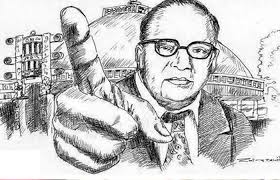
  • *Dr. Ambedkar, the pioneer of establishing an egalitarian society*

    *Dr. Ambedkar, the pioneer of establishing an egalitarian society*

    *Dr. Ambedkar, the pioneer of establishing an egalitarian society*

    (Suresh Pachauri)

    The proud son of Madhya Pradesh, Bharat Ratna Dr. Bhimrao Ambedkar, is the pioneer of establishing an egalitarian society and the architect of the Indian Constitution. Dr. Ambedkar’s life is a saga of struggles which understood humanity in its true sense and glorified history by establishing human dignity. Dr. Ambedkar was the biggest advocate of self-respect and social and economic equality of the weaker sections of the country. He was born on 14 April 1891 in Mhow, Madhya Pradesh. Born in the Mahar caste, Dr. Ambedkar touched the heights from the surface to the peak while being burnt in the furnace of inequality, untouchability, injustice, exploitation, suppression, hatred, contempt and pain.

    Dr. Bhimrao Ambedkar was a man of sharp intellect and multi-talent since childhood. He passed his graduation examination in 1912. He did his M.A. in Economics from Columbia University, America, D.Sc. from London School of Economics and Doctor of Law degree from Columbia University. He was a thoughtful person and a Karmayogi. His life, his successes and achievements are proof in themselves that talent has no relation with caste. The important thing is that talent should get an open and free environment. His extraordinary organization capacity and his determination to fight against injustice easily establish him as a great historical figure. He has a special contribution in awakening awareness about human rights in the Dalit society. His clear message for the Dalit and weaker sections was – “Be educated, stay organized and struggle.” Dr. Ambedkar became the Law Minister of the country in the first cabinet of independent India. He was also a member of the Constituent Assembly and was made the Chairman of the Drafting Committee of the Constituent Assembly. Immediately after independence in 1947, when the fire of communal hatred was spreading, the biggest challenge was to make a constitution that would be acceptable to all. Dr. Ambedkar gladly accepted this challenge.

    Dr. Ambedkar wanted to transform political democracy into social democracy. He was in favour of including protection against economic exploitation as a fundamental right in the constitution. Dr. Ambedkar enriched the Indian constitution with global struggles and experiences by moulding the best values ​​and advanced provisions of world constitutions in accordance with Indian culture. The entire country remembers with great pride the contribution of Dr. Ambedkar as the architect of the constitution of independent India.

    While drafting the constitution, Dr. Ambedkar kept in mind that independent India should travel its development journey as a united human society without being divided into castes and sects. Dr. Ambedkar made many such provisions in the Constitution, due to which not only the Dalit class but the entire human society got the right to live with equality. It was due to his efforts that untouchability was declared a punishable offence. Many provisions for social justice and betterment of the weaker sections were made in the Constitution.

    The life and philosophy of Dr. Ambedkar is the basic mantra to give the right direction to social and economic reconstruction. He presented his views in the form of articles on many subjects like Finance Commission, RBI, Election Commission, water, electricity, grid system, women’s right to property etc. His then thinking on nation building, foreign policy making, labour welfare, agriculture and industrial development is still like a heritage for the people of the country.

    Dr. Ambedkar, who had a multi-faceted personality, was a thoughtful journalist. He considered journalism as a medium of social justice. Underlining the need and impact of journalism, he had said, “Just as there are no birds without wings, there are no movements without newspapers.” Dr. Ambedkar himself started publishing the newspaper “Mooknayak” in 1920 through which he gave a national voice to human sentiments. The result was that the British ploy to separate Dalit society from Hindu society failed. The socio-economic questions raised by Dr. Ambedkar gave momentum and strength to the freedom movement.

    Social harmony and equality in society were the central points of Dr. Ambedkar’s thinking, but it was not limited to Dalits or weaker sections only. He made tireless efforts to implement the Hindu Code Bill to give women property rights and to ban polygamy in Hindu society. It was a sign of his firmness towards principles that he resigned from the post of Law Minister when the Hindu Code Bill was not passed.

    Taking a decisive step towards the creation of an exploitation-free society based on equality, he adopted Buddhism along with millions of his followers on 14 October 1956. At the holy Deekshabhoomi in Nagpur, he took a pledge that “I will follow the principle that all human beings are one. I will mold myself according to the three elements of Buddhism 1. Knowledge 2. Compassion 3. Morality.”

    Under the guidance of Prime Minister Shri Narendra Modi, the Central Government has taken several steps to make the life and work of Dr. Ambedkar unforgettable. Prime Minister Shri Narendra Modi has planned to develop five places having deep connection with the life of Baba Saheb Ambedkar as Panchtirtha. These Panchtirtha are as follows.

  • Vaisakhi – a festival that inspires national resurgence

    Vaisakhi – a festival that inspires national resurgence

    *Vaisakhi – a festival that inspires national resurgence*

    (Subhash Anand)

    India is a country of fairs and festivals. Some of these are related to religion, some to history and some to weather. The vibrant festival of Vaisakhi celebrated with great enthusiasm in Punjab is basically a seasonal festival. This festival is celebrated with great enthusiasm and excitement on the arrival of the crops prepared by the farmers with their blood and sweat. This festival is also a symbol of the spirit of brave and self-respecting Punjabis.

    The tenth Guru of the Sikhs, Govind Singh Ji, established the Khalsa sect on this day, due to which the greatness and dignity of this festival increases further. This festival is also associated with the freedom struggle of India. On this day in 1919, the British government attacked the freedom fighters in Jallianwala Bagh.

    During the time of Guru Govind Singh Ji, the social and political condition of the country was so terrible that the morale of the people had completely fallen. They were not even able to protect the honour of their daughters and daughters-in-law from foreign looters. Hindu girls and daughters-in-law were bought and sold in the market for a few pennies. The honour of Hindu daughters and daughters-in-law was looted openly. Guru Ji could not see this situation and he decided to bring about a change in the society. To fulfil his objective, Guru Ji ordered his followers living in the country and abroad to reach Anandpur Sahib on the day of Baisakhi. According to historians, more than 80 thousand people reached there. Kirtan started. After the kirtan ended, Guru Ji addressed the people with full enthusiasm, holding a naked sword. Dear Sadh Sangat, at this time all peaceful ways to save humanity have been closed. To save humanity, I need some sacrifices. So that humanity can be protected and human life can be safe. As soon as Guru Ji asked for the head, Bhai Dayaram of Lahore, who was a Kshatriya by caste, came on the stage to offer his head.
    Guru Ji took him to a tent and after some time returned on the stage with a blood stained sword. He asked for another head; this time on his request, Bhai Dharamdas Jat from Delhi came. On Guru Ji’s request, Guru Ji took three others Himmat Rai from Orissa, Bhai Mohkam Chandra from Dwarika and Bhai Sahib Chandra from Vidar to the tent.
    After some time, Guru Ji came on the stage with these five. People sitting in the pandal were surprised to see these people alive. All five were wearing similar clothes. Guru Ji prepared Amrit from sugar candies in a bowl (iron vessel) and fed it to all five.
    Eradicating the caste distinction, he named them the five beloved ones. Also, he ordered them to wear the five K’s- Kesh-Kangha-Kada-Kachha-Kirpan. He always inspired people to stay away from intoxication, not to cut hair, not to eat halal meat, to avoid adultery, to earn bread from hard earned money, to eat together, to live a truthful and humble life and to donate one-tenth of their earnings for social work.

    History is witness that by following these teachings of Guru Ji, Punjabis showed bravery against injustice and oppression of the huge Mughal and British empires. They even sacrificed their lives but did not abandon the orders of Guru Ji even in difficult circumstances. But nowadays some youths pretend to follow the path of Guru Govind Singh Ji, but are stuck in the quagmire of addiction. One cannot become a Sikh just by having a beard, hair and wearing a turban. A real Sikh is one who follows the path shown by Guru Ji. He himself bears pain and gives happiness to the human society.

    On 13 April 1875, the world famous saint Swami Dayanand Saraswati founded the Arya Samaj and brought revolution in the society. On this day, after conquering Lahore, Sher-e-Punjab Maharaja Ranjit Singh laid the foundation of the Sikh state in Punjab.

    On 13 April 1749, General Jassa Singh formed the Khalsa Dal on the day of Baisakhi and gave a new slogan ‘Wahe Guru Ji Ka Khalsa – Wahe Guru Ji Ki Fateh’ and the day of Baisakhi on 13 April 1919 still screams and narrates the story of the atrocities of the British. On this day, the British carried out a brutal massacre in Jallianwala Bagh.

    The importance of Baisakhi festival also increases because on this day the Samvat also begins. It is said that on Baisakhi, day and night are equal. It is believed that if it rains on Baisakhi day, it is an auspicious sign of a good harvest next year. Baisakhi is considered the first day of the solar year, because on this day the Sun enters its first zodiac sign Aries and that is why this day is also called Mesha Sankranti.

    After losing everything to the Kauravas, Draupadi had expressed her desire to take a bath on the day of Baisakhi during her exile with the Pandavas. To fulfill Draupadi’s wish, the Pandavas had built a Dhara Mandal in Pijaur. On 13 April 1763, a Pandit pleaded before the sect that the Nawab of Kasur, Usman Khan, had forcibly taken away his daughter. The Sikh sect taught to protect the daughters and daughters-in-law of others. Hari Singh picked up his sword and attacked the Nawab. He freed the Brahmin’s daughter.

    Thus, while Baisakhi is a festival of happiness, it is also associated with religious and freedom struggle stories. (Vibhuti Features)

  • Lokayukta Deputy Secretary Mohammad Arif appointed as new Executive Officer of State Haj Committee

    Lokayukta Deputy Secretary Mohammad Arif appointed as new Executive Officer of State Haj Committee

    Lokayukta Deputy Secretary Mohammad Arif appointed as new Executive Officer of State Haj Committee

    Dehradun (Uttarakhand) [India], Aug 1 (ANI): Uttarakhand Minority Welfare Department has removed Mau Misham from his position as the Executive Officer of the Haj Committee and has been transferred to the post of Deputy Secretary in the Haj Committee. The Haj program for the year 2025 has started in the state, on April 29, the first flight of Uttarakhand Haj pilgrims will leave for Saudi on April 29. Mohammad Arif, the new executive officer of the Haj Committee, is responsible for the proper completion of Haj works.

  • Former MLA Deshraj Karnawal got the responsibility of Social Welfare Schemes and Monitoring Committee Vice President

    Former MLA Deshraj Karnawal got the responsibility of Social Welfare Schemes and Monitoring Committee Vice President

    Former MLA Deshraj Karnawal got the responsibility of Social Welfare Schemes and Monitoring Committee Vice President

    CM Dhami distributed responsibilities to 18 more leaders*


    Amaanullah Usmani

    Dehradun – Chief Minister Pushkar Singh Dhami has distributed the responsibilities of 18 more party workers. This is the second list of responsibilities. BJP State Vice President and former MLA Deshraj Karnawal has been made Vice President, Social Welfare Schemes and Monitoring Committee

    The state government believes that the departmental responsibilities assigned will expedite the implementation of departmental public welfare schemes in the state and will also help in their effective monitoring. Director General of Information Banshidhar Tiwari gave information in this regard. Who was given the responsibility

    Balveer Ghuniyal, Vice President, Herbal Advisory Committee

    Surendra Mogha, Vice President, Uttarakhand Animal Welfare Board

    Bhuwan Vikram Dabral, Vice President, Herbal Advisory Committee

    Subhash Barthwal, Vice President, State Formation Movement Honor Council

    Puneet Mittal, Vice President, Urban Environment Protection Council

    Girish Dobhal, Vice President, State Silent Council

    Geetaram Gaud, Vice President, Uttarakhand Tribal Advisory Council

    Dr. Jaipal, Vice President, Uttarakhand State Higher Education Promotion Committee

    Deshraj Karnawal, Vice President, Social Welfare Schemes and Monitoring Committee

    Ajit Chaudhary, Vice President, Uttarakhand State Farmers Commission

    Pratap Singh Panwar, Vice President, State Medicinal Plant Board

    Jagat Singh Chauhan, Vice President, State Level Minor Irrigation Advisory Committee

    Geeta Rawat, Chairperson, State Level Vigilance Committee

    Shankar Koranga, Vice President, State Level Watershed Council

    Maheshwar Singh Mahara, Vice President, Tea Development Advisory Council

    Sardar Manjit Singh, Co-Chairman, State Level Sugarcane Development Advisory Committee

    Naveen Verma, Vice President, Senior Citizens Welfare Council

    Ashok Nabyal, Vice President, Uttarakhand Tribal Advisory Council

  • Development work should not be limited to papers, it should be visible on the ground: Dhami

    Development work should not be limited to papers, it should be visible on the ground: Dhami

    Development work should not be limited to papers, it should be visible on the ground: Dhami

    The Chief Minister reviewed the game changer schemes of the Forest and Energy Department

    More effective efforts should be made to conserve forests and increase revenue from forest wealth
    Special attention should be given to the modernization of the guest house of the Forest Department: Chief Minister
    Dehradun. Along with the conservation of forests, more effective efforts should be made to increase revenue from forest wealth. Special attention should be paid to the modernization of the guest house of the Forest Department. More possibilities should be explored for work in the field of herbs, cultivation and marketing. Effective measures should be taken to reduce human-wildlife conflict. Special attention should be paid to forest fire management, biodiversity conservation and eco-tourism. These instructions were given by Chief Minister Pushkar Singh Dhami to the officials during the review of the game changer schemes of the Forest Department in the Secretariat on Tuesday.
    The Chief Minister said that along with better use of forest wealth, direct and indirect employment should be promoted. In view of summer, a strategy should be made with an effective action plan to prevent forest fire. It should be ensured that such efforts are not limited to papers only, but are visible on the ground. To prevent incidents of human-wildlife conflict, the best practices of other states should be studied and a better action plan should be made for this in the state.

    It was informed in the meeting that under eco tourism, special attention is being given to the development of eco camping infrastructure, restoration of old forest rest houses, various activities for local youth such as training of nature guides and capacity development programs. A website dedicated to eco tourism will be created. Till now, the eco tourism sector operating in various areas has generated an income of about Rs 5 crore to local youth, Rs 17 crore from gypsy operation and Rs 30 lakh to self-help groups.

    Forest Minister Subodh Uniyal, Infrastructure Monitoring Council Vice President Vishwas Dabur, Chief Secretary Anand Bardhan, Principal Secretary R.K. Sudhanshu, R. Meenakshi Sundaram, Chief Forest Conservator Dr. Dhananjay Mohan, Additional Secretary Ranjana Rajguru, Uttarakhand Jal Vidyut Nigam Managing Director Sandeep Singhal, UPCL Managing Director Anil Kumar, Pitkul Managing Director PC Dhyani and related officials were present in the meeting.

    Work should be done rapidly towards increasing energy production in the state

    Dehradun. During the review of the Energy Department, the Chief Minister also directed that work should be done rapidly towards increasing energy production in the state. Special attention should be given to small hydro power projects. He said that the main concept of Uttarakhand state was energy and tourism state.

    The work of undergrounding of power lines in urban areas should be completed before the onset of rainy season. The work of covering government buildings with solar roof top should be completed soon. An effective action plan should be made to use the assets of UJVNL, UPCL which are not in use.

    It was informed in the meeting that as per the revised hydropower policy in 2023, 8 projects of total 160.80 MW have been approved under one time amnesty. These projects will be completed by 2030 at a cost of 1790 crores. Along with this, 6 projects of 121 MW have been approved. UGVNL will start the work of 03 pump storages from 2028 and complete it in 2031. These three pump storages costing around 5660 crores include Ichhari, Lakhwar-Vyasi and Vyasi-Katapathar projects.

  • Eid was celebrated with devotion and joy, thousands of people prayed for peace and prosperity

    Eid was celebrated with devotion and joy, thousands of people prayed for peace and prosperity

    Eid was celebrated with devotion and joy, thousands of people prayed for peace and prosperity

    Roorkee. Eid-ul-Fitr festival was celebrated with great devotion, joy and harmony in the city and surrounding areas. Thousands of people from the Muslim community offered Namaaz in the Idgah. Before the Namaaz, Maulana Azhar Haq, Principal of Madrasa Rahmania, while giving a speech, called for eliminating dowry, drug addiction and other evils in the society as well as connecting our children with more and more education. Haji Mohammad Mustakim Waqf Administrator Madrasa Rehmania Roorkee said that a joint campaign should be run against drugs. He said that today the biggest need is national unity, peace and harmony, which has been seen in Roorkee for years. He expressed his gratitude to the police administration and municipal corporation administration for the cleanliness and security in the city and said that we had informed the Chief Assistant Municipal Commissioner of Municipal Corporation Roorkee Rakesh Chandra Tiwari by giving a letter and demanded cleanliness and repair of roads in the Idgah area and the city on the occasion of Eid, on which the Municipal Corporation and Health Department and cleaning staff improved the system and for security, the police administration conducted the Eid Fitr namaz and festival peacefully, for which the Municipal Corporation, Health Department and Police Administration deserve congratulations. Mufti Mohammad Salim Ahmed read the Eid namaz and prayed for the prosperity and safety of the country and the state. According to the tradition of Roorkee, Hindu brothers set up their camps on the main road of Idgah and hugged the Muslim brothers and gave them sweets and gifts. They fed dates and gave their best wishes, on the other hand, Muslims also congratulated the people of Hindu society on Navratri and wished them happiness and prosperity. Mukesh Kumar, who came to Roorkee Idgah specially from SSC office, gave the message of Uttarakhand Police to the people of Muslim society under the ‘Bhiksha Nahi Shiksha Abhiyan’. CO Narendra Pant gave a message to Muslim brothers that Muslim religious leaders should come forward at a high level against drug abuse, on the other hand, for the last twenty-five years, Eid Milan program was organized by Uttarakhand Nagrik Samman Samiti at his residence in Sot, in which officials, social workers, journalists and dignitaries participated. On the other hand, in the main Idgah of the city, AIMIM state president Dr. Nayyar Kazmi, along with his party workers, tied a black band and protested against the Waqf Amendment Bill and the action being taken on Madrasas in Uttarakhand and demanded that the Uttarakhand government should immediately open the Madrasas sealed here and stop atrocities on minorities. On this occasion, Ganganahar Kotwali Inspector Amarjit Singh, SI Naveen Chauhan, Karuna Kantholi and police personnel were present. Outside the Idgah, Congress State General Secretary Sachin Gupta, senior BJP leader Naveen Kumar Jain Advocate, Engineer Mujeeb Malik, former MP Rajendra Kumar Body, former Mayor Yashpal Rana, social worker Ishwar Lal Shastri, Congress District President Advocate Chaudhary Rajendra Singh, youth leader Pranay Pratap Singh, Lavy Tyagi, Jitendra Chaudhary, Ritu Kandiyal, Premnath Prema, social worker Haji Naushad Ahmed, Subhash Saini Senior Journalist, Tapan Sushil, social worker Mohammad Mofiq, Om Prakash Noor, Vikas Vashisht, Syed Nafeesul Hasan, Manavvar Qureshi, Imran Deshbhakt, Riyaz Qureshi, Haji Mumtaz, Mohammad Meharban, Dr. Mohammad Mateen etc. offered Eid Mubarak to the Namazis.

  • National level citizens convention on democratic rights, civil rights and human rights express grave concern over violation of human rights and secularism

    National level citizens convention on democratic rights, civil rights and human rights express grave concern over violation of human rights and secularism

    National level citizens convention on democratic rights, civil rights and human rights express grave concern over violation of human rights and secularism


    New Delhi- A national convention on ‘Democratic rights and Secularism; was held here today at Ghalib Institute hall, ITO, New Delhi. The speakers of convention expressed grave concern over the violation of Human Rights and Secularism in the country. The convention was presided over by Justice B. N. Srikrishna, former Judge, Supreme Court,  Justice A. K. Patnaik former Judge, Supreme Court was the main speaker.


    Among the other speakers were Senior Advocate of Supreme court Prashant Bhushan, Dr. Aditya Sondhi, senior advocate, Supreme Court, Senior journalist Paranjoy Guha Thakurta,  Kumar Prashant, social activist, Gauhar Raza, Scientist and cultural activist,  Joseph Mathew, Social activist,  Anil Naurya, Advocate, Supreme Court, Writer and Social Activist, Dwarikanath Rath, National Convener, CPDRS.

    Justice Srikrishna (retd) depicted the present situation to be into deep crisis and said that over 5 crore cases are pending in the courts starting from Supreme Court to the sessions Court. Delay in Justice is denial in justice, he said. Justice A. K. Patnaik (retd) said that the institutions responsible for the protection of democratic rights are violating them the most. There is a steep price in custodial death, fake encounters and jail torture. Other speakers said that be it tribals, dalits, women, children or any other downtrodden persons, they are subject to the worst kind of exploitation and Human Rights violation.

    The decline in human rights in India is reflected in the global rankings. India was placed 109th out of 165 countries in the UN Human Freedom Index 2023, with its overall score dropping by 9% between 2015 and 2023. The statistics paint a grim picture: in 2021 alone, 31,677 cases of rape were registered, and in 2022, a staggering 4.45 lakh crimes were reported against women. Custodial violence remains rampant, with the NHRC recording 147 deaths in police custody, 1,882 deaths in judicial custody, and 119 extrajudicial killings in just the first nine months of 2022. Shockingly, 77% of India’s 5.5 lakhs of prison inmates continue to languish in jails despite being granted bail.

    Repressive laws such as the Unlawful Activities Prevention Act (UAPA), National Security Act (NSA), and Public Security Act (PSA), along with the misuse of investigative agencies like the CBI and ED, have instilled fear in the population. In Manipur, 175 people were killed and over 60,000 displaced Delegates from all the states of the country participated in the convention. Convention passed main resolution and another resolution on Palestine. It resolved to encompass intellectuals and common people of the country to build up mighty human rights movement.


    Speaking on the Right to dissent and voice of protest is the essence of democracy. Justice BN Sreekrishna (retd) said, “Right to dissent and raise voice of protest of the people is the soul of democracy.” He pointed out that under real democracy all citizens would be treated equally and rule of prevail and secularism means ability to tolerate other religious beliefs too. But all these cardinal values are under siege in India now, he lamented.


    While presiding over the National Convention held under the aegis of Committee for the protection of Democratic Rights and Secularism (CPDRS) in Delhi today, he said that the judicial independence and freedom of expression is also under severe threat over the past ten years.  The civil society has to take cudgels to fight all these onslaughts on hard own rights of people, he declared in the end.

    Prasanth Bhushan addressed the gathering on the issues of Democracy, Secularism and Civlity under severe crisis. “India is now witnessing a rampant form of bulldozing on fundamental rights. Constitutional institutions are destroyed and draconian laws are clamped”, said Prasanth Bhushsn. Present status of EC and Comptroller and Auditor General are the living examples becoming appendages ruling regime. They have stopped auditing of funding of BJP but by misusing the powers. But it is they auditing opposition parties accounts only. Those who protest against the government are imprisoned and languishing in jail without trail for years together. not giving justice and legal trials on time. People must shed their fears and come out against draconian rule, he appealed.