Category: Breaking News

  • Syed Sartaj Ahmad Appointed Vice President of Uttarakhand Minority Congress

    Syed Sartaj Ahmad Appointed Vice President of Uttarakhand Minority Congress

    Syed Sartaj Ahmad Appointed Vice President of Uttarakhand Minority Congress

    Dehradun: Senior social worker and Congress leader Syed Sartaj Ahmad has been appointed as the Vice President of Uttarakhand Minority Congress. The appointment has been made through the state Minority Congress Committee, following an order issued by the National Coordinator of the All India Minority Congress Committee.

    The appointment of Syed Sartaj Ahmad is being viewed as an important responsibility in recognition of his long-standing association with the Congress organization and his active involvement in social work. Following the announcement, Congress workers and his supporters expressed happiness and congratulated him on the new responsibility.

    Syed Sartaj Ahmad has been associated with the Congress organization for several years and has held various organizational positions. He has also served as Secretary and General Secretary in the Dehradun Metropolitan Congress organization, where he remained actively involved in organizational activities and public issues.

    His organizational journey includes several important assignments. In 2013, he served as District Vice President of the IT Department. In 2015, he was appointed State Secretary of the IT Department, followed by his appointment as State General Secretary of the Minority Department in 2016. In 2021, he was given the responsibility of State Coordinator of the Vichar Department.

    Apart from his political activities, Ahmad has also remained actively associated with several social organizations. He has served as Metropolitan Vice President of the Nirbhala Varg Jankalyan Parishad and has also held the position of District President of Janhit Forum and Civil Liberties Organization. Through these organizations, he has remained associated with various social and public welfare issues.

    Syed Sartaj Ahmad has also held important positions in Congress-supported organizations. He served as State General Secretary of the National Congress Brigade and as State Vice President of the National Sonia Gandhi Brigade Congress.

    With his extensive organizational experience and long association with both political and social activities, his appointment as Vice President of the Uttarakhand Minority Congress is considered significant. He is expected to play an active role in strengthening the organization at the grassroots level and connecting the party with different sections of society.

    After his appointment, Syed Sartaj Ahmad expressed gratitude to the senior leadership and organizational authorities for entrusting him with the responsibility. He said that he would discharge his new responsibility with full dedication, sincerity and commitment and would continue working to strengthen the Congress organization and raise issues concerning the public.

    Congress workers, social activists and his supporters congratulated Syed Sartaj Ahmad on his appointment and expressed confidence that his experience and organizational capabilities would further strengthen the Minority Congress in Uttarakhand.
  • Shadab Alam Joins All India National Monitoring Committee

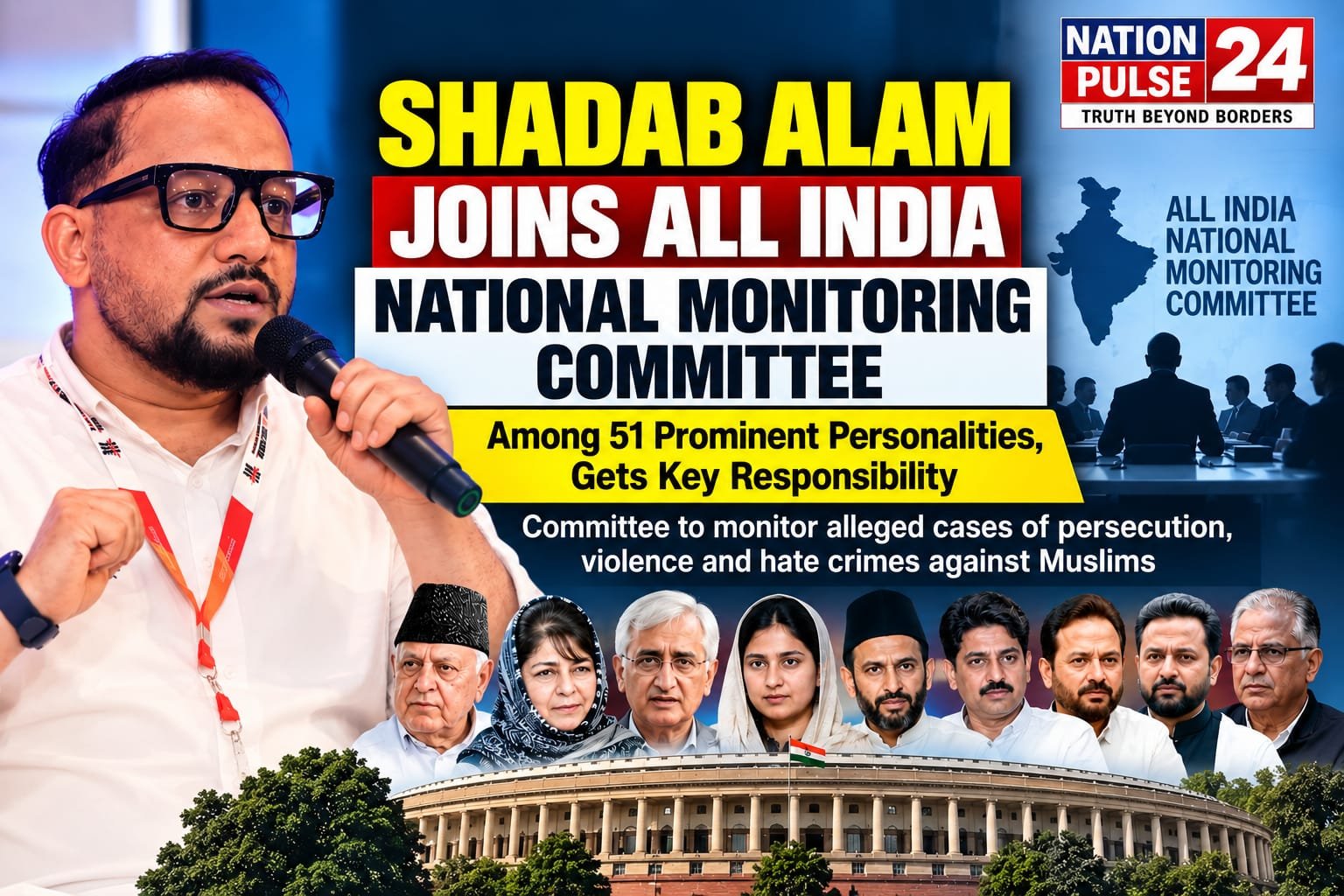
    Shadab Alam Joins All India National Monitoring Committee

    Shadab Alam Joins All India National Monitoring Committee

    Gets Responsibility Alongside 51 Prominent Personalities; Committee to Monitor Alleged Cases of Persecution, Violence and Hate Crimes


    Haldwani: Shadab Alam, a resident of Haldwani, has been given a responsibility in the All India National Monitoring Committee, a committee formed with the participation of former chief ministers, MPs, former Union ministers, members of commissions, social workers, lawyers, academics and prominent activists from across the country.
    According to the information available, 51 prominent personalities from different fields have been included in the committee. The committee is aimed at monitoring cases allegedly involving persecution, violence, discrimination and hate crimes against Muslims and bringing relevant facts, documents and reports into the public domain.

    Shadab Alam Included in Committee Secretariat

    Shadab Alam has reportedly been included in the secretariat of the committee. He has been associated with social and legal issues for a considerable period and has worked on matters related to High Court cases, fact-finding reports and tracking of alleged hate-crime incidents.
    His new responsibility is being viewed as significant, particularly because the committee brings together people from diverse backgrounds and different parts of the country.

    Several Prominent Names Associated With Committee

    According to the information provided, the committee includes several prominent personalities, including former Chief Minister Farooq Abdullah, former Chief Minister Mehbooba Mufti, former Union Minister Salman Khurshid, Nadeem Khan, MP Iqra Hasan, MP Ziaur Rahman Barq, Imran Masood, Mohammad Adeeb, former Lieutenant Governor Najeeb Jung, Shia scholar Kalbe Jawad Naqvi, Professor Mohammad Ali Mahmoodabad, Abu Azmi, Maulana Ubaidullah Azmi and Aga Ruhullah Mehdi, among others.
    The inclusion of personalities from politics, law, academia and civil society is intended to give the committee a broad-based character.

    Focus on Fact-Finding and Monitoring

    The committee is expected to focus on collecting information related to reported incidents, examining available documents and conducting fact-finding exercises. Monitoring the progress of cases and compiling reports related to alleged hate crimes will also form an important part of its work.
    The stated objective is to ensure that facts and documentation relating to such incidents are systematically collected and brought before the public.

    Recognition for Haldwani-Based Activist

    Shadab Alam’s inclusion in the national-level committee is being seen as an important development for Haldwani. His experience in dealing with legal matters, High Court-related cases, fact-finding initiatives and hate-crime tracking is expected to be relevant to the responsibilities assigned to him.
    With his inclusion in the committee’s secretariat, Alam will now have an opportunity to work at the national level alongside prominent personalities associated with social, political, legal and public-interest issues.

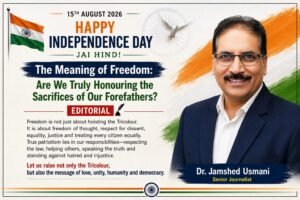
  • The Meaning of Freedom: Are We Truly Honouring the Sacrifices of Our Forefathers?

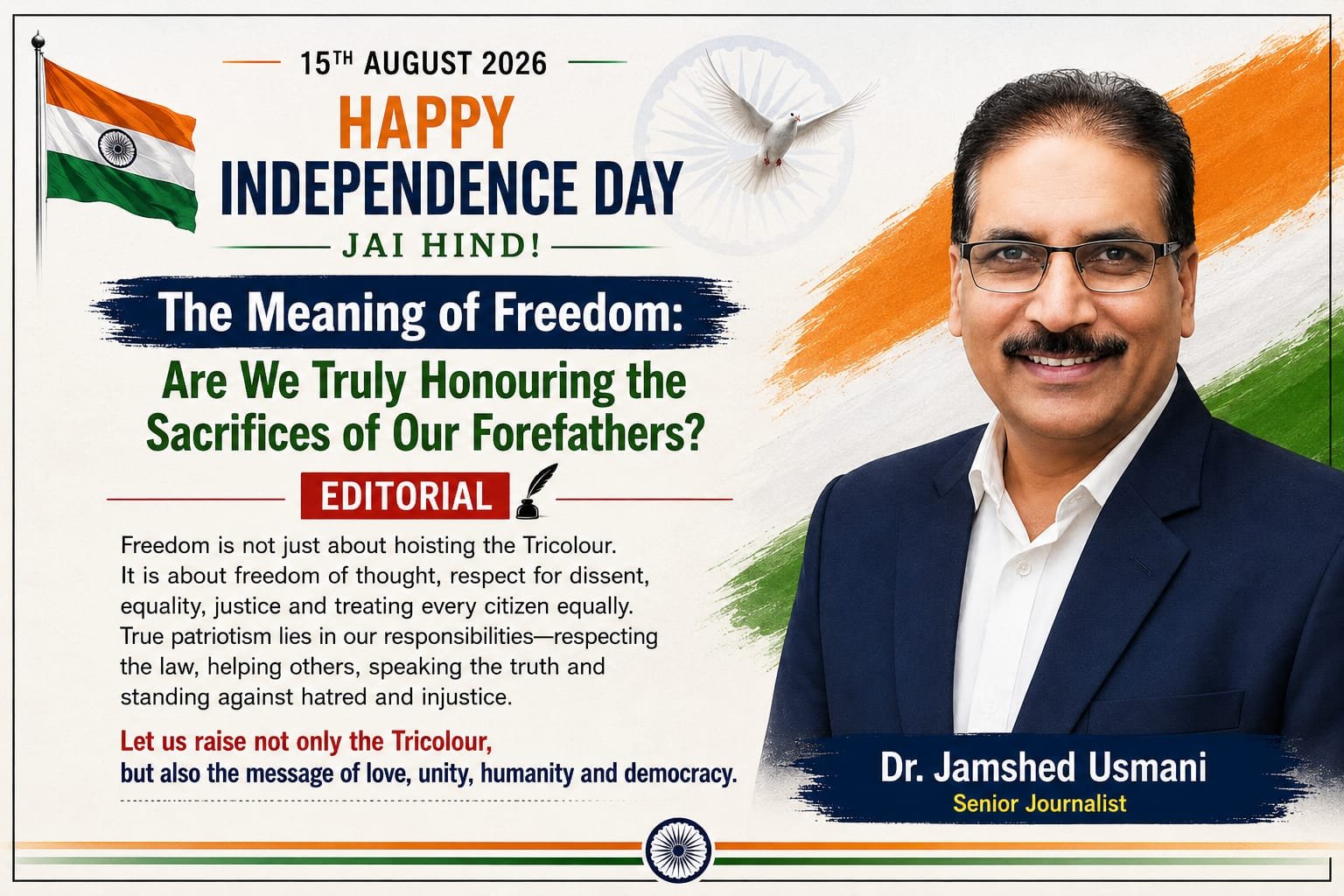
    The Meaning of Freedom: Are We Truly Honouring the Sacrifices of Our Forefathers?

    The Meaning of Freedom: Are We Truly Honouring the Sacrifices of Our Forefathers?

    Dr. Jamshed Usmani

    Today, India celebrates its Independence Day with pride, enthusiasm and joy. The Tricolour is flying high, patriotic songs are echoing across the country, schools and institutions are organising programmes, and the spirit of freedom can be felt everywhere.

    This is the historic day when India broke the chains of British colonial rule and began its journey as a free and independent nation.

    But amid the celebrations, there is a question that every citizen must ask himself and herself:

    Are we truly honouring the sacrifices of those who fought for our freedom?

    Freedom was not merely about liberating India from British rule. Freedom meant creating a country where every citizen could live with dignity, express an opinion, ask questions, practise their faith, follow their beliefs and enjoy equal rights under the law.

    Our forefathers dreamed of an India where a person’s identity would not be determined by caste, religion, language or region, but by the simple fact that they are human.

    They went to prisons, faced lathi charges, endured bullets and sacrificed their lives so that future generations could breathe the air of freedom.

    But today, when questions are being raised about democratic values, when concerns are expressed over restrictions on freedom of expression, when attempts are made to silence voices of dissent, and when hatred and social divisions based on caste and religion appear to be growing, we must pause and reflect.

    Is hoisting the Tricolour alone enough to celebrate Independence Day?

    No.

    The true meaning of freedom is the freedom of thought, the right to question, respect for dissent, equality before the law and the opportunity to live in a society based on justice and dignity.

    If someone holds an opinion different from ours, it does not necessarily make that person our enemy.

    The beauty of democracy lies in the fact that people with different opinions can live together as equal citizens of the same nation.

    Dissent is not the weakness of democracy; it is one of its strengths.

    At a time when hatred, mistrust and divisions in the name of caste and religion are increasingly visible in society, Independence Day should not be merely a day of celebration. It should also be a day of introspection.

    We must ask ourselves:

    What kind of India do we want to leave for the generations that come after us?

    An India where one citizen hates another?

    Or an India where people belonging to different faiths—whether they worship in temples, mosques, churches or gurdwaras—stand together in each other’s moments of happiness and sorrow?

    Let us remember:

    True patriotism lies in bringing people together, not in dividing them.

    If we see something wrong in our society or in the system, we must certainly raise our voice against it—but not through violence, abuse or hatred.

    The path of protest should be democratic, peaceful and constructive.

    Ask questions. Present your arguments. Raise your voice within the framework of the Constitution and the law. And work towards meaningful change.

    Because patriotism is not limited to slogans.

    Patriotism is about fulfilling our responsibilities.

    Respecting the law is patriotism.

    Helping those in need is patriotism.

    Having the courage to speak the truth against injustice is patriotism.

    Respecting the rights of others is patriotism.

    And above all, treating every citizen of the country equally is patriotism.

    Democracy becomes stronger when citizens, along with governments and institutions, understand their responsibilities.

    We must not only demand our own rights; we must also respect the rights and freedoms of others.

    Independence Day reminds us that the greatest strength of India is not merely the Tricolour, but also our unity, democracy and spirit of brotherhood.

    If democratic values face challenges today, there is no reason for us to lose hope. Instead, this is the moment to strengthen once again the values upon which our free India was built.

    On this Independence Day, let us not merely hoist the Tricolour outside our homes and institutions.

    Let us also raise the flag of love in our hearts, humanity in our conduct and democracy in our thinking.

    Let us pledge that we will not allow politics of hatred to become normal.

    We will not allow walls to be built between human beings in the name of caste or religion.

    We will not treat disagreement as enmity.

    We will protect the right to speak the truth and ask questions.

    And wherever we see discrimination or injustice, we will stand against it through peaceful and democratic means.

    Because freedom is not merely a date—15 August 1947. Freedom is a responsibility, an idea and a trust that we owe to future generations.

    Therefore, on this Independence Day, the most important question before us is:

    We achieved freedom—but are we truly preserving the meaning of freedom?

    If our forefathers sacrificed their lives for an India built on equality, brotherhood and justice, then the greatest tribute we can offer them is to strengthen the India they dreamed of.

    An India where there is more love than hatred.

    More trust than fear.

    More equality than discrimination.

    More humanity than divisions of caste and religion.

    And an India where democracy is not merely written in books, but is visible in our behaviour, our institutions and our everyday lives.

    This Independence Day, let us raise not only the Tricolour, but also the message of love, unity, humanity and democracy with all our hearts.

    Jai Hind.

  • Uttarakhand Muslims Send a Clear Political Message: Our Vote Will No Longer Be About Defeating Someone, But About Securing Our Future

    Uttarakhand Muslims Send a Clear Political Message: Our Vote Will No Longer Be About Defeating Someone, But About Securing Our Future

    Uttarakhand Muslims Send a Clear Political Message: Our Vote Will No Longer Be About Defeating Someone, But About Securing Our Future

    Uttarakhand Assembly Elections 2027: The vote should now be based on education, employment, development, constitutional values and a concrete agenda — not fear, emotions or negative politics

    Dr. J. Usmani

    Nation Pulse 24

                  As Uttarakhand moves towards the 2027 Assembly elections, the political ground is gradually beginning to heat up. The BJP, Congress and other political parties will soon sharpen their electoral strategies, select candidates and work out their political and social equations.

    But this time, political parties in Uttarakhand need to understand one thing clearly:

    The parameters of Muslim voting politics must change.

    The vote should no longer be cast merely to defeat someone.

    It should not be driven by fear.

    It should not be dictated by emotions.

    The vote must be for the future of our children, better education, employment opportunities for the youth, economic progress, constitutional rights and the overall development of Uttarakhand and India.

    The message for 2027 is clear: the vote must be based on programmes and performance, not fear and negative politics.

    Don’t Tell Us Whom to Fear — Tell Us What You Will Do

    For years, particularly during elections, Muslim voters have often been told about the dangers they may face if a particular political party comes to power.

    But the question must now change.

    Don’t just tell us whom we should fear. Tell us what you will do if you come to power.

    What is your programme for improving the education of our children?

    What is your roadmap for creating employment opportunities for our youth?

    What will you do to support small businesses, artisans and self-employed young people?

    How will you improve schools, colleges, hospitals, roads and basic infrastructure in backward and neglected areas, including Muslim-majority localities?

    How will you ensure that the benefits of government welfare schemes reach every deserving citizen without religious discrimination?

    And most importantly, will you openly stand for the equality, dignity, security and constitutional rights of every citizen?

    In 2027, political choices should be determined by the answers to these questions.

    If You Want Our Vote, Show Us Your Development Roadmap

    Muslim voters have a significant electoral presence in several constituencies across Uttarakhand’s plains, particularly in districts such as Haridwar, Dehradun, Udham Singh Nagar and Nainital.

    Therefore, every political party seeking Muslim votes — including the Congress — must understand that remembering the community only during elections will no longer be enough.

    A legitimate question must be asked:

    If our votes contribute to your political victories, where is our meaningful participation in your organisation, leadership and decision-making process?

    If Muslim political workers spend years strengthening a party, why should their role remain limited to mobilising crowds, raising slogans, putting up posters and doing groundwork during elections?

    Muslims are equal citizens of Uttarakhand. Their political participation cannot be viewed only through institutions dealing specifically with minority affairs.

    They are equally concerned with education, healthcare, industry, business, infrastructure and the overall development of the state.

    If political parties want votes, they must also offer representation, respect and a credible development agenda.

    Being a Muslim Candidate Alone Will Not Be Enough

    This message is not only for political parties. It is equally important for Muslim political leaders.

    In 2027, merely being a Muslim candidate should not automatically guarantee political support.

    A Muslim candidate must face the same questions as any other candidate.…

  • Progressive Community Trust Elects Dr. Riazul Hasan Siddiqui as Presiden

    Progressive Community Trust Elects Dr. Riazul Hasan Siddiqui as Presiden

    Progressive Community Trust Charts New Course with Fresh Leadership

    Dehradun: A significant meeting of the Progressive Community Trust was held under the chairmanship of the Trust’s Vice President, Mr. Khalid Farooqui. The meeting focused on discussing future plans and strategies to achieve the Trust’s objectives more effectively and to expand its social, educational, and community welfare initiatives. During the meeting, a new Executive Committee of the Trust was unanimously elected. Dr. Riazul Hasan Siddiqui was unanimously chosen as the President of the Progressive Community Trust.

    The newly elected office-bearers include President: Dr. Riazul Hasan Siddiqui, Vice President: Mr. Khalid Farooqui, Vice President: Advocate Ashraf Zaheer Hashmi, General Secretary: Dr. Jamshed Usmani, Joint Secretary: Mr. Mohammad Arif Siddiqui, Convener: Syed Suhail Zameer, Auditor: Advocate Danish Ghazali, The members also unanimously resolved to authorize Dr. Riazul Hasan Siddiqui to nominate and assign responsibilities to additional members whenever required in the best interest of the Trust and to strengthen its activities in the future.

    Expressing his gratitude after being elected President, Dr. Riazul Hasan Siddiqui thanked all the members for reposing their confidence in him. He assured the gathering that he would discharge his responsibilities with complete dedication, sincerity, and commitment.

    He said that his foremost priority would be to work collectively with all members of the Trust to achieve its vision and objectives, strengthen educational and social welfare initiatives, and promote unity, cooperation, and community development.

    The members expressed confidence that under the new leadership, the Progressive Community Trust would further expand its social and educational activities and continue serving society with renewed energy and commitment.

  • Endless Career Opportunities in Radiology, An Exclusive Conversation Between Career Guide Dr. Afroze Eqbal and Radiology Professional Ms. Shagufta

    Endless Career Opportunities in Radiology, An Exclusive Conversation Between Career Guide Dr. Afroze Eqbal and Radiology Professional Ms. Shagufta

    Endless Career Opportunities in Radiology

    An Exclusive Conversation Between Career Guide Dr. Afroze Eqbal and Radiology Professional Ms. Shagufta

    Interviewer: Career Guide Dr. Afroze Eqbal
    Guest: Ms. Shagufta, Radiology Professional
    Special Series: Career Conversations with Professionals

    Dr. Afroze Eqbal: Jai Hind, Ms. Shagufta. To begin with, please tell our readers about yourself and your current role.

    Ms. Shagufta: Jai Hind, Sir. I am currently working in the Radiology Department of a reputed hospital. My responsibilities include assisting physicians in diagnosing diseases through X-rays, CT scans, MRI, and other medical imaging procedures. This role plays a crucial part in guiding the right treatment for patients.

    Dr. Afroze Eqbal: What is Radiology, and why is it so important in healthcare services?

    Ms. Shagufta: Radiology is a branch of medical science that uses advanced technology to study the internal organs and conditions of the human body. Today, radiology plays a vital role in diagnosing almost every major illness. Accurate diagnosis is often impossible without proper imaging investigations.

    Dr. Afroze Eqbal: What inspired you to choose this field?

    Ms. Shagufta: I have always wanted to work in the healthcare sector. When I realized that radiology is an essential part of diagnosis and treatment, I decided to pursue it as my career.

    Dr. Afroze Eqbal: How can students begin a career in Radiology?

    Ms. Shagufta: After completing Class 12 with a science background, students can enroll in diploma, undergraduate, or professional courses related to Radiology and Medical Imaging. These programs provide the foundation for a successful career in this field.

    Dr. Afroze Eqbal: What qualities are necessary for success in Radiology?

    Ms. Shagufta: Apart from technical knowledge, one needs patience, discipline, responsibility, empathy, and a continuous willingness to learn. Good communication and compassionate behavior with patients are equally important.

    Dr. Afroze Eqbal: Can only academically brilliant students succeed in this profession?

    Ms. Shagufta: Not at all. Success is not determined solely by marks. Hard work, dedication, practical skills, and a positive attitude can help any student achieve success in this field.

    Dr. Afroze Eqbal: What was the biggest challenge during the early stage of your career?

    Ms. Shagufta: Understanding the technical aspects of advanced imaging machines and developing confidence in real clinical situations were my initial challenges. However, with continuous practice and guidance from seniors, I was able to overcome them.

    Dr. Afroze Eqbal: Is there any particular experience that has deeply influenced you?

    Ms. Shagufta: There have been many occasions when timely imaging helped detect serious illnesses at an early stage, enabling patients to receive proper treatment. Such moments remind us of the importance of our work.

    Dr. Afroze Eqbal: What are the employment opportunities in Radiology?

    Ms. Shagufta: The demand for trained radiology professionals is steadily increasing in government and private hospitals, diagnostic centers, medical colleges, and healthcare institutions. It is a growing and stable career field with excellent prospects.

    Dr. Afroze Eqbal: Is Radiology a suitable career option for women?

    Ms. Shagufta: Absolutely. Today, many women are working successfully in radiology and holding important positions. It is a respectable, rewarding, and safe career option for women.

    Dr. Afroze Eqbal: Artificial Intelligence (AI) is transforming many industries. Will it impact Radiology as well?

    Ms. Shagufta: AI will certainly make radiology faster and more efficient. However, human expertise, judgment, and patient-centered care cannot be replaced. Therefore, skilled professionals will always remain essential.

    Dr. Afroze Eqbal: What do you think is the biggest challenge facing today’s youth?

    Ms. Shagufta: Many students choose careers without gathering sufficient information, and they often expect quick success. I would advise them to be patient and thoroughly understand their chosen field before making career decisions.

    Dr. Afroze Eqbal: What is your personal mantra for success?

    Ms. Shagufta: Never stop learning, respect time, and remain honest and committed to your work. These principles are the true keys to success.

    Dr. Afroze Eqbal: If you could give one piece of advice to students across the country, what would it be?

    Ms. Shagufta: Dream big, but work even harder to achieve those dreams. No profession is small. With dedication, perseverance, and consistent effort, success is inevitable.

    Dr. Afroze Eqbal: Finally, what inspirational message would you like to share with our readers?

    Ms. Shagufta: Challenges are a part of life, but they should be viewed as opportunities for growth. Keep learning, keep moving forward, and never give up. Success will surely follow your efforts.

    Conclusion

    Radiology is one of the most important pillars of modern healthcare, playing a critical role in accurate diagnosis and effective treatment. According to Ms. Shagufta, the field offers outstanding opportunities for employment, professional respect, and service to society. Her experience and guidance serve as a source of inspiration for students aspiring to build a bright future in healthcare.

    Interviewed by: Career Guide Dr. Afroze Eqbal
    Guest: Ms. Shagufta, Radiology Professional
    Series: Career Conversations with Professionals

    Jai Hind! 🇮🇳

  • Why uproar on the streets in the name of prophet?

    Why uproar on the streets in the name of prophet?

    Why uproar on the streets in the name of prophet?

    By Khursheed Ahmed Siddique

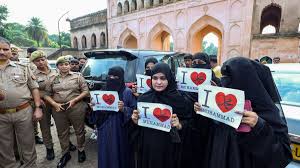
                 The slogan “I LOVE MOHAMMED ﷺ” has recently turned into a movement of processions, rallies, and street protests across several cities. What began in Kanpur during Jashn-e-Milad-un-Nabi soon escalated into a law-and-order issue. FIRs were filed, arrests made, and political leaders jumped at the chance to exploit Muslim sentiments.

    But the deeper question remains: is this really the right way to express love for the Prophet ﷺ?

    Islam teaches peace, respect, and tolerance. The Prophet ﷺ emphasized that causing pain, inconvenience, or disorder to others is against his message. Yet, what we are witnessing today is the opposite—streets blocked, traffic disrupted, slogans shouted, and tempers flared. The claim of love turned into chaos, and the outcome was far from what the Prophet ﷺ taught.

    The Prophet ﷺ replaced ritualistic displays with meaningful ‘Sunnah’. Sunnah refers to the traditions, teachings, and practices of the Islamic prophet Muhammad that serve as a guide for Muslims. Derived from an Arabic word meaning “tradition” or “way,” the Sunnah is the second foundational source of Islamic law after the Quran encompassing Prophet Muhammad’s ﷺ words, deeds, and approvals. Muslims learn about the ‘Sunnah’ by studying ‘Hadees’ which are reports about his life and actions.

    His companions expressed their love not through noisy demonstrations but through obedience, sacrifice, and moral conduct. Love in Islam has never been about slogans; it has always been about living the Prophet’s ﷺ teachings in everyday life.

    The “I LOVE MOHAMMED ﷺ” trend, therefore, is not a ‘Sunnah’ but a Bid‘ah—an innovation that brings turmoil instead of peace. True love for the Prophet ﷺ is shown not on placards, but in honesty, compassion, justice, and respect for others. Muslims must reflect: are we upholding the Prophet’s ﷺ message—or unknowingly harming it in the name of love?

    ( The writer is a social worker of Dehradun and views expressed are his personal)

  • Flipkart Announces Big Billion Days Sale 2025: Exclusive Deals on iPhone 16, Samsung Galaxy S24, and More

    Flipkart Announces Big Billion Days Sale 2025: Exclusive Deals on iPhone 16, Samsung Galaxy S24, and More

    Flipkart Announces Big Billion Days Sale 2025: Exclusive Deals on iPhone 16, Samsung Galaxy S24, and More

    Report by: Syed Taskin Ahmed

    E-commerce giant Flipkart has officially announced that its flagship Big Billion Days (BBD) Sale 2025 will begin on September 23, offering massive discounts across multiple product categories including smartphones, laptops, televisions, home appliances, and audio devices.

    Flipkart confirmed that Plus and Black membership holders will get early access to the sale on September 22, while “Early Bird Deals” will begin as early as September 8 for select users.

    This year, smartphones are expected to be the highlight of the BBD sale. Reports suggest that the Samsung Galaxy S24 will be available for under ₹40,000, while the Galaxy S24 FE could drop below ₹35,000. The newly launched iPhone 16 is also rumored to be priced under ₹50,000 during the sale, making it one of the most anticipated deals of the year.

    Apart from smartphones, Flipkart is also teasing heavy discounts on laptops, smart TVs, wearables, kitchen appliances, and gaming accessories. The company is positioning the sale as its biggest shopping festival ahead of the festive season.

    To further sweeten the offers, Flipkart has partnered with leading banks including Axis Bank and ICICI Bank, offering 10% instant discounts on purchases made through their debit and credit cards. Additional savings are also expected for users of Flipkart’s co-branded credit card.

    Industry experts believe that this year’s BBD sale could surpass previous records in terms of sales volume, given the growing demand for electronics and the excitement around flagship smartphone deals. Flipkart is also promoting “sale pass vouchers,” priced affordably, that will provide additional discounts during checkout.

    With the festive season approaching, Flipkart’s Big Billion Days 2025 promises to be a shopping extravaganza for Indian consumers.

  • Hazrat Sabir Pak Urs begins with a wonderful langar

    Hazrat Sabir Pak Urs begins with a wonderful langar

    Hazrat Sabir Pak Urs begins with a wonderful langar


    Report: Amaanullah Usmani

    Piran Kaliyar – The 757th annual Urs that began at the shrine of Hazrat Sabir Pak Rahmatullah Aleh saw an increase in the langar from the first day of the Islamic calendar. As per the tradition of the Urs, on Sunday, 7 Rabiul Awwal, langar was distributed on the beds and tunes of Sufia-e-Kiram and his disciples.

    On the seventh day of the annual Urs of Sabir Pak, under the patronage of Sajjada Nashin Shah Ali Ejaz Sabri, Sajjada representative Shah Suhail, along with Faqiro-Uzzam, distributed langar among the pilgrims and disciples. This series of langar distribution will continue till 12 Rabiul Awwal. On this day, langar will be distributed once a day. On 12 Rabiul Awwal, Sufi saints and pilgrims coming from far off places also distribute langar at their respective camps. 12 Rabiul Awwal has special importance in Urs. The langar distributed on this day is traditionally called “Mast Langar”, in which a large number of pilgrims participate. Sahibzada Shah Yawar Ali Aijaz Sabri said that this langar of Piran Kaliyar Sharif is not just a spiritual tradition but also gives the message of Ganga-Jamuni culture, brotherhood and humanity. This ritual of distributing langar during Urs was started in 1903 by the then Sajjada Nashin Shah Abdurrahim and is continuing till date. During this Shah Yawar Miya, Shah Yawar Ali Aijaz Sabri, Sajjada representative Shah Suhail, Sufi Kamal Sabri, Dargah supervisor Aslam Qureshi, Nomi Miya, Sufi Rashid Sabri, Ghulam Sabir, Khalid Qureshi, Shan Sabri, Rahim Sabri, Samad Sabri, Tasleem Sabri, Shan Sabri, Murad, Moin, Anmol Sabri, Shahzad Advocate, Gulzar Chaudhary, Munawwar Sabri etc. were present.

  • Future officers lit up with the torch of knowledge

    Future officers lit up with the torch of knowledge

    Dr. Afroz Iqbal gave important training to trainee officers selected by UKPSC


    Narendranagar, Tehri Garhwal- Dr. Afroz Iqbal, Head of Department (HOD) of Sociology, Shaheed Durga Malla Government Post Graduate College Doiwala, participated in a special training session organized for trainee officers selected by Uttarakhand Public Service Commission (UKPSC) at Police Training College (PTC), Narendranagar. He gave a comprehensive lecture to these future officers on the intricacies of sociology and social work.

    Dr. Iqbal was specially invited under this basic training program organized by Deputy Inspector General of Police/Director, Police Training College. The objective of this session was to prepare the trainee officers to understand the psychology of prisoners, their behavioral problems and plans for reform from a scientific point of view.

    In his lecture, Dr Iqbal highlighted several important aspects under ‘Sociology and Social Work’ which included:

    Definition and process of social case work

    Different methods of interview and importance of mutual coordination

    Establishing rapport between client (prisoner) and worker (officer)

    Techniques for preparing questions for interview and maintaining case records

    Testing behavioural problems of the individual and planning treatment

    This training session was extremely beneficial for the trainee officers as it provided them practical and theoretical knowledge to deal with the challenges they face in their professional life. The guidance of an experienced academician like Dr Afroz Iqbal will prove to be helpful in making these officers better administrators. We wish all the trainee officers a bright future.