Category: Politics

  • Voices of Dissent: Paying the Price of Demanding Accountability in Times of Grief

    Voices of Dissent: Paying the Price of Demanding Accountability in Times of Grief

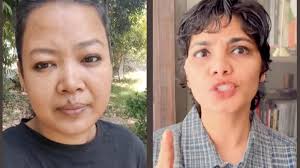
    In the wake of the tragic terrorist attack in Pahalgam, Jammu and Kashmir, a disturbing pattern is emerging—not just in the streets or along the borders, but in India’s courtrooms, police stations, and digital spaces. Rather than confronting the root causes of extremism or addressing lapses in security, the state has turned its gaze inward, cracking down on those who dare to speak truth to power, and demand accountability for their “lapses”. Artist Neha Singh Rathore, known for her bold Bhojpuri satire, and feminist academic Dr Madri Kakoti, better known online as Dr Medusa on X (formerly Twitter), now face FIRs for merely expressing their views—criticising the state’s response in light of the Pahalgam terror attack, and questioning the broader culture of impunity. More than anything, both have sharply questioned, in their respective and inimitable styles, government role in (not) responding to intelligence warnings of a possible terror attack.

    But they are not alone. In Lucknow, the newsroom of 4 PM, a digital Hindi-language outlet known for its critical reporting on the government, was forcibly taken off YouTube. Its editor, Sanjay Sharma, told Newslaudry that he had been asking government questions regarding national security, especially after the Pahalgam terror attack. Together, these incidents point to a growing climate of fear, where artistic expression, academic freedom, and independent journalism are seen as threats to national order rather than pillars of a healthy democracy.

    The cases of Rathore, Kakoti, and 4 PM are not isolated. They are symptoms of a systemic assault on free speech, emboldened by a new legal regime—the Bharatiya Nyaya Sanhita—that revives colonial-era sedition in a new, more ambiguous form. This is not just about individual persecution. It is about the shrinking space for dissent in today’s India—and the urgent need to defend it.

    ‘Sedition’ for singing truths: Folk singer Neha Singh Rathore targeted

    In a striking example of the state’s growing hostility towards dissenters and cultural voices that challenge official narratives, Bhojpuri folk singer Neha Singh Rathore has been booked under charges of sedition and digital offences in Uttar Pradesh for her social media posts on the April 22 terror attack in Pahalgam. The charges come under Section 152 of the newly implemented Bharatiya Nyaya Sanhita (BNS), which criminalises acts “endangering the sovereignty, unity and integrity of India”, and under various sections of the Information Technology Act, 2000.

    The FIR, registered at Hazratganj police station in Lucknow, stems from a complaint by one Abhay Pratap Singh. The complaint claims that Rathore’s posts could provoke communal tensions and alleges that her content is being picked up and circulated by social media handles associated with Pakistani political organisations. That a popular singer known for biting social satire has been accused of jeopardising national unity, based on speculation that Pakistani accounts shared her video, lays bare the sheer fragility of the state’s definition of “security” and “sovereignty”.

    What did Rathore say? Legitimate questions, politically inconvenient: As per a report in The Quint, the complaint focuses on three tweets by Rathore and one by an allegedly Pakistan-linked handle that reposted her video. In one tweet, Rathore raised a straightforward question:

    “Modi ji was scheduled to visit Jammu on 19 April, but his trip was postponed. Three days later, on 22 April, a terrorist attack took place in Pahalgam, resulting in the death of 27 tourists. On what grounds was Modiji’s Jammu visit postponed? Was there a suspicion of a possible terrorist attack?”

    Another post urged people to question the narrative and look beyond the surface:

    “Who could have orchestrated such an attack? Who stands to benefit from it? Think about it, think carefully! Use common sense and tell!”

    These are not inflammatory remarks but standard political commentary—critical in tone, but fully within the bounds of democratic discourse. Yet, they have been construed as seditious, dangerous, and anti-national.

    The FIR also references a tweet by a Pakistani handle—believed to be affiliated with the Pakistan Tehreek-e-Insaf (PTI) party—which reposted a video of Rathore where she called the Pahalgam incident “a failure of intelligence and security under the current administration” and alluded to similar historical instances where terror attacks were politically leveraged during elections.

    The criminalisation of political dissent: The legal and political implications of this FIR are significant. Section 152 of the BNS, which replaces the colonial-era sedition law under the Indian Penal Code, was touted by the Union government as a modernised, rights-respecting alternative. In practice, however, the section is proving to be just as repressive, if not worse. The language of “sovereignty” and “integrity” has once again become a catch-all net to silence dissent, especially in politically sensitive moments like elections.

    The FIR represents an increasingly familiar pattern in BJP-ruled states, especially Uttar Pradesh: anyone who challenges the government’s record—whether on security, governance, or civil rights—is branded a threat to national security, slapped with draconian laws, and subjected to relentless digital vilification. That this treatment is being meted out to a folk singer whose platform is built on satire, regional culture, and grassroots issues, shows just how wide the net of repression has been cast.

    Neha Singh Rathore hits back: Rathore, undeterred, released a strong video statement on X (formerly Twitter), accusing the state of using legal intimidation to deflect from its failures:

    “The government wants to divert attention by filing an FIR against me. This is not so difficult to understand. If you have the guts, go get the heads of those terrorists. Don’t put the blame of your failure on me.”

    She further condemned the state’s practice of penalising those who ask questions:

    “Their answer to every question is sending a notice, taking away our jobs, filing FIRs, getting us abused, scaring us, and humiliating us. If you call this politics, then what is dictatorship?”

    In response to the coordinated outrage from the BJP IT cell, Rathore clarified that she has deep personal ties to the armed forces:

    “They’re calling me anti-national because a Pakistani handle copied my video. Fourteen members of my family have served in the Indian Army and paramilitary forces. My brother is fighting Naxalites in Chhattisgarh and my uncle fought in the Kargil war.”

    Her response not only highlights the absurdity of the charges against her but also exposes the selective patriotism of those who weaponise nationalism to silence dissent.

    A pattern of targeting: This is not Rathore’s first brush with the law. In July 2023, she faced legal action for posting a cartoon on the horrifying Madhya Pradesh urination incident, where a dominant-caste man was seen urinating on a tribal labourer. Earlier in February 2023, she was served a notice by Kanpur Police for allegedly promoting enmity through the second version of her viral song ‘UP Mein Ka Ba’.

    Her songs—rooted in Bhojpuri folk tradition—focus on social issues like unemployment, corruption, gender violence, the dowry system, and declining cultural values. Unlike the sanitised and often apolitical mainstream media and music industry, Rathore’s work is a rare voice of resistance, using wit and melody to speak truth to power.

    Her 2020 hit ‘Bihar Mein Ka Ba’ and its 2022 counterpart ‘UP Mein Ka Ba’ gained massive traction precisely because they reflected the frustrations of ordinary people under a regime increasingly allergic to criticism.

    Free speech or treason? A dangerous precedent: The booking of Neha Singh Rathore should worry anyone who values free speech, artistic expression, and the right to question authority. It illustrates how the new legal architecture under the BNS is no less authoritarian than the old colonial codes it claims to replace. Vague provisions like Section 152 are now being used not to protect India’s sovereignty, but to shield a powerful ruling party from public scrutiny—especially in moments when its security apparatus appears compromised.

    Rather than launching a credible investigation into the Pahalgam attack, the state has found it more convenient to redirect public attention by persecuting artists and intellectuals. By doing so, it reframes criticism as subversion, dissent as sedition, and legitimate questions as threats to national integrity.

    Neha Singh Rathore’s case is not an isolated incident—it is a warning. A democracy that cannot tolerate a folk song, a tweet, or a video is no longer secure in its foundations. And when the law is wielded not to protect citizens but to silence them, the real danger to the nation lies not in dissenting voices, but in those who seek to extinguish them.

    Targeting the Professor: Dr Medusa booked for ‘sedition’ over social media posts

    In a chilling development that underscores the shrinking space for academic and political dissent in India, an FIR has been filed against Dr Madri Kakoti—popularly known as “Dr Medusa” on social media—for posts questioning state actions following the terror attack in Pahalgam. The charges, filed at Hasanganj police station in Lucknow, include sedition-like provisions under the newly enacted Bharatiya Nyaya Sanhita, as well as offences under the Information Technology Act, 2000.

    Dr Kakoti, an Assistant Professor in the Department of Linguistics at Lucknow University and a widely followed political commentator online, is accused of posts that allegedly threaten India’s “unity, integrity and sovereignty.” The complaint, filed by Akhil Bharatiya Vidyarthi Parishad (ABVP) leader Jatin Shukla, claims she routinely uses terms such as “saffron terrorists” and that her remarks are being picked up by Pakistani social media handles like @PTI_Promotion—ironically the same handle cited in the FIR against singer Neha Singh Rathore earlier.

    The posts that sparked the storm: Dr Kakoti’s recent posts have focused on the alleged atrocities committed against Kashmiris in the aftermath of the Pahalgam attack, and she has openly demanded the resignation of Home Minister Amit Shah for what she describes as an “unforgivable failure” of national security. Her posts include commentary on state excesses in Kashmir, communal impunity, and the co-option of terrorism for electoral benefit.

    While her critique is deeply political and sharply worded, it falls squarely within the realm of democratic free speech and academic independence—particularly in a country where public discourse is constitutionally protected under Article 19(1)(a). Yet, the FIR alleges that her intent is to provoke unrest and “incite riots.” Such extrapolations from political critique to criminal conspiracy reflect an increasingly draconian trend.

    Campus protests and disciplinary action: As her posts gained traction, ABVP-led student protests erupted at Lucknow University, demanding her dismissal. Protesters raised slogans, submitted a memorandum to the Vice-Chancellor, and insisted that her remarks were “anti-national.” Under pressure, the University issued Dr Kakoti a show-cause notice, as per the report of Moneycontrol.com, demanding an explanation within five days and threatening disciplinary action.

    This targeting of a university professor, using student mobilisation and administrative pressure, is a playbook that has become disturbingly common. Whether in the case of Delhi University’s Dr GN Saibaba, JNU’s Umar Khalid and Anirban Bhattacharya, or now Dr Kakoti, universities are being turned into battlegrounds for ideological policing.

    As per Times of India, Dr Kakoti, originally from Assam and known for her pointed satire and critique of majoritarian politics, responded to the outrage by stating that “What I said is a fact and 100% correct. There is nothing wrong in this statement. It is a general one, listing crimes which fall within the definition of causing ‘terror’. I can’t really take any responsibility for someone thinking it is about them.”

    Weaponising patriotism, silencing dissent: The FIR and the university’s swift disciplinary response are indicative of a deeper rot: the weaponisation of nationalism to criminalise critique, especially from voices seen as Left-leaning, secular, or resistant to the Sangh Parivar’s ideological worldview. ABVP leader Shukla told Newslaundry: “People from Leftist ideology are working to divide society and the students. They are making this issue political, when there is a situation of war between India and Pakistan and your ideology wants to create a civil war in the country itself.”

    This framing—conflating dissent with disloyalty, criticism with conspiracy—is emblematic of an authoritarian approach to governance. By invoking an external enemy (Pakistan) and branding all domestic critics as internal threats, the state and its allied organisations seek to delegitimise political opposition altogether.

    While the colonial-era sedition law under Section 124A of the Indian Penal Code has been suspended pending Supreme Court review, its spirit has found a new home in Section 152 of the Bharatiya Nyaya Sanhita—a catch-all provision criminalising any act seen as “endangering India’s sovereignty, unity or integrity.”

    Both Dr Medusa and Neha Singh Rathore have been booked under this vague and sweeping section. That their posts were allegedly shared by a Pakistani social media handle has been used to bolster charges of sedition—a dubious logic that essentially gives foreign propaganda the power to criminalise Indian citizens.

    Silencing dissent: Blocking 4PM news channel on YouTube over ‘national security’ concerns

    In a fresh blow to press freedom and digital journalism in India, the YouTube news channel 4PM has been blocked in the country following a government order citing concerns related to “national security or public order.” The move, which lacks transparency and a clear public justification, marks yet another instance of the state using opaque mechanisms to silence critical voices in the media space—particularly those asking uncomfortable questions.

    The ban, communicated to the channel’s editor-in-chief Sanjay Sharma via email from YouTube on Tuesday morning as per Newslaundry, comes shortly after 4PM published a series of videos critically analysing the government’s handling of the Pahalgam terror attack. Sharma, a veteran journalist, has stated that the channel’s intention was not to undermine national interest but to hold the government accountable in a democratic manner.

    Coverage that asked tough questions: Although the exact video or post that led to the blocking remains unspecified, the report of Newslaundry provided that 4PM had recently uploaded content with headlines such as:

    • “Pahalgam hamle ka khul gaya raaz. Raaton raat kya hua ki hat gayi sena?”
    • “Laal kaaleen par Amit Shah ka swaagat. Mritakon ko shraddhanjali dene gaye the ya tamasha banaane?”

    These pointed headlines reflect the channel’s critical editorial line: questioning the sudden security lapses in Pahalgam, the removal of troops before the attack, and the political spectacle surrounding Home Minister Amit Shah’s visit to pay tributes to the victims.

    Rather than engage with these questions, the government has seemingly opted for the digital equivalent of a blackout. At the time of writing, visitors to 4PM’s YouTube page are met with a notice that reads:

    “This content is currently unavailable in this country because of an order from the government related to national security or public order.”

    Opaque process, no due process: The removal of 4PM comes under the ambit of Rule 16 of the Information Technology (Intermediary Guidelines and Digital Media Ethics Code) Rules, 2021, which allows the central government to issue blocking orders in “emergency” situations without providing the affected parties an opportunity to be heard beforehand. While the rules allow for post-facto hearings, critics argue this is largely a formality—especially when platforms comply without questioning or publicising the takedown.

    No formal notice from the Ministry of Electronics and Information Technology (MeitY) has been made public. The lack of transparency, both from the government and from YouTube, raises serious concerns about the misuse of national security as a blanket justification to suppress journalism that challenges the ruling dispensation.

    A pattern of digital censorship: This is not an isolated incident. Over the past few years, India has seen a sharp rise in the blocking of YouTube channels, Twitter accounts, and news content critical of the central government, especially during sensitive moments such as the farmers’ protests, the Delhi riots, and the abrogation of Article 370 in Kashmir. Often, the reasoning given involves “public order” or “national interest”—but without explanation or recourse.

    According to the Google Transparency Report of 2023, India has been among the top five countries in the world for government content takedown requests, with hundreds of URLs blocked citing national security. , these incidents signal a coordinated suppression of dissent in the digital sphere, particularly when it arises from independent or alternative media sources.

    Democracy and the “Right to Know” at stake: 4PM is not a major corporate media house but a regional digital-first outlet with multiple sub-channels such as 4PM UP and 4PM Rajasthan. Its success lies in its direct communication with ordinary citizens, often bypassing mainstream narratives to highlight local grievances, administrative lapses, and political controversies. In doing so, it fulfils the media’s constitutional role of holding power to account.

    By labelling such journalism as a threat to national security, the government not only criminalises scrutiny but also undermines the public’s right to information—a right enshrined in Article 19(1)(a) of the Constitution.

    Conclusion: Policing speech, protecting power

    The FIRs against Neha Singh Rathore and Dr Madri Kakoti, alongside the silencing of 4 PM, are not aberrations—they are part of a broader architecture of repression where dissent is equated with disloyalty, and grief is permitted only if it conforms to the state’s narrative. These actions came in the wake of the Pahalgam terror attack, a horrifying incident that claimed the lives of Indian soldiers and civilians. In moments like these, public mourning must be accompanied by public inquiry. People must be allowed to ask: How did such a breach happen in a heavily militarised zone? Were there lapses in intelligence? What accountability mechanisms are in place?

    Instead of facilitating such democratic introspection, the state has chosen to clamp down on voices that seek it. Rathore’s Bhojpuri poem and Kakoti’s social media post did what responsible citizens should do in a constitutional democracy—they questioned state preparedness and response. Their criminalisation reveals a dangerous tendency: the shifting of focus from state failures to citizen ‘offences’.

    Under the Bharatiya Nyaya Sanhita, with its vague and expansive clauses like Section 152, the state is increasingly equipped to prosecute dissent under the guise of protecting sovereignty. But as history shows, suppressing uncomfortable questions in the name of national security rarely leads to genuine safety—it leads to silence, impunity, and a brittle nationalism that cannot withstand scrutiny.

    To defend freedom of expression today is to defend the right to grieve publicly, to question fearlessly, and to demand accountability relentlessly. The real threat to the republic is not a poem or a post—it is a government that treats questions as threats and critics as criminals. The price of dissent is rising—but so too is the cost of silence. And in the face of terror, it is not silence but scrutiny that keeps a democracy alive.

    Courtesy: Sabrang India
  • Big gift of Dhami government before Chardham Yatra 

    Big gift of Dhami government before Chardham Yatra 

     Big gift of Dhami government before Chardham Yatra


    Hospitals in the state get 45 specialist doctors

    Amaanullah Usmani

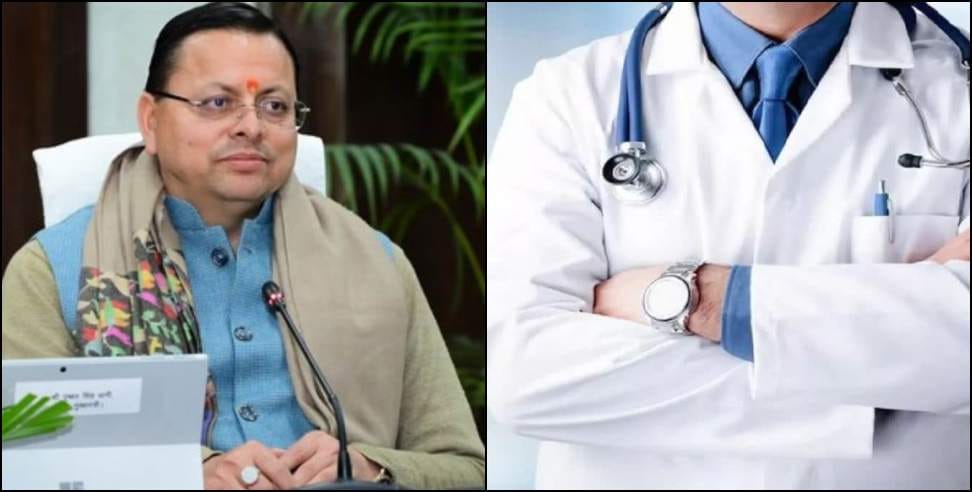
    Dehradun: Ahead of the launch of the Chardham Yatra, the Dhami government has taken an important step towards strengthening the health services of the state. The Medical Health and Medical Education Department has issued orders for the appointment of 45 specialist doctors in various districts of the state. According to the order number 293157/2025 issued by the Health Department in this regard, specialist doctors have been posted in district hospitals, sub-district hospitals and community health centers as per their respective specializations. These include doctors from departments such as Surgery, Gynaecology & Gynae, Anaesthesia, Pediatrics, Ophthalmology, ENT, Forensic Medicine, and General Medicine.

    Disclosing this here today, Health Secretary Dr. R. Rajesh Kumar said that the department is constantly striving to strengthen health services under the guidance and direction of Chief Minister Pushkar Singh Dhami, Health Minister Dr. Dhan Singh Rawat. The Chief Minister and the Health Minister have clear instructions that the person standing at the extreme end of the border village should also get the full benefit of health services.

    The Health Secretary said that all the doctors had gone to do PG on behalf of the department. After the completion of PG course, all of them have been posted as specialist doctors in various districts. Lakhs of devotees are expected to visit Uttarakhand during the Chardham Yatra. In such a situation, keeping health services in order is the top priority of the government.With the deployment of specialist doctors, there will be a significant improvement in the districts from emergency services to general treatment. This will provide quick and high-quality healthcare services not only to the passengers but also to the local population.

    Health Secretary Dr R Rajesh Kumar said that continuous efforts are being made to overcome the shortage of specialist doctors. Specialist doctors have been posted in hospitals of hilly districts in the past. The deployment of these doctors has brought great relief to the hospitals of the state. Due to lack of specialist doctors in many district hospitals and community health centres, patients had to travel to big cities for treatment. Specialist services will now be available in key departments such as surgery, anaesthesia, gynaecology, paediatrics and ophthalmology. This will not only improve the quality of emergency health services, but will also speed up the treatment of common diseases. This step of the government will prove to be a major change towards strengthening health services.

    Health Secretary Dr R Rajesh Kumar said that these 45 specialist doctors have been deployed especially in those districts where there is a direct impact of the Chardham Yatra or where there was an urgent need to strengthen the health infrastructure. These include districts like Pauri Garhwal, Rudraprayag, Uttarkashi, Chamoli, Tehri Garhwal, Almora, Champawat, Bageshwar and Haridwar.

    Details of deployment as per specialization*

    1 – Anaesthesiology – 12 Doctors

    2 :- General Surgery – 5 Doctors

    3 :- Pediatrics – 4 Doctors

    4 :- Gynaecology and Obstetrics

  • Delhi wins All India Tennis Ball Cricket Championship

    Delhi wins All India Tennis Ball Cricket Championship

    Delhi wins All India Tennis Ball Cricket Championship

    Roorkee-Delhi won the fifth All India Tennis Ball Cricket Championship organized by Uttarakhand Tennis Ball Cricket Association. Delhi team defeated CBSC team and won the championship trophy and cash prize of 25 thousand rupees. While the second place went to CBSC C team, they got 21 thousand rupees and trophy, third place went to Uttar Pradesh and fourth place went to Uttarakhand team. Best batsman award went to Rohit of CBSE team while best bowler award went to Aryan of Delhi team. During this, players of the winning teams were seen in great enthusiasm.

    District Magistrate Kamendra Singh, who came to give prizes to the winning teams, said that the Uttarakhand government is constantly trying to promote sports talents and stadiums will soon be built in every village. He said that through tennis ball cricket, players are making their name shine. Congratulating the teams of Delhi, CBSE and Uttar Pradesh, he said that it is very important to participate in the competition, one should move forward in sports. Sports competition has already been held in Haridwar and sports are also being promoted in Roorkee. It is worth mentioning that from 24 to 26 April, Tennis Ball Cricket Championship was organized in Nehru Stadium Roorkee. In which about twenty teams including Pondicherry, Karnataka, Maharashtra, Gujarat, Haryana, Himachal Pradesh, Uttar Pradesh, Purvanchal, Mumbai, Rajasthan, Uttarakhand participated.

    The championship will be inaugurated by Anshul Singh, Vice President of Haridwar-Roorkee Development Authority at 10 am on 24 April and the prize distribution will be done by Karmendra Singh, District Officer Haridwar at 4 pm on 26 April. Uttarakhand Tennis Ball Cricket Association’s President Deshraj Karnawal told that in the championship the winning team Delhi was given a cash prize of twenty five thousand rupees and a trophy, the runner up CBSC was given twenty one thousand rupees and a trophy, the third place team was given eleven thousand rupees and a trophy, while the team getting the fourth place was given a cash prize of five thousand rupees. Apart from this the best bowler and batsman of the championship were also awarded. On this occasion the Secretary of Tennis Ball Cricket Association Kamal Chawla and Arvind Kashyap said that their association is constantly making efforts to promote the players and the players will not be allowed to face any kind of problem.

  • 5th All India Tennis Ball Cricket Championship begins 

    5th All India Tennis Ball Cricket Championship begins 

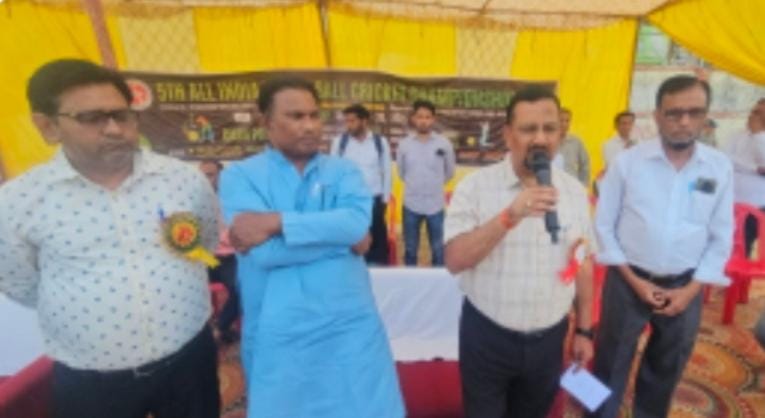
    Anshul Singh, Vice Chairman, Roorkee Development Authority inaugurated the championship.

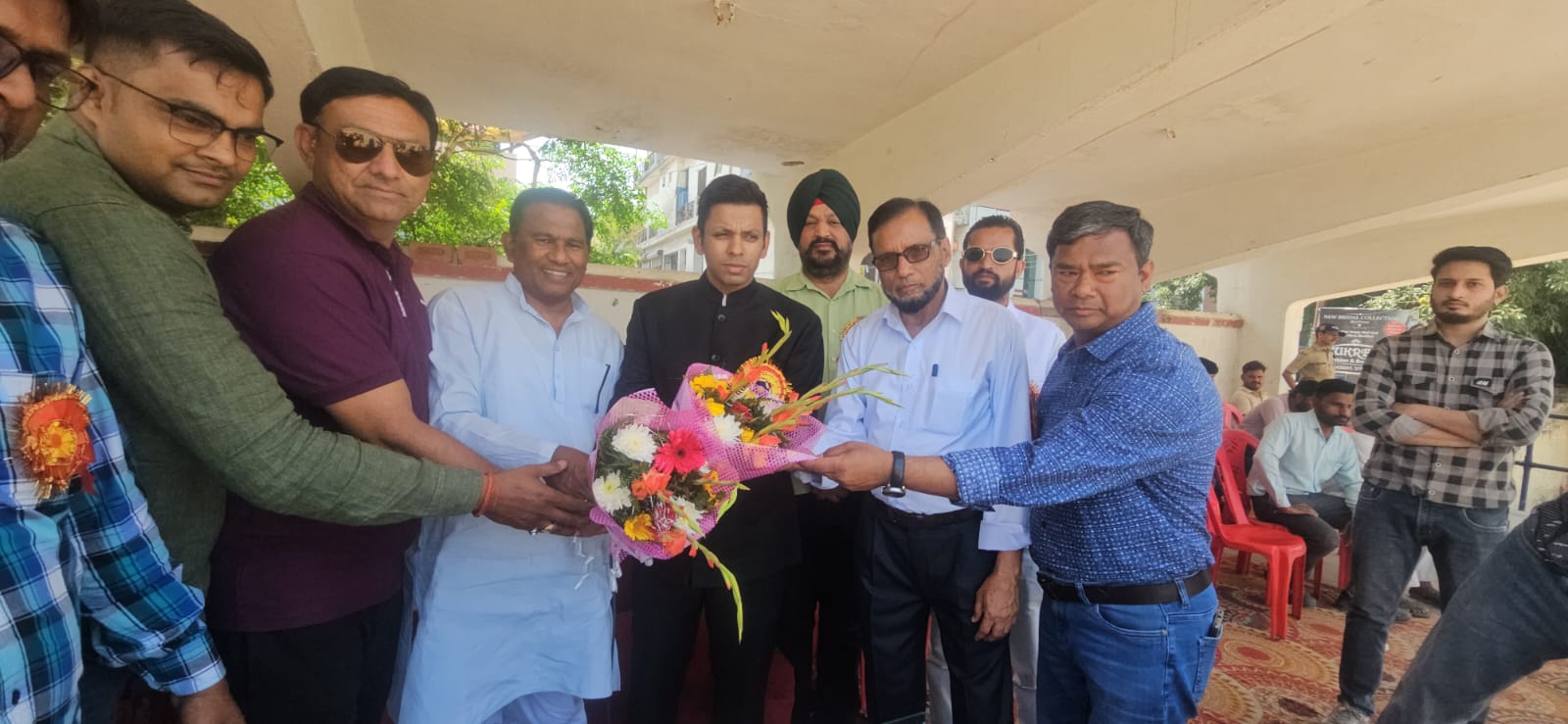
    The fifth All India Tennis Ball Cricket Championship organized by Uttarakhand Tennis Ball Cricket Association started today at Nehru Stadium. Anshul Singh, Vice Chairman, Roorkee Development Authority, inaugurated the championship as the chief guest. Addressing the inaugural ceremony, he gave sports tips to the young players. He said that regular practice and discipline along with concentration take players to their destination. There are many opportunities in life for young players. The ability to make the right decision at the right time helps in moving forward.

    Uttarakhand Tennis Ball Cricket Association President Deshraj Karnwal welcomed the Chief Guest and said that as diligent and passionate as an administrative officer, Anshul Singh also contributes his full contribution as a player. Today, I am happy that he has joined this event as a player among the players. Chief Guest Anshul Singh inaugurated the championship by batting and bowling. The program was conducted by Amjad Usmani. On this occasion, Uttarakhand Secretary Imran Sadiq, Delhi Secretary Usman Siddiqui, PS Rawat, Laxmikant Patel, Aslam Warsi, Sonu Badungar, Anees Gaur, Manish Saini, Kamal Chawla, Arsalan, Bharat Bhushan, Anil Bhaskar, Shakeel Ahmed etc. were present. In the inaugural match of the championship, Uttarakhand registered a sensational win over Pondicherry by one run in Pool A.

  • 5th All India Tennis Ball Cricket Championship begins in Roorkee today 

    5th All India Tennis Ball Cricket Championship begins in Roorkee today 

    5th All India Tennis Ball Cricket Championship begins in Roorkee today 


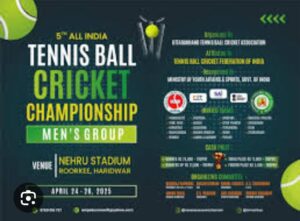
    The fifth All India Tennis Ball Cricket Championship is being organized by the Uttarakhand Tennis Ball Cricket Association from 24 to 26 April 2025 at Nehru Stadium Roorkee. Twenty men’s teams including Pondicherry, Karnataka, Maharashtra, Gujarat, Haryana, Himachal Pradesh, Uttar Pradesh, Purvanchal, Mumbai, Rajasthan, Uttarakhand will participate in the tournament. The championship will be inaugurated by Haridwar-Roorkee Development Authority Vice Chairman Mr. Anshul Singh on April 24 at 10 am and prize distribution will be done by Mr. Karmendra Singh, District Officer, Haridwar on April 26 at 4 pm. Uttarakhand Tennis Ball Cricket Association President Deshraj Karnwal said that the winning team will be given a cash prize of Rs 25,000, the runner-up will be given Rs 21,000, the third place will be Rs 11,000 and the fourth place team will be given Rs 5,000. Apart from this, the best bowler and bets man of the championship will also be awarded.

  • ’Doctors play an important role in the upliftment of humanity: JP Nadda’

    ’Doctors play an important role in the upliftment of humanity: JP Nadda’

    ’Doctors play an important role in the upliftment of humanity: JP Nadda’

    ’Degrees were awarded to 434 students in the convocation ceremony’

    ’Health services have expanded rapidly in the country in the last 10 years – Chief Minister’


    Amaanullah Usmani

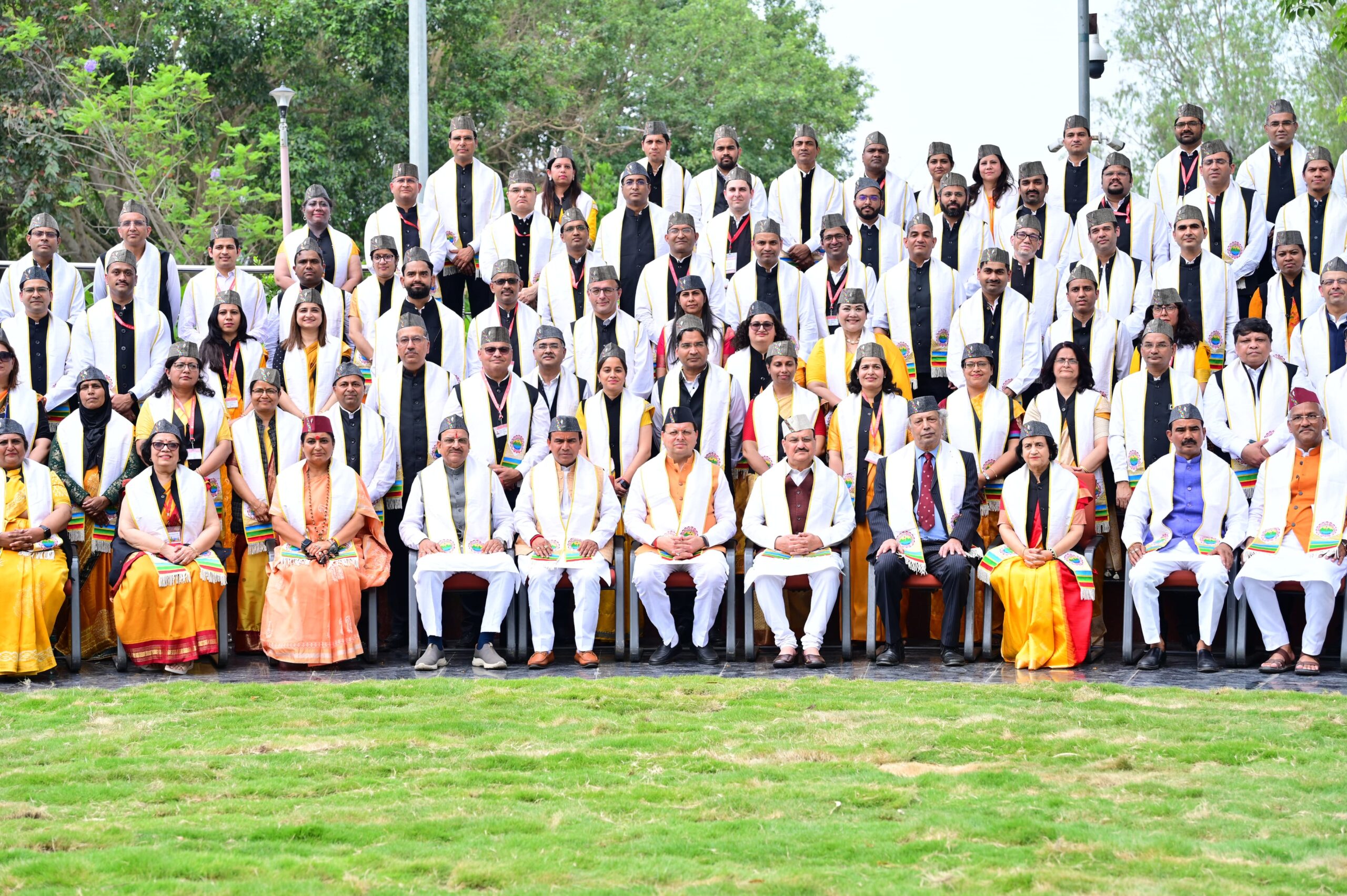
    Rishikesh – Union Minister for Health and Family Welfare Jagat Prakash Nadda today presided over the fifth convocation of AIIMS Rishikesh. Addressing the gathering, JP Nadda said that “the convocation is a special occasion that recognizes the achievements of the students.” He said that providing affordable and quality healthcare to every poor person in the country is the priority of the Central Government.

    JP Nadda highlighted the achievements of AIIMS institutions across the country in medical education and services and said that “till the beginning of this century, there was only one AIIMS in India, whereas today, 22 AIIMS are operational in the country.” He said that AIIMS Rishikesh has created a unique identity among healthcare institutions due to its excellent services. He reiterated the commitment of the Central Government to provide world-class healthcare to the citizens. He said, “The government is focused on providing healthcare that is not only curative but also preventive, palliative and rehabilitative.”

    Highlighting the achievements of the Central Government in the health sector, Mr Nadda said, “Today, 1.75 lakh Ayushman Arogya Mandirs are operational across the country providing various services related to health and wellness. There has been a 101 per cent increase in medical colleges in the last 10 years, and now there are a total of 780 medical colleges across the country. There has been a 130 per cent increase in MBBS seats and 138 per cent increase in PG seats.” He further said, “Similarly, to meet the needs of paramedics, 157 nursing colleges are also being set up, which will be co-located with medical colleges.”

    The Union Health Minister lauded AIIMS Rishikesh, saying that the institute saved 309 critical patients by effectively using helicopter and drone services and became one of the best institutions in the country in providing service in remote and underserved areas of the state by using digital services like telemedicine (e-Sanjeevani). Concluding his address, Shri Nadda encouraged the students to do their work with compassion, honesty and dedication without any selfishness. Emphasizing that the government spends Rs 30-35 lakh on each MBBS student, the Union Minister urged the new doctors to take up more responsibilities at the beginning of their professional career. During the event, Shri Nadda inaugurated several healthcare facilities to enhance the medical services of the institute, including Integrated Medicine in the Department of AYUSH, PET Scan Machine in the Department of Nuclear Medicine, PACS Facility in the Department of Radiology and Advanced Pediatrics in Pediatric Care.

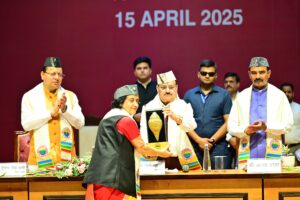
    During the ceremony, Mr Nadda conferred gold medals and degrees to 10 medical students of MBBS, DM, MSc Nursing, BSc Nursing and BSc Allied Health Sciences programmes. A total of 434 students were awarded degrees at the convocation, including 98 MBBS students, 95 BSc (Hons) Nursing students, 54 BSc Allied Health Sciences students, 109 MD/MS/MDS students, 17 MSc Nursing students, 1 MSc Medical Allied student, 12 Master of Public Health students, 40 DM/MCh students and 8 PhD students.

    Welcoming Union Health and Family Welfare Minister and Bharatiya Janata Party National President Jagat Prakash Nadda, Chief Minister Pushkar Singh Dhami said that many works have been done towards strengthening the health sector of the country. In the last 10 years, health services have expanded rapidly in the country. Be it the establishment of AIIMS across the country, implementation of National Health Policy-2017, Ayushman Bharat Yojana or increase in seats in medical colleges, India’s health system has been given a new height through many schemes and policies. He thanked the Union Health Minister for his continuous support for the development of health services in Uttarakhand.

    The Chief Minister said that the inauguration of Picture Archiving and Communication System and Center for Advanced Pediatrics in Trauma Center at AIIMS Rishikesh will further strengthen the health services. He said that today in AIIMS Rishikesh, along with the system of state-of-the-art medical examination and treatment, various types of diseases are being treated by a team of specialist doctors. Services like robotic surgery, knee transplant facility, advanced neurosurgery and radiation therapy are also being operated in this institute. Prime Minister Shri Narendra Modi gave a new flight to the health sector of Uttarakhand by launching Heli Ambulance here. Under the guidance of the Prime Minister, the construction work of the satellite center of AIIMS Rishikesh in Udham Singh Nagar district is also going on at a fast pace.

    *’More than 05 thousand gram sabhas of Uttarakhand have become TB free.’*

    The Chief Minister said that with the guidance and support of Prime Minister Shri Narendra Modi, the state government is working rapidly to strengthen the health sector. A target was set to build a medical college in every district. Efforts have been made to provide cheap medicines and necessary treatment to the public through telemedicine network and Jan Aushadhi Kendras. 207 pathological test facilities are also being provided free of cost in government hospitals. So far, free pathological tests of 29 lakh people have been done. More than 14 lakh people have been treated in the state under the Ayushman Bharat scheme. He said that more than 05 thousand gram sabhas of Uttarakhand have become TB free. New hospitals will also be operated in view of the Chardham Yatra.

  • Lokayukta Deputy Secretary Mohammad Arif appointed as new Executive Officer of State Haj Committee

    Lokayukta Deputy Secretary Mohammad Arif appointed as new Executive Officer of State Haj Committee

    Lokayukta Deputy Secretary Mohammad Arif appointed as new Executive Officer of State Haj Committee

    Dehradun (Uttarakhand) [India], Aug 1 (ANI): Uttarakhand Minority Welfare Department has removed Mau Misham from his position as the Executive Officer of the Haj Committee and has been transferred to the post of Deputy Secretary in the Haj Committee. The Haj program for the year 2025 has started in the state, on April 29, the first flight of Uttarakhand Haj pilgrims will leave for Saudi on April 29. Mohammad Arif, the new executive officer of the Haj Committee, is responsible for the proper completion of Haj works.

  • Former MLA Deshraj Karnawal got the responsibility of Social Welfare Schemes and Monitoring Committee Vice President

    Former MLA Deshraj Karnawal got the responsibility of Social Welfare Schemes and Monitoring Committee Vice President

    Former MLA Deshraj Karnawal got the responsibility of Social Welfare Schemes and Monitoring Committee Vice President

    CM Dhami distributed responsibilities to 18 more leaders*


    Amaanullah Usmani

    Dehradun – Chief Minister Pushkar Singh Dhami has distributed the responsibilities of 18 more party workers. This is the second list of responsibilities. BJP State Vice President and former MLA Deshraj Karnawal has been made Vice President, Social Welfare Schemes and Monitoring Committee

    The state government believes that the departmental responsibilities assigned will expedite the implementation of departmental public welfare schemes in the state and will also help in their effective monitoring. Director General of Information Banshidhar Tiwari gave information in this regard. Who was given the responsibility

    Balveer Ghuniyal, Vice President, Herbal Advisory Committee

    Surendra Mogha, Vice President, Uttarakhand Animal Welfare Board

    Bhuwan Vikram Dabral, Vice President, Herbal Advisory Committee

    Subhash Barthwal, Vice President, State Formation Movement Honor Council

    Puneet Mittal, Vice President, Urban Environment Protection Council

    Girish Dobhal, Vice President, State Silent Council

    Geetaram Gaud, Vice President, Uttarakhand Tribal Advisory Council

    Dr. Jaipal, Vice President, Uttarakhand State Higher Education Promotion Committee

    Deshraj Karnawal, Vice President, Social Welfare Schemes and Monitoring Committee

    Ajit Chaudhary, Vice President, Uttarakhand State Farmers Commission

    Pratap Singh Panwar, Vice President, State Medicinal Plant Board

    Jagat Singh Chauhan, Vice President, State Level Minor Irrigation Advisory Committee

    Geeta Rawat, Chairperson, State Level Vigilance Committee

    Shankar Koranga, Vice President, State Level Watershed Council

    Maheshwar Singh Mahara, Vice President, Tea Development Advisory Council

    Sardar Manjit Singh, Co-Chairman, State Level Sugarcane Development Advisory Committee

    Naveen Verma, Vice President, Senior Citizens Welfare Council

    Ashok Nabyal, Vice President, Uttarakhand Tribal Advisory Council

  • Print media’s authenticity still remains: Ritu Bhushan Khanduri

    Print media’s authenticity still remains: Ritu Bhushan Khanduri

    Interaction between media and journalists is dangerous: Yogesh Bhatt Information Commissioner

    Oath taking ceremony of Devbhoomi Patrakar Union concluded


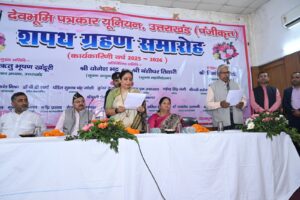
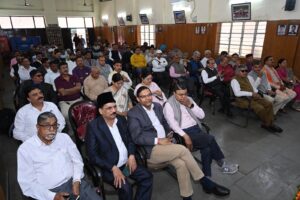
    Dehradun (Amaanullah Usmani) Assembly Speaker Mrs. Ritu Bhushan Khanduri, speaking as the chief guest at the oath taking ceremony of Devbhoomi Patrakar Union (registered), said that along with the three pillars of democracy, the responsibilities of the media remain important even today. Its responsibilities are extremely important. Despite the changing form of media, the authenticity of print media still remains intact.

    Addressing the journalists participating in the oath taking and felicitation ceremony organized at the local Uttaranchal Press Club, Mrs. Ritu Bhushan Khanduri said that the role of journalism today is capable of giving the right direction to the country and society.

    At the same time, journalist unions can play an important role in dealing with adverse circumstances and in the interest of journalists. Press is the mirror of society. On one hand, while the press should criticize, it should also highlight the good things.

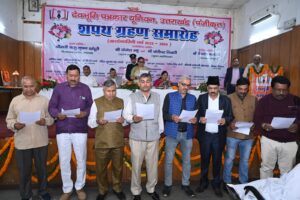
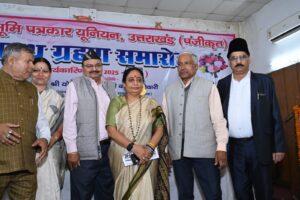
    On this occasion, the Speaker of the Assembly administered the oath of office and secrecy to the newly elected state executive and district executive of the Devbhoomi Patrakar Union.

    Information Commissioner Yogesh Bhatt, who was present as a special guest, said that today there is a confusion between media and journalists. Whereas the work of both is different. Today journalists have started calling themselves media. Today, due to the constantly changing form of the press, the existence of journalists is getting endangered. Today everyone has become a journalist. Due to which the credibility of the press is becoming doubtful in the minds of the common people. He said that journalist organizations and unions should be ready for the interests of the journalist colleagues who are doing journalism in adverse circumstances.

    Apart from these, Minister of State Vinod Uniyal, Sarojini Semwal, Arun Sharma, DD Mittal, Pandit Vijendra Kumar Mamagai, Dr. MR Saklani etc. also expressed their views. The program started with lighting a lamp and garlanding the picture of Maa Saraswati. The special guest of the program, Director General of Information Shri Banshidhar Tiwari Ji, who arrived a little late, discussed the problems of the journalists present and assured them of their solution, saying that journalists can meet me with their problems anytime. I will always try to solve them.

    The program was presided over by the State President of the Union Anil Verma and conducted by the State General Secretary Dr. V.D. Sharma. Hundreds of respected journalists, poets, litterateurs, social workers of the state and the city were present in the program.

  • These policemen are performing their duty of uniform and Ramzan simultaneously, know about them

    These policemen are performing their duty of uniform and Ramzan simultaneously, know about them

    These policemen are performing their duty of uniform and Ramzan simultaneously, know about them


    Luxor (Farman Khan) In the holy month of Ramzan, people of Muslim community are busy in the worship of Allah. Working people are performing their duty of both job and Ramzan with full dedication. There are many such departments where the posted people keep fast by enduring hunger and thirst throughout the day.If we talk about policemen, their responsibilities are somewhat different. Because they have to run on the roads all day along with their office duties. In the scorching heat, they definitely feel thirsty while clearing vehicles stuck in traffic jams at crossroads, but they fulfill both the responsibilities with patience and smile. Whether it is catching criminals or going out to raid. Despite facing these difficult situations, they do not turn away from fasting. Actually, it is the effect of prayers that they never feel any problem while doing duty in the month of Ramzan. Whether they get full rest at night or not. Never left the fast

    Many people have been working in the police department for seven to twenty years. While keeping the fast, they also had to run a lot. Despite this, the policemen did not leave a single fast.

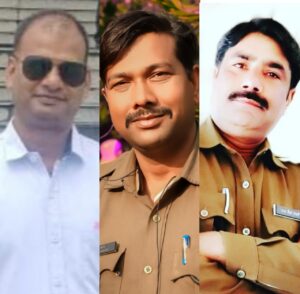
    *Shamsher Khan runs from the police station to the road*

    Shamsher Khan, who joined the police department in the year 2002, goes from the police station, the crime scene to the court with the criminals. Despite running around, he looks completely fit.

    *Riyaz Ali is seen everywhere*

    Riyaz Ali, posted in Laksar police station, is always serious about his duty. Riyaz Ali, who has been serving the people in the police service for 23 years, is one of those policemen who reach the spot immediately on any information. He takes action against drug smugglers throughout the day but never feels tired during Ramzan.

    Qurban Ali is the best in reading and writing

    Qurban Ali, posted as Head Constable in Intelligence Unit Laksar, has been serving the department for 22 years. He keeps fasts every year. Along with doing other departmental works of writing or reading, he is an expert in keeping a close eye on every activity of the area.