Category: Technology

  • India’s Emerging Tech Future Showcased at IIT Delhi’s VisionAI 2025 Conference

    India’s Emerging Tech Future Showcased at IIT Delhi’s VisionAI 2025 Conference

    India’s Emerging Tech Future Showcased at IIT Delhi’s VisionAI 2025 Conference

    Report by: Syed Taskin Ahmed

    Byline: TechTalk India | Delhi Bureau | October 9, 2025

    New Delhi: The Emerging Tech Conference 2025, hosted by VisionAI India at the Indian Institute of Technology (IIT) Delhi, brought together innovators, researchers, and policymakers to explore the future of Artificial Intelligence (AI), Quantum Computing, Blockchain, and Cybersecurity in India.

    The event, held on October 5, 2025, served as a platform for discussing the intersection of technology, ethics, and governance as India continues its digital transformation journey.

    > “India’s leadership in emerging technologies depends on how we balance innovation with inclusivity and ethics,” said one of the keynote speakers during the opening session.

    The conference featured multiple expert panels on AI Governance, Quantum Innovation, Blockchain Beyond Cryptocurrency, and Cyber Threat Intelligence, emphasizing responsible and transparent use of advanced technologies.

    VisionAI Spark Hackathon 2025 — Young Minds, Big Ideas

    Alongside the main conference, VisionAI India organized the Spark Hackathon 2025, which attracted students and startups from across the country. Participants developed innovative projects and prototypes across several tracks, including:

    AI for Social Good

    AI in EdTech

    AI-based Agricultural Health (Plant Disease Detection)

    Fake News Detection and Credibility Scoring

    The hackathon encouraged real-world application of AI to solve societal problems, highlighting the growing role of young Indian talent in shaping ethical technology solutions.

    A Call for Ethical and Inclusive Innovation

    Experts at the conference reiterated the need for a policy-driven and ethical approach to emerging tech adoption in India. Discussions also addressed global AI competitiveness and India’s position as a hub for responsible innovation.

    The conference concluded with a call to integrate AI education, cyber awareness, and quantum research within national policy frameworks, ensuring that India remains a leader in the rapidly evolving digital landscape.


  • Indian IT Sector Faces Turbulence Amid AI Disruption and Policy Uncertainty

    Indian IT Sector Faces Turbulence Amid AI Disruption and Policy Uncertainty

    Indian IT Sector Faces Turbulence Amid AI Disruption and Policy Uncertainty

    Report by: Syed Taskin Ahmed

    New Delhi, October 6, 2025 — India’s $250-billion IT industry, once the global symbol of outsourcing efficiency, is facing a period of slowdown as global clients delay contract renewals, reshapes roles, and U.S. visa policy changes threaten cost structures.automation

    Contract Renewals Hit a Wall

    According to reports from The Economic Times, several large Indian IT firms are witnessing delayed or stalled contract renewals. Clients across North America and Europe are re-evaluating their technology budgets amid macroeconomic uncertainty and the rapid adoption of AI-driven business models.

    Where contract cycles once closed within 60 days, many are now extending to 90–150 days, affecting quarterly revenue visibility for giants like TCS, Infosys, and Wipro.

    > “AI disruption has created both hesitation and opportunity,” said an industry insider. “Clients want to invest in transformation but are unsure which services will remain relevant in the AI era.”

    AI and Automation Reshape Job Landscape

    Artificial Intelligence is increasingly performing tasks once handled by mid-level engineers — such as software testing, maintenance, and data support. Analysts predict that up to 20–25% of low-skill IT roles could be automated within the next two years.

    TCS has already reduced its workforce by roughly 12,000 employees (about 2%), primarily in middle management and legacy service areas.

    Industry experts, however, believe the transition could lead to higher-value opportunities. “AI will displace some jobs but also create new roles in data engineering, cloud automation, and cybersecurity,” said a senior HR consultant.

    Visa Policy Shock Adds to Woes

    The U.S. government’s proposed H-1B visa fee hike to nearly $100,000 per application has sent shockwaves through the Indian IT community. While renewals remain unaffected for now, new applications could become prohibitively expensive for firms relying on onsite projects in the U.S.

    NASSCOM, India’s IT industry association, has warned that this could cost Indian tech firms between $150–550 million in additional immigration expenses annually, pushing companies to adopt more offshore and nearshore delivery models.

    Margins Under Pressure

    The combined effect of delayed deals, higher visa fees, and increased competition has started to compress operating margins. To offset costs, companies are shifting work back to India or Southeast Asia and exploring automation-led efficiency programs.

    > “The old outsourcing model is breaking down,” said technology analyst Ravi Mahajan. “The future lies in AI-driven managed services, not just manpower supply.”

    The Road Ahead: Reskilling and Reinvention

    As the industry navigates this transition, reskilling has become the new mantra. IT majors are investing heavily in training employees in generative AI, cloud computing, data science, and cybersecurity.

    At the same time, firms are expanding into new markets beyond the U.S., targeting Europe, the Middle East, and emerging Asian economies to reduce dependency on North American clients.

    Despite near-term headwinds, analysts remain cautiously optimistic. India’s vast talent pool and expanding AI infrastructure could position the country as a global innovation hub — if the sector can adapt quickly enough.

    Headline: AI Disruption, US Visa Hike, and Slow Deals: Indian IT Faces Its Biggest Test in a Decade

    Byline: Techtalk India | Hindi Tech Desk | October 6, 2025

  • BSNL to Upgrade Its Towers to 5G Within 6–8 Months, Says Minister Scindia

    BSNL to Upgrade Its Towers to 5G Within 6–8 Months, Says Minister Scindia

    BSNL to Upgrade Its Towers to 5G Within 6–8 Months, Says Minister Scindia

    Report by: Syed Taskin Ahmed 

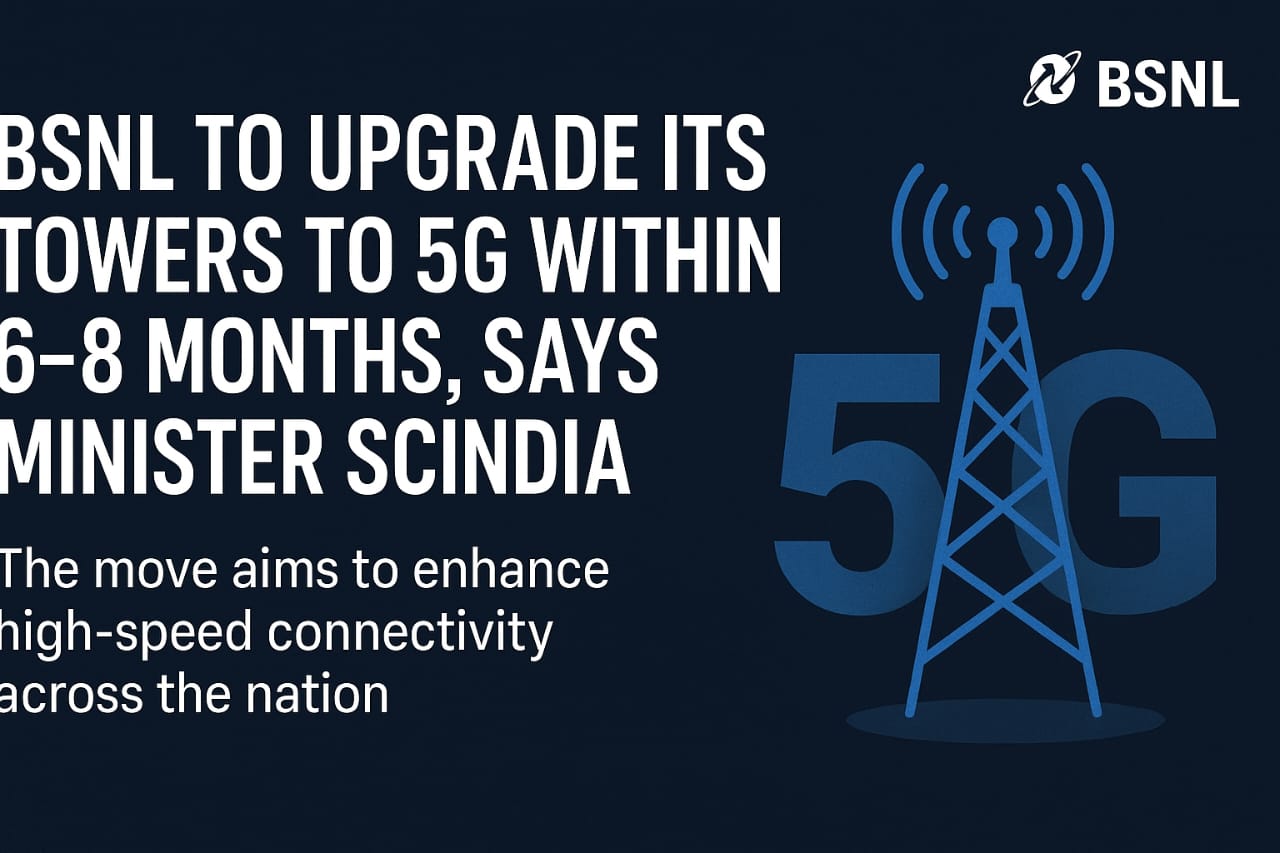
    New Delhi, October 5, 2025 — In a major push toward advancing India’s telecom infrastructure, Bharat Sanchar Nigam Limited (BSNL) is set to upgrade its existing 4G network towers to 5G within the next six to eight months, according to Union Minister Jyotiraditya Scindia.

    The move marks a significant milestone in India’s ongoing digital transformation and aims to enhance high-speed connectivity across the nation. Speaking at a telecom industry event, Scindia stated that the upgrade will help BSNL “join the global 5G club” and provide better network quality to both urban and rural users.

    > “India is rapidly pioneering in communications, technology, and artificial intelligence. With over 944 million broadband users, the country is witnessing a digital revolution, and BSNL’s 5G initiative will further strengthen this progress,” Scindia said.

    The public sector telecom giant has been working to modernize its infrastructure as part of the government’s Digital India initiative. The 5G upgrade will not only improve data speeds but also play a crucial role in enabling new-age technologies such as IoT (Internet of Things), AI-driven services, and smart city connectivity.

    Industry experts believe that BSNL’s transition to 5G will be critical for bridging the digital divide, especially in remote and under-served regions. Once completed, BSNL is expected to compete more effectively with private telecom players already offering 5G services across major cities.

  • Paytm Stages Strong Comeback with Profit Turnaround and Growth Momentum

    Paytm Stages Strong Comeback with Profit Turnaround and Growth Momentum

    Paytm Stages Strong Comeback with Profit Turnaround and Growth Momentum

    Report by: Syed Taskin Ahmed 

    New Delhi, October 3, 2025 — Fintech giant Paytm is making a strong comeback after years of losses and regulatory hurdles, as the company reported a net profit of ₹122.5 crore in Q1 FY26, marking a major turnaround from previous losses.

    According to its latest earnings report, Paytm’s operating revenue grew 28% year-on-year, driven by strong growth in payments services and financial services distribution. The company also emphasized that tighter cost controls, including a reduction in employee expenses and stock-based compensation, have significantly boosted profitability.

    Focus on Profitable Growth

    Payments services revenue rose 18% YoY, while loan distribution and financial services nearly doubled, with repeat borrowers driving strong disbursement volumes. Despite intense competition from PhonePe and Google Pay, Paytm has managed to maintain a robust merchant base and user engagement.

    Cost Cutting and Efficiency

    In FY25, Paytm reduced its workforce by around 4,600 employees as part of a wider efficiency drive. The company has also cut down on indirect expenses, improving margins and cash flow.

    Regulatory Challenges Remain

    However, challenges remain. The Reserve Bank of India (RBI) had earlier imposed restrictions on Paytm Payments Bank for compliance violations, and the Enforcement Directorate has issued notices over alleged foreign exchange rule breaches. Additionally, Paytm’s wallet user base has seen a sharp decline, with the company now nudging users to reactivate inactive accounts.

    Analysts’ Outlook

    Market analysts say Paytm’s return to profitability marks a crucial step in its turnaround journey. With strong liquidity, consistent revenue growth, and renewed focus on compliance, Paytm appears to be on track for a sustainable revival.

    “While regulatory scrutiny and competition remain key risks, Paytm’s financial rebound signals a new phase of disciplined growth,” one analyst noted.

  • Apple Expands iPhone Supply Chain in India, Creates Over 350,000 Jobs

    Apple Expands iPhone Supply Chain in India, Creates Over 350,000 Jobs

    Apple Expands iPhone Supply Chain in India, Creates Over 350,000 Jobs

    Report by: Syed Taskin Ahmed 

    New Delhi, September 30, 2025 — Apple has significantly expanded its iPhone supply chain operations in India, strengthening the country’s position as a global manufacturing hub and reducing reliance on China.

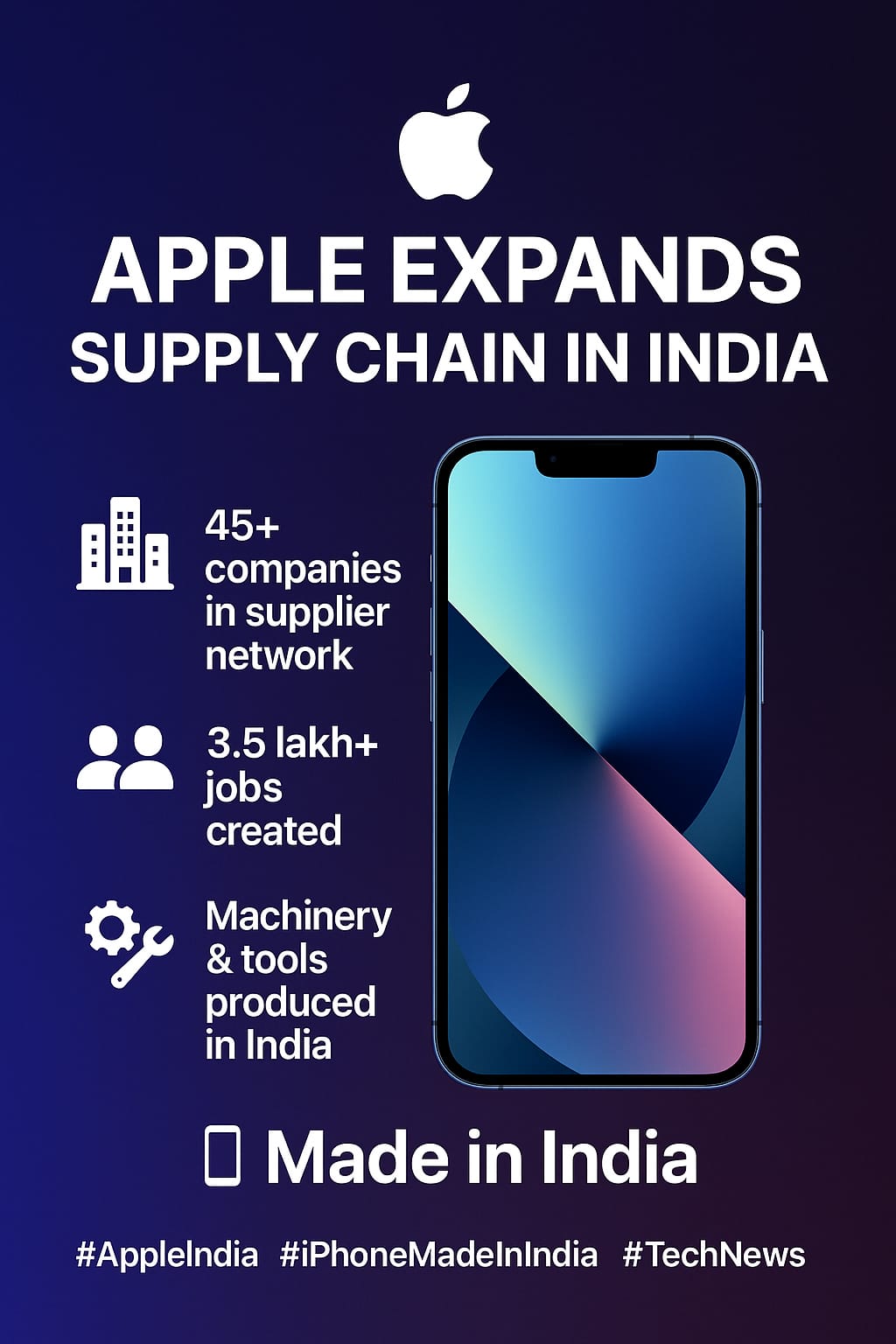
    According to industry reports, nearly one in every five iPhones is now produced in India. Apple has onboarded more than 45 suppliers into its local network, including component manufacturers, sub-assembly providers, and machinery suppliers.

    The expansion has had a major impact on employment, generating more than 350,000 jobs, of which around 120,000 are direct positions in iPhone-related operations. The move is also driving the production of manufacturing tools and machinery within India, a step that goes beyond component assembly and signals deeper industrial integration.

    In a landmark development, Tata Electronics acquired a 60% stake in Pegatron’s Indian iPhone plant, further boosting domestic participation in Apple’s global supply chain.

    Analysts view Apple’s shift as part of a long-term strategy to diversify its production base, amid global supply chain disruptions and geopolitical uncertainties surrounding China.

    This expansion not only benefits Apple by de-risking its supply chain but also aligns with India’s “Make in India” initiative, strengthening the country’s appeal as a manufacturing powerhouse for the world’s top technology brands

  • Hero Splendor Electric in the Works: What We Know So Far

    Hero Splendor Electric in the Works: What We Know So Far

    Hero Splendor Electric in the Works: What We Know So Far

    Report by: Syed Taskin Ahmed 

    New Delhi: India’s largest two-wheeler manufacturer, Hero MotoCorp, is developing an electric version of its iconic Splendor motorcycle. With Splendor already being the most successful commuter bike in the country, the move towards electrification has generated massive anticipation. While official details are still awaited, industry insiders and auto portals have provided a glimpse into what could be expected.

    —

    Development Timeline

    According to credible reports, the Splendor Electric is currently under development and could be launched around 2027. The project is reportedly codenamed under Hero’s EV strategy and aims to offer a reliable, affordable, and mass-market electric motorcycle.

    —

    Expected Specifications (Speculative)

    Range: Industry reports suggest a realistic range of 100–240 km per charge, depending on riding conditions and battery pack options.

    Top Speed: The commuter bike is expected to achieve 90–110 km/h, though this figure remains speculative.

    Price Range: Auto portals estimate the Splendor Electric to be priced between ₹90,000 and ₹1 lakh, aligning with Hero’s strategy of keeping its commuter motorcycles accessible to the masses.

    Design: The electric version is likely to retain the classic commuter design of the Splendor while incorporating modern EV elements such as a battery pack, motor, and digital console.

    —

    Rumors and Misleading Claims

    Recently, several social media posts claimed that the upcoming Hero Splendor Electric will deliver a 400 km range with a top speed of 110 km/h, priced at just ₹35,999.

    This claim, however, is inaccurate and misleading. Experts point out that:

    A 400 km single-charge range would require a very large and expensive battery, which is unrealistic for a budget commuter motorcycle.

    A price point of ₹35,999 is closer to third-party electric conversion kits available for petrol Splendor motorcycles, not an entirely new EV from Hero MotoCorp.

    Official reports from Hero and leading auto publications instead place the price estimate around ₹90,000–₹1 lakh, which is far more plausible.

    —

    Why Splendor Electric Matters

    The Splendor has been the backbone of India’s commuter segment for decades, selling in millions due to its reliability, mileage, and affordability. An electric version would not only boost India’s EV adoption but also provide a trusted entry point for rural and urban riders shifting to electric mobility.

    Moreover, with the government pushing for faster EV adoption through subsidies and green policies, Hero Splendor Electric could play a significant role in making electric motorcycles mainstream.

    —

    Conclusion

    While the excitement is high, buyers and enthusiasts must wait for Hero MotoCorp’s official announcement regarding the Splendor Electric. Until then, most details circulating online remain speculative. What’s certain, however, is that once launched, the Hero Splendor Electric could redefine the commuter EV segment in India.

  • India Accelerates Semiconductor Ambition with ₹1.6 Lakh Crore Investments

    India Accelerates Semiconductor Ambition with ₹1.6 Lakh Crore Investments

    India Accelerates Semiconductor Ambition with ₹1.6 Lakh Crore Investments

    Report by: Syed Taskin Ahmed

    New Delhi, September 29, 2025 — India is rapidly scaling up its semiconductor ecosystem, with the government approving nearly 10 major chip manufacturing and assembly projects across the country. The total committed investment now stands at approximately ₹1.6 lakh crore, marking one of the most ambitious technology pushes in India’s history.

    The projects span multiple states and include semiconductor fabrication units, ATMP (Assembly, Testing, Marking and Packaging) facilities, and design innovation hubs. This initiative is part of India’s larger strategy to reduce dependency on foreign chip supplies and establish itself as a critical player in the global semiconductor value chain.

    Industry experts highlight that the move comes at a time when the global semiconductor market is projected to cross $1 trillion by 2030. With rising demand for chips in smartphones, electric vehicles, AI, and 5G/6G technologies, India aims to capture a significant share of this growing market.

    The government has also been actively engaging with global tech giants and chipmakers, offering production-linked incentives (PLI) and infrastructure support to attract investment. Officials say the long-term goal is to transform India into both a manufacturing hub and a global innovation center for semiconductors.

    If successful, this push could create thousands of high-skilled jobs, boost exports, and reduce supply chain vulnerabilities that were highlighted during the global chip shortage in recent years.

    Analysts believe India’s semiconductor ambition will also strengthen its position in strategic technologies such as defense, quantum computing, artificial intelligence, and next-generation communication networks.

  • India Shifts Towards Zoho: A Push for Homegrown Digital Solutions

    India Shifts Towards Zoho: A Push for Homegrown Digital Solutions

    India Shifts Towards Zoho: A Push for Homegrown Digital Solutions

    Report by: Syed Taskin Ahmed

    In a significant move aligned with the vision of Digital India and Atmanirbhar Bharat, Indian enterprises and institutions are increasingly shifting to Zoho, the Chennai-based SaaS giant.

    The transition comes as organizations seek secure, affordable, and locally-driven digital platforms to manage communication, collaboration, and business processes.

    Industry experts highlight several key reasons behind this shift:

    Data Security & Privacy: Zoho operates its own data centers in India, reducing concerns over foreign surveillance and ensuring tighter compliance with local data laws.

    Cost Efficiency: Compared to international competitors like Microsoft 365 and Google Workspace, Zoho offers a wide suite of tools at a fraction of the cost — making it especially attractive for startups and SMEs.

    Integrated Ecosystem: From email and CRM to finance, HR, and project management, Zoho provides an all-in-one digital workplace solution.

    Made in India Advantage: As a homegrown tech company, Zoho aligns with the government’s mission of promoting indigenous technology solutions.

    Industry insiders note that both government departments and private enterprises are actively adopting Zoho to replace foreign alternatives. This shift not only strengthens the Indian SaaS ecosystem but also signals growing trust in local technology solutions.

    With its expanding global presence and strong domestic adoption, Zoho is fast emerging as the flagbearer of India’s SaaS revolution.

  • BSNL Launches Indigenous 4G Network; Nearly 98,000 Towers Commissioned Nationwide

    BSNL Launches Indigenous 4G Network; Nearly 98,000 Towers Commissioned Nationwide

    BSNL Launches Indigenous 4G Network; Nearly 98,000 Towers Commissioned Nationwide

    Report by: Syed Taskin Ahmed

    New Delhi, September 27, 2025: In a landmark push towards self-reliance in the telecom sector, Prime Minister Narendra Modi on Saturday inaugurated Bharat Sanchar Nigam Limited’s (BSNL) fully indigenous 4G network from Jharsuguda, Odisha. The launch marks a historic milestone as India deploys a homegrown telecom stack at a national scale.

    According to officials, nearly 97,500 mobile towers have been commissioned across the country under this rollout, developed entirely through domestic innovation and collaboration. The network is built by a consortium including the Centre for Development of Telematics (C-DOT), Tejas Networks, and Tata Consultancy Services (TCS).

    Of the total, around 92,600 towers will run on BSNL’s new indigenous 4G technology stack. The initiative is expected to provide coverage to over 26,700 previously unserved villages, particularly in remote, border, and extremism-affected regions. Several towers have also been funded under the Digital Bharat Nidhi (DBN) to expand rural connectivity.

    The project, with an estimated investment of ₹37,000 crore, is designed to be software-upgradable, enabling a seamless transition to 5G in the future. In addition, many of the towers are solar-powered, supporting India’s commitment to green and sustainable infrastructure.

    Bridging the Digital Divide

    Officials said the initiative will significantly reduce India’s reliance on foreign telecom equipment while ensuring last-mile connectivity in underserved regions. “This rollout is not just about faster internet; it is about empowering villages, boosting local industries, and ensuring digital inclusion,” the Prime Minister said during the launch event.

    Industry Impact

    The indigenous 4G rollout is also expected to energize India’s telecom manufacturing ecosystem. By relying on local companies for critical infrastructure, the government aims to strengthen the “Atmanirbhar Bharat” mission while creating new opportunities for innovation, R&D, and employment.

    Challenges Ahead

    Despite the ambitious scale, experts highlight potential challenges such as timely deployment across difficult terrains, maintenance in remote areas, and competition from private telecom operators that already provide 4G and 5G services. Financial sustainability and network quality will also determine user adoption in the long run.

    With this rollout, BSNL seeks to regain its position in India’s highly competitive telecom market, while simultaneously laying the foundation for a future-ready, sovereign digital infrastructure.

  • Digital Personal Data Protection Act Comes Into Effect, Strengthening Citizens’ Data Rights in India

    Digital Personal Data Protection Act Comes Into Effect, Strengthening Citizens’ Data Rights in India

    Digital Personal Data Protection Act Comes Into Effect, Strengthening Citizens’ Data Rights in India

    Report by: Syed Taskin Ahmed 

    New Delhi: The Digital Personal Data Protection (DPDP) Act has officially come into effect, marking a major milestone in India’s digital governance framework. The legislation aims to safeguard citizens’ personal information, regulate how companies and government bodies handle data, and ensure stronger accountability in the digital ecosystem.

    The Act introduces key provisions, including mandatory user consent for data collection, strict limitations on data storage and sharing, and heavy penalties for violations. Individuals will now have the right to access, correct, or erase their personal data, while companies are required to adopt transparent practices in processing user information.

    The government has emphasized that the law will create a balance between protecting individual privacy and enabling innovation in the digital economy. Experts believe the Act will bring India closer to global data protection standards like the GDPR, while also addressing local challenges such as misuse of personal details and increasing cyber threats.

    The implementation of the DPDP Act is expected to reshape the way businesses, startups, and digital platforms operate in India, pushing them towards greater responsibility in handling sensitive user data.