Category: Technology

  • ThumbPay: India’s First Biometric UPI Payment Device Launched

    ThumbPay: India’s First Biometric UPI Payment Device Launched

    ThumbPay: India’s First Biometric UPI Payment Device Launched

    Report by: Syed Taskin Ahmed 

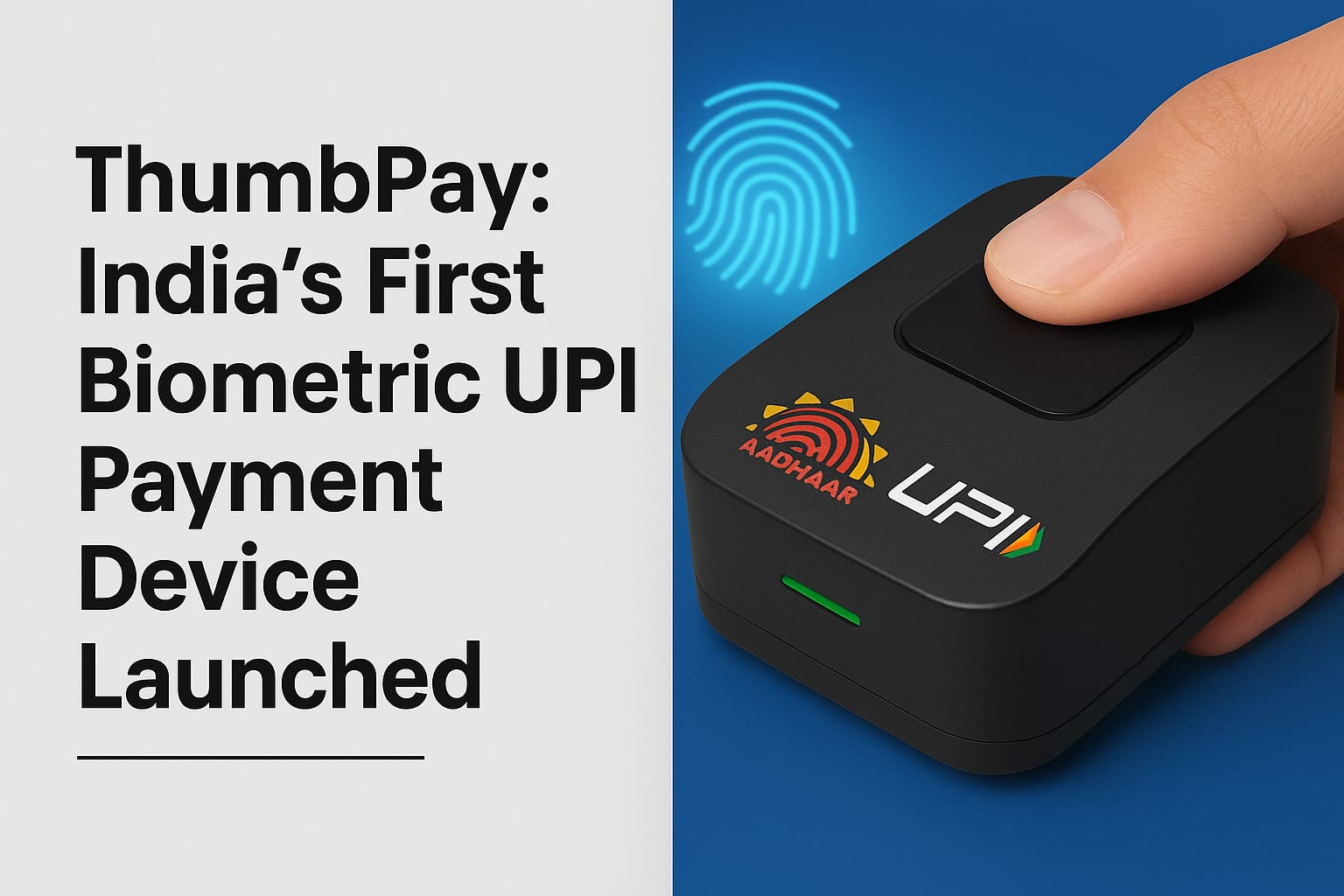
    Gurugram-based IoT startup Proxgy has unveiled ThumbPay, a first-of-its-kind biometric payment device that allows users to make UPI transactions using just their thumb impression.

    The device leverages Aadhaar-enabled biometric authentication and links it directly with the Unified Payments Interface (UPI), eliminating the need for smartphones, QR codes, debit cards, or physical wallets.

    Key Highlights of ThumbPay

    Seamless payments: Users simply place their thumb on the device to complete a transaction.

    Affordable pricing: Expected to cost under ₹2,000, making it accessible to a wide audience.

    Inclusive technology: Especially beneficial for rural populations, senior citizens, and small shopkeepers who may not use smartphones.

    Connectivity options: Designed to work even in low-network areas, with support for 4G and Wi-Fi.

    Regulatory process: Proxgy is currently working with UIDAI and NPCI for approvals before large-scale rollout.

    Industry experts believe that ThumbPay could become a game-changer for financial inclusion, bridging the digital divide by bringing secure digital payments to millions who are currently excluded from smartphone-based payment systems.

    The device has already undergone pilot testing with merchants, and early feedback has been positive. Proxgy plans a phased rollout in partnership with major banks and fintech companies.

    With the launch of ThumbPay, India takes another significant step forward in the journey of Digital India, ensuring payments are simpler, safer, and more accessible for all.

  • UIDAI to Launch Aadhaar App with Live Facial Recognition: What It Means for Users

    UIDAI to Launch Aadhaar App with Live Facial Recognition: What It Means for Users

    UIDAI to Launch Aadhaar App with Live Facial Recognition: What It Means for Users

    Report by: Syed Taskin Ahmed

    The Unique Identification Authority of India (UIDAI) is planning to roll out a new Aadhaar mobile app by December 2025, introducing a “live facial recognition” feature that allows users to update their mobile numbers without visiting an Aadhaar centre. However, certain services, such as fingerprint or iris updates, will still require physical visits to enrolment or update centres.

    How It Works

    The app will capture a live image of the user’s face via the mobile camera, which will then be matched against the photo stored in UIDAI’s biometric database. If the match is successful, the user’s authentication is completed.

    In addition to facial recognition, the app will feature QR code-based verification. Users can share their Aadhaar information digitally, either fully or in a masked format, depending on consent. This allows service providers like banks, hotels, or government offices to verify identity without handling physical documents.

    Advantages

    1. Convenience – Reduces the need to visit an Aadhaar centre, especially beneficial for people in remote areas.

    2. Speed – Mobile number and other demographic updates can be processed faster if facial recognition works smoothly.

    3. Paperless & Cardless – Physical Aadhaar cards or photocopies may no longer be needed; digital QR verification suffices.

    4. Privacy & Control – Users can control what information is shared, with consent-based masked sharing.

    5. Inclusive Biometric Option – Useful for individuals for whom fingerprints or iris scans are difficult due to age or health conditions.

    Risks & Challenges

    1. Privacy & Security – Facial biometric data is highly sensitive. Any breach or misuse could have serious consequences.

    2. False Positives/Negatives – Facial recognition can fail due to lighting, camera quality, face masks, aging, or appearance changes.

    3. Digital Divide – Not all users have smartphones or high-quality cameras; network connectivity may be an issue in rural areas.

    4. Legal & Regulatory Clarity – Data protection, consent laws, and Aadhaar regulations need to be clear and enforceable.

    5. Dependence on Database Accuracy – Outdated photos or records could prevent successful facial authentication.

    Key Questions Remaining

    Question Current Status / Clarification Needed

    How secure is facial data? UIDAI claims encryption and secure backend matching, but details on storage duration, third-party access, and retention policies are not fully disclosed.

    What if facial recognition fails? Users will need to visit Aadhaar centres for biometric updates or verification.

    Which updates can be done online? Mobile number updates are confirmed; demographic updates like address/name may require SOPs for document verification.

    Will there be a fee? Some biometric updates already have fees; online demographic updates may be free or low-cost, but final structure is not confirmed.

    App rollout timeline? December 2025 is reported for full launch.

    Legal protections? Implementation of Aadhaar Act, data privacy, and accountability mechanisms remain key questions.

    The UIDAI Aadhaar app with live facial recognition promises greater convenience, speed, and paperless verification, but privacy, security, and accessibility challenges remain. Clear communication, legal safeguards, and robust backup mechanisms will be crucial for its success.
  • 67% of Engineers Say AI Is Transforming Their Jobs; 85% Turn to Upskilling for Survival

    67% of Engineers Say AI Is Transforming Their Jobs; 85% Turn to Upskilling for Survival

    67% of Engineers Say AI Is Transforming Their Jobs; 85% Turn to Upskilling for Survival

    Report by: Syed Taskin Ahmed 

    New Delhi, Sept 14, 2025 Artificial Intelligence (AI) is rapidly reshaping India’s engineering workforce, with a majority of professionals acknowledging that their roles are undergoing dramatic changes. According to a new survey conducted by Great Learning to mark Engineers’ Day, 67% of engineers believe AI has already begun altering the nature of their jobs, while 85% are actively pursuing upskilling opportunities to remain competitive.

    AI Disruption in the Workplace

    The survey highlights that engineers across industries are witnessing a transformation in everyday responsibilities. Routine coding, data handling, and testing tasks are increasingly being automated, leaving professionals to focus on more complex, creative, and design-driven work. While this evolution is enhancing productivity, it is also fueling anxiety about job security and career stagnation.

    Surge in Demand for AI & Data Skills

    Engineers are turning towards short, targeted learning programmes to bridge the skill gap. AI & Machine Learning emerged as the most sought-after domains, followed closely by Data Science & Analytics, Cloud Computing, Cybersecurity, and Software Development. Within AI, niche skills such as Generative AI, Agentic AI, Python, and Natural Language Processing (NLP) are gaining strong traction.

    Interestingly, two-thirds of engineers prefer short courses lasting less than six months, prioritizing flexibility and speed over long-term programmes like Master’s or PhDs. Certificate programmes from Indian and global universities are seen as more practical routes for career growth.

    Changing Career Expectations

    Beyond learning, the report reveals a shifting professional mindset. 85% of engineers are either actively exploring new jobs or passively considering a switch. Key drivers include:

    Better work-life balance (33%)

    Improved job security (18%)

    Escaping career stagnation (14%)

    Higher salaries and promotions (20%)

    What Lies Ahead

    Experts believe the Indian engineering landscape is entering a phase of AI-augmented work, where human creativity and problem-solving will be complemented—not replaced—by machines. Employers, meanwhile, are expected to revamp job descriptions, performance metrics, and internal training programmes to align with this transition.

    As one industry analyst noted, “The pace of AI adoption means engineers can no longer rely on traditional degrees alone. Continuous upskilling is the only way to remain relevant in the future of work.”

  • Tesla’s Robotaxi App Launches for iPhone Users, Expands Service Amid Safety and Regulatory Scrutiny

    Tesla’s Robotaxi App Launches for iPhone Users, Expands Service Amid Safety and Regulatory Scrutiny

    Tesla’s Robotaxi App Launches for iPhone Users, Expands Service Amid Safety and Regulatory Scrutiny

    Report by: Syed Taskin Ahmed

    Austin/San Francisco, Sept 13, 2025 – Tesla has officially rolled out its much-anticipated Robotaxi app for iPhone users, marking a major step in the company’s autonomous mobility ambitions. Available on the Apple App Store, the app allows users to join a public waitlist, though ride availability remains limited to select geofenced zones.

    Limited Rollout and Expansion Plans

    The service debuted in Austin, Texas earlier this year and has since expanded to parts of the San Francisco Bay Area. Tesla has also widened the geofenced operational areas in Austin to cover more neighborhoods, with gradual scaling expected in other U.S. cities.

    Currently, the app is exclusive to iOS users, with an Android version expected at a later date. Due to a small fleet size, wait times for rides range between 12 to 40 minutes, and access is being granted in phases.

    Safety Monitors Still Onboard

    While Tesla envisions fully driverless operations, all Robotaxi rides presently include a human “safety monitor”. Depending on the trip type, the monitor may sit in the passenger seat or behind the wheel, ready to intervene if required.

    For highway routes, monitors are often positioned in the driver’s seat to ensure quick control in emergencies.

    Regulatory and Technical Challenges

    Despite the progress, Tesla faces regulatory hurdles across U.S. jurisdictions. Fully unsupervised rides are not yet permitted in most regions due to concerns over safety, liability, and insurance frameworks.

    Recent reports of occasional glitches—such as incorrect turns or unexpected halts—have also prompted investigations into the system’s reliability.

    Elon Musk’s Goal for 2025

    CEO Elon Musk has reiterated Tesla’s goal of achieving fully autonomous Robotaxi rides without safety monitors by the end of 2025, provided regulators give approval. The company also aims to expand beyond Austin and San Francisco, scaling up its fleet and introducing cross-city services.

    Mixed User Experience

    Early adopters report mixed experiences: some gained access quickly, while others were moved back to the waitlist after initial approval. Despite these setbacks, enthusiasm remains high, with Tesla fans eager to experience the future of autonomous ride-hailing.

    In summary, Tesla’s Robotaxi launch is a milestone in the race toward autonomous mobility, but widespread adoption will depend on fleet expansion, regulatory green lights, and public trust in AI-driven transport.

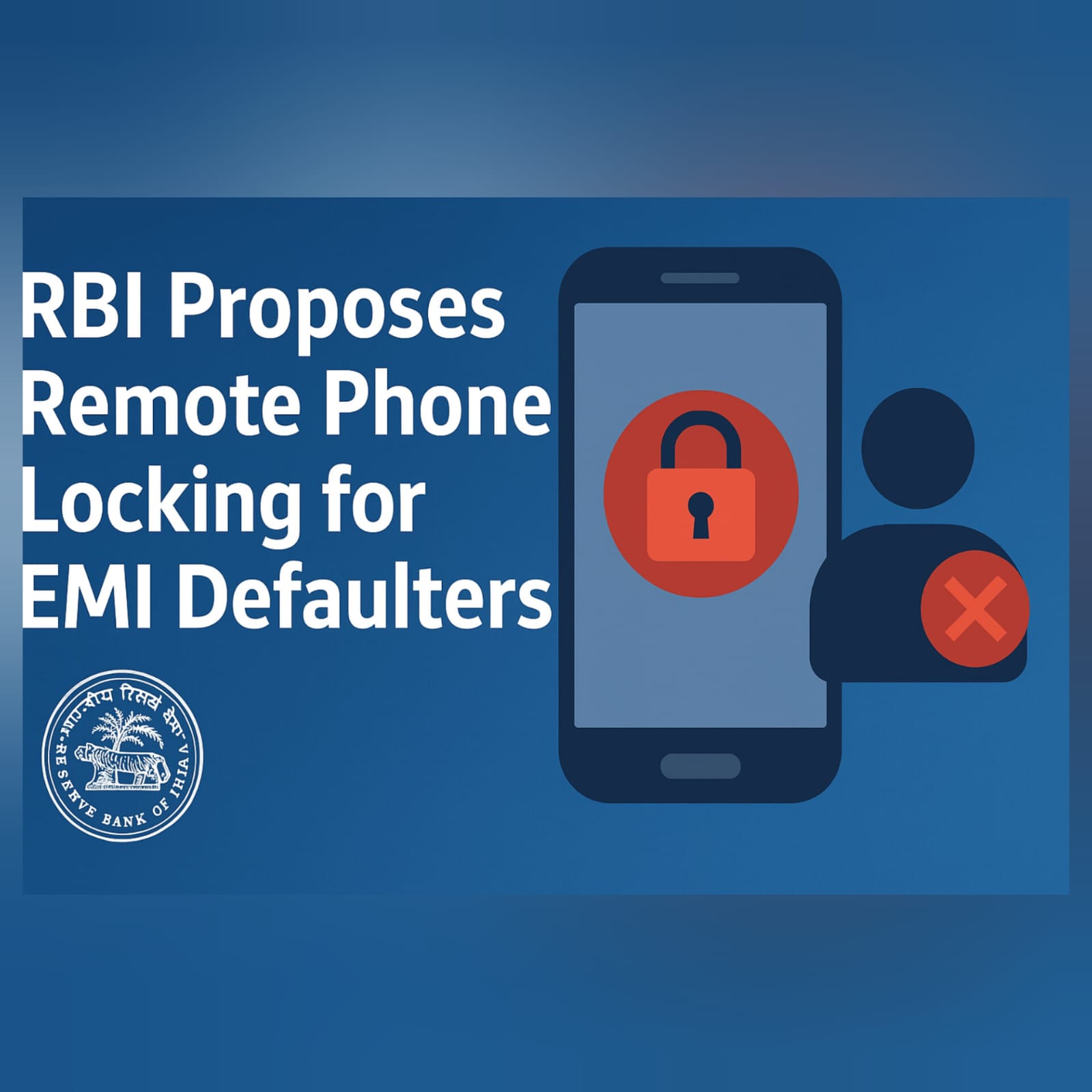
  • RBI Proposes Remote Phone Locking for EMI Defaulters

    RBI Proposes Remote Phone Locking for EMI Defaulters

    RBI Proposes Remote Phone Locking for EMI Defaulters

    Report by: Syed Taskin Ahmed

    New Delhi, September 11, 2025 – The Reserve Bank of India (RBI) is considering a controversial proposal that could allow lenders to remotely lock mobile phones purchased on credit if borrowers fail to pay their EMIs.

    According to sources, the move is aimed at curbing rising defaults in small-ticket consumer loans, particularly those under ₹1 lakh, where repayment slippages are becoming a growing concern for banks and NBFCs.

    How the system may work

    Under the proposed framework, lenders will be empowered to disable a borrower’s handset if EMIs remain unpaid. However, the RBI is also planning to introduce strict safeguards to ensure consumer rights are not compromised. These include:

    Prior consent from borrowers before activating the locking mechanism.

    Clear rules under the Fair Practices Code on how and when phones may be locked.

    Assurance that lenders will not gain access to personal data stored on the device.

    Why the move matters

    The central bank believes that enabling such technology could act as a strong deterrent against defaults, especially in the rapidly growing consumer electronics finance segment. Mobile phones are among the most commonly financed items, making them a critical point of leverage for lenders.

    Concerns raised

    While the proposal may improve loan recovery, it has raised serious concerns over consumer rights and digital access.

    A locked phone could prevent borrowers from accessing essential services such as banking apps, health tools, education, and even emergency communication.

    Experts warn of possible misuse if lenders exercise the power too aggressively or without transparency.

    Technical challenges also remain, including how the lock will be implemented — whether via third-party apps, manufacturer support, or OS-level integration.

    Current status

    The RBI is still in the consultation stage, and no final decision has been taken. Once finalized, the framework will be added to the Fair Practices Code for all regulated entities.

    Notably, some digital lenders had earlier experimented with phone-locking apps, but the RBI discouraged such practices in 2024 due to concerns over harassment and misuse. The new proposal seeks to reintroduce the system in a more regulated and transparent form.

  • China Unveils “Brain-Like AI” That Promises 100× Faster Performance

    China Unveils “Brain-Like AI” That Promises 100× Faster Performance

    China Unveils “Brain-Like AI” That Promises 100× Faster Performance

    Report by: Syed Taskin Ahmed

    Beijing, September 2025 — Researchers in China have announced the development of a new artificial intelligence system described as the world’s first “brain-like” large language model (LLM). Dubbed SpikingBrain 1.0, the system is designed to mimic certain mechanisms of the human brain, offering faster, more energy-efficient performance compared to conventional AI models.

    Inspired by the Brain

    Unlike standard AI models that require massive computational resources and power-hungry GPUs, SpikingBrain 1.0 uses spiking neural networks and a concept known as localized attention.

    In practice, this means the model only activates specific “neurons” when needed, rather than processing the entire network for every task.

    The approach reduces energy consumption, lowers training data requirements (reportedly to less than 2% of what mainstream LLMs require), and accelerates computation.

    Performance Claims

    According to the research team at the Chinese Academy of Sciences’ Institute of Automation, SpikingBrain 1.0 can run certain ultra-long sequence tasks 25 to 100 times faster than conventional AI systems.

    The model has been trained on locally developed MetaX processors, bypassing the need for Nvidia GPUs and sidestepping U.S. export restrictions.

    Applications and Potential

    If validated, the technology could transform how AI systems handle:

    Long documents and records, such as legal or scientific texts.

    Resource-constrained environments, where power efficiency is critical.

    Domestic AI ecosystems, particularly in countries seeking independence from foreign chipmakers.

    Skepticism Remains

    Experts caution that the research is still at an early stage. The work is currently available as a non-peer-reviewed paper on arXiv, and independent verification of its claims is pending.

    Critics also argue that while the system is “brain-inspired,” it does not fully replicate the complexity of human cognition.

    Why It Matters

    With AI models growing larger and more expensive to operate, energy efficiency and hardware independence are becoming urgent global priorities. If China’s “brain-like AI” delivers on its promises, it could mark a major leap in the race for next-generation AI, reducing dependence on costly chips and reshaping the competitive landscape.

  • Indian Engineers Drive eVTOL Innovation, Paving the Way for Air Taxis and Air Ambulances

    Indian Engineers Drive eVTOL Innovation, Paving the Way for Air Taxis and Air Ambulances

    Indian Engineers Drive eVTOL Innovation, Paving the Way for Air Taxis and Air Ambulances

    Report by: Syed Taskin Ahmed

    New Delhi, September 10, 2025 – India is fast emerging as a hub for advanced air mobility as homegrown engineers and startups step up efforts in developing electric vertical take-off and landing (eVTOL) aircraft. These next-generation flying vehicles, capable of operating as air taxis and air ambulances, are expected to redefine urban transportation in the coming years.

    Engineers at the Forefront

    Indian engineers are contributing significantly to the global eVTOL ecosystem, working on navigation software, flight control systems, and battery technology to ensure safe and efficient operations. Their expertise is being tapped by both domestic startups and international collaborations.

    Startups Leading the Charge

    The ePlane Company (Chennai) has secured over $20 million in funding and recently signed a $1 billion agreement to supply 788 eVTOL air ambulances across India. A certifiable prototype is expected by March 2025, with commercial rollout targeted for late 2026.

    Sarla Aviation (Bengaluru) is developing a seven-seater eVTOL prototype with a range of up to 160 km. Backed by $10 million in funding, the company plans to launch operations by 2028 and is working with Makmor to establish a network of vertiports across Indian metros.

    In a Japan–India partnership, SkyDrive has joined hands with private jet operator JetSetGo, with a pre-order of 50 aircraft. The collaboration also involves Indian engineering major Cyient, marking a major step in technology co-development.

    Infrastructure Support

    The Maharashtra government has also announced plans to build vertiports across districts to support future air taxi services. Cities like Nagpur and Pune are expected to be among the early adopters of this infrastructure.

    A Billion-Dollar Opportunity

    Industry experts believe India could become one of the largest markets for eVTOL technology, thanks to its dense urban centers, traffic congestion issues, and rising demand for faster medical evacuation services. With both domestic innovation and international collaboration, India is well-positioned to be a leader in advanced air mobility by the end of this decade.

  • X Expands Encrypted Messaging Feature ‘XChat’ to All Users

    X Expands Encrypted Messaging Feature ‘XChat’ to All Users

    X Expands Encrypted Messaging Feature ‘XChat’ to All Users

    Report by: Syed Taskin Ahmed

    In a major update aimed at strengthening user privacy, X (formerly Twitter) has rolled out its encrypted messaging feature, XChat, for all users. The feature, which was previously limited to Premium subscribers, is now available free of cost, marking a significant step in the platform’s security evolution.

    A Separate Secure Inbox

    XChat is designed as a separate opt-in inbox that does not replace the platform’s existing Direct Messaging (DM) system. Standard messages remain in the “Unencrypted” section, while users who activate XChat can send and receive end-to-end encrypted conversations.

    To activate the feature, users must opt in and set up a four-digit PIN code, which provides an additional layer of security. On desktop, the “Chat” tab appears above Message Requests, while on mobile devices it is available on the navigation bar above Communities.

    Features and Functionality

    XChat supports a wide range of features, including:

    End-to-end encryption, ensuring only sender and recipient can read the messages.

    Media sharing and group chats.

    Options to pin messages, manage read/unread status, and soon, the addition of disappearing (auto-vanishing) messages.

    An unsend option, allowing users to delete messages from both devices.

    Elon Musk described the system as using “Bitcoin-style encryption” and confirmed that it is built on Rust programming language. Experts, however, note that while the term is catchy, the encryption relies on elliptic-curve cryptography rather than Bitcoin’s blockchain model.

    Security Concerns

    Despite the upgrade, security experts point out some limitations. Unlike Signal, XChat does not support forward secrecy, which means if a user’s encryption key is compromised, past messages may also be at risk. Furthermore, private keys are stored on X’s servers through its Juicebox protocol, raising concerns over potential vulnerabilities.

    Metadata such as recipient details and message timestamps remain visible, and encrypted messages cannot be reported to moderation teams, presenting a trade-off between privacy and abuse detection.

    Conclusion

    With XChat, the company has taken a major step toward improving user privacy and securing digital conversations. While it still faces criticism for certain cryptographic shortcomings and moderation challenges, the update highlights X’s effort to compete with secure messaging platforms like Signal and WhatsApp. For journalists, activists, and privacy-conscious users, XChat could prove to be a valuable addition.

  • GST Revision: Impact on Tech Gadgets and Automobiles

    GST Revision: Impact on Tech Gadgets and Automobiles

    GST Revision: Impact on Tech Gadgets and Automobiles

    Report by: Syed Taskin Ahmed

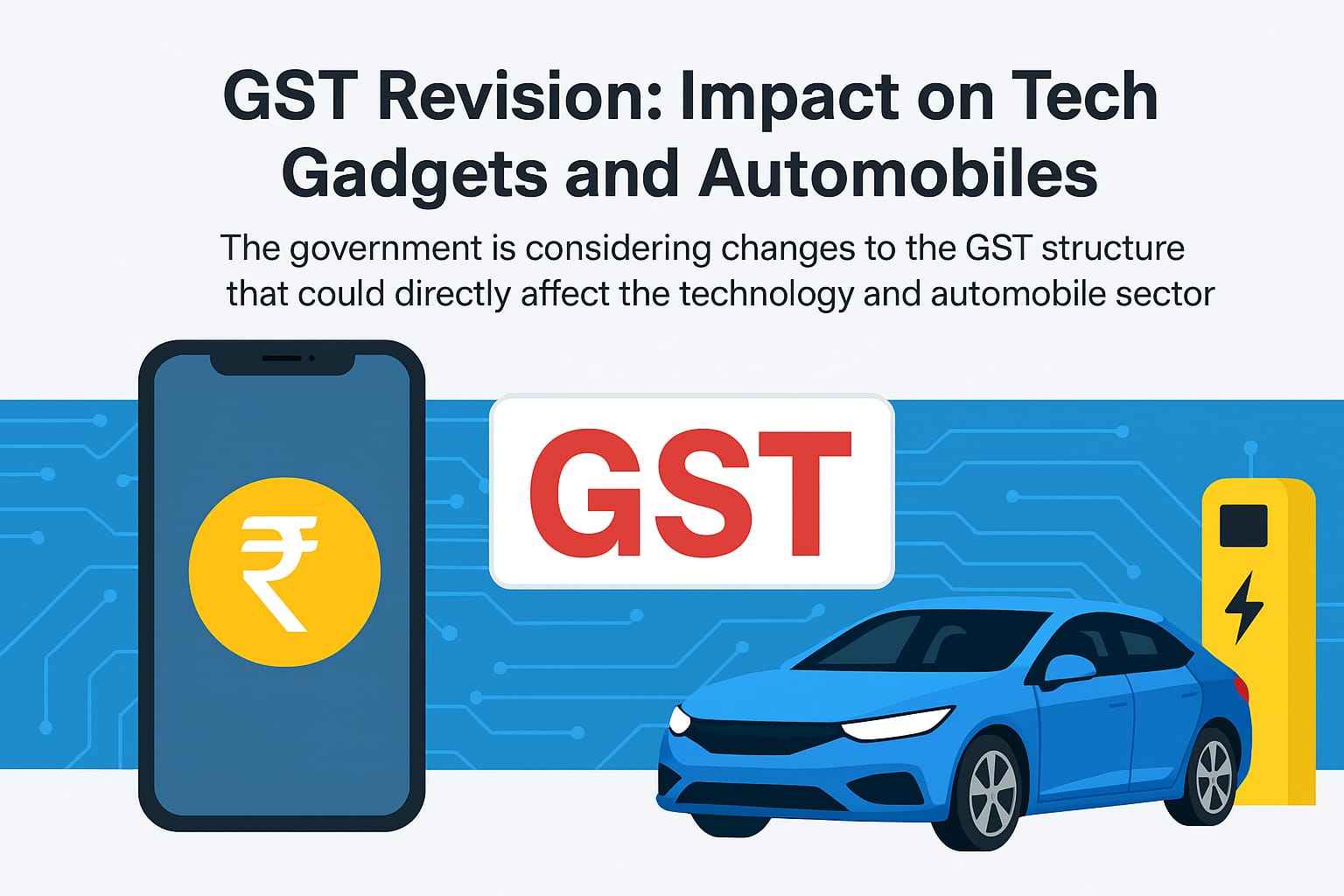
    The government is considering changes to the Goods and Services Tax (GST) structure, which could have a direct impact on the technology and automobile sectors. This move may come as welcome relief for consumers.

    At present, smartphones, laptops, and other electronic products fall under the 18% GST slab. The government is reportedly exploring the possibility of reducing this rate to 12%. If implemented, the prices of mid-range smartphones and premium laptops could drop significantly. For instance, on a smartphone worth ₹20,000, a consumer could save nearly ₹1,200. Experts believe such a move would boost demand and sales in India’s electronics market.

    On the other hand, the automobile sector is also expected to see a notable impact. Currently, cars and bikes attract 28% GST along with additional cess, which makes their prices considerably high. However, Electric Vehicles (EVs) are already taxed at just 5% GST. Now, there are discussions to further reduce GST on EV batteries and charging infrastructure. If this happens, owning and maintaining an EV will become more affordable, giving a push to India’s EV adoption drive.

    Industry experts say these revisions would benefit both consumers and manufacturers. While tech products would become more affordable for the masses, cheaper EVs could accelerate India’s green mobility mission, bringing the country closer to its sustainable transportation goals.

  • India Unveils Indigenous Semiconductor Breakthroughs at Semicon India 2025

    India Unveils Indigenous Semiconductor Breakthroughs at Semicon India 2025

    India Unveils Indigenous Semiconductor Breakthroughs at Semicon India 2025

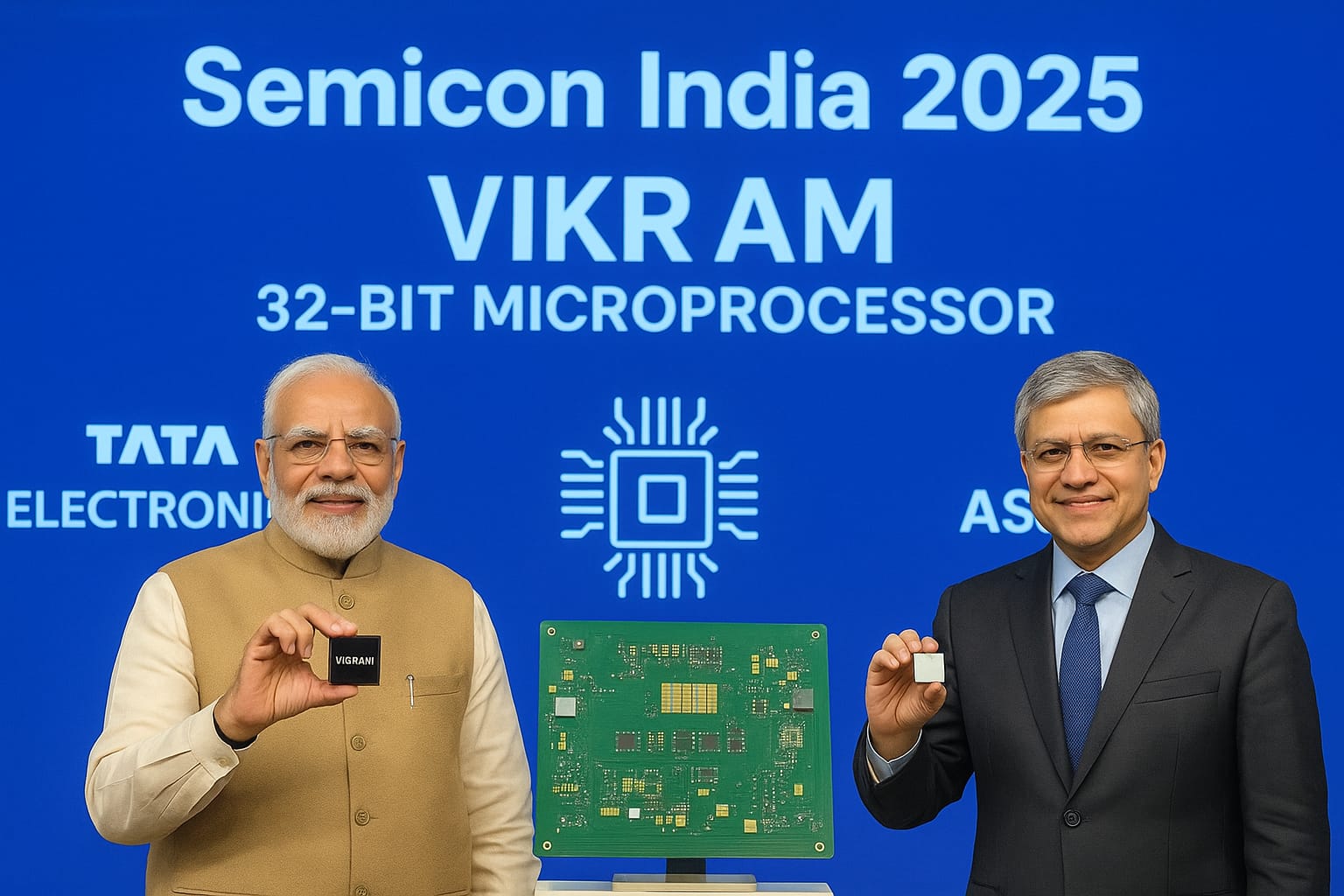
    In a historic step towards technological self-reliance, India showcased two major semiconductor innovations at the Semicon India 2025 event. Prime Minister Narendra Modi and Union Electronics & IT Minister Ashwini Vaishnaw unveiled the country’s first fully indigenous 32-bit microprocessor, “Vikram,” along with semiconductor chips developed in Assam.

    The Vikram processor marks a crucial milestone in India’s ambition to become a global leader in semiconductor design and manufacturing. Developed entirely within the country, the 32-bit chip is expected to power a wide range of applications, from consumer electronics to industrial systems. Minister Vaishnaw highlighted that this processor symbolizes India’s entry into the league of nations capable of building advanced microchips independently.

    At the same event, Tata Electronics’ Jagiroad facility in Assam presented the Tata OSAT chip. Designed for packaging, testing, and optimization, this innovation enables mass-scale semiconductor production. In parallel, NIT Silchar unveiled a Neural Amplifier Frontend IC, developed to support brain-computer interfaces and medical technologies by enhancing low-noise neural signal amplification.

    Experts say these developments not only reduce dependence on global supply chains but also create opportunities for domestic startups and research institutions. The Assam chips, in particular, are being seen as a signal of India’s intent to expand semiconductor manufacturing beyond traditional hubs, promoting regional innovation.

    Prime Minister Modi called the unveiling a “turning point in India’s semiconductor journey,” stressing that the government’s support for R&D and private investment will accelerate the country’s growth as a global tech hub.

    With global semiconductor demand projected to surge, India’s latest achievements could position it as a significant player in the industry, bridging the gap between innovation and large-scale manufacturing.