Author: Nation Pulse 24

  • Akshay Kumar’s star can shine again with serious acting instead of action

    Akshay Kumar’s star can shine again with serious acting instead of action

    Akshay Kumar’s star can shine again with serious acting instead of action

    Mumbai (Shibli Rampuri) Several of Akshay Kumar’s films failed, leading to various questions. He was also questioned by the media on several occasions. It’s clear that at one time, Akshay Kumar was considered a guarantee of box office success, with many of his films consistently achieving success, and his acting was highly praised in many films. Despite this, Akshay Kumar’s star has been on the wane for some time, with his films consistently failing. Recently, Akshay Kumar’s performance in Jolly LLB 3 was well-received, and his performance in this film suggests that if Akshay Kumar shifts his focus from action to serious roles, his star could shine again. Actually, many things seem right with time and when a time comes when the audience starts rejecting you in the same action or comedy, then you have to think a lot and Akshay Kumar should now think about what kind of roles he wants to do. Jolly ALLB 3 can give a new direction to his acting.

  • US Proposes Tax on Outsourcing: Potential Double Blow for Indian IT Industry

    US Proposes Tax on Outsourcing: Potential Double Blow for Indian IT Industry

    US Proposes Tax on Outsourcing: Potential Double Blow for Indian IT Industry

    Report by: Syed Taskin Ahmed

    The Indian IT sector, already reeling from the recent $100,000 H-1B visa petition fee, may face another setback as the United States considers imposing a new tax on outsourcing.

    Under the proposed “HIRE Act”, American companies that outsource jobs to countries like India could be subjected to additional taxation. The legislation aims to discourage U.S. firms from moving employment opportunities overseas, encouraging more onshore hiring.

    If implemented, the move is expected to have a significant impact on Indian IT giants such as Infosys, TCS, Wipro, and HCL, which derive a large share of their revenue from U.S. contracts. Analysts warn that this could lead to increased costs for U.S. tech companies and reduced competitiveness for Indian service providers.

    Industry body NASSCOM has expressed concern, calling the combined effect of the H-1B visa fee hike and the outsourcing tax proposal a “double blow” for the $250 billion Indian IT industry.

    The timing of these policy shifts has raised uncertainty across the sector, with experts noting that both measures—if enforced—could accelerate the trend of U.S. companies setting up offshore development centers outside India or automating more processes to cut costs.

  • H-1B Visa Becomes the World’s Costliest Deal, Raising Concerns for Indian IT Industry

    H-1B Visa Becomes the World’s Costliest Deal, Raising Concerns for Indian IT Industry

    H-1B Visa Becomes the World’s Costliest Deal, Raising Concerns for Indian IT Industry

    Report by: Syed Taskin Ahmed 

    New Delhi: The H-1B visa — a lifeline for thousands of Indian engineers working in the United States — has now turned into the world’s most expensive deal, sparking alarm across the technology sector.

    Indian IT giants such as Infosys, TCS, Wipro, and HCL heavily depend on the H-1B program for deploying talent to the US. With the new policy changes, industry experts warn of significant consequences:

    Rising project costs

    Risks to business continuity

    Shrinking profit margins

    Industry body NASSCOM has issued a strong warning, stating that implementing such a policy on short notice will pose a serious challenge for Indian IT firms.

    The implications, however, extend beyond Indian companies. US clients will also be forced to bear higher costs for projects outsourced to India, potentially impacting global business dynamics.

    Analysts believe this development could push Indian IT companies to redesign their strategies and cost models, marking a game-changing moment for the global tech industry.

    Now, the big question remains: Will this move slow down talent migration, or open up new opportunities for the industry?

  • Digital Personal Data Protection Act Comes Into Effect, Strengthening Citizens’ Data Rights in India

    Digital Personal Data Protection Act Comes Into Effect, Strengthening Citizens’ Data Rights in India

    Digital Personal Data Protection Act Comes Into Effect, Strengthening Citizens’ Data Rights in India

    Report by: Syed Taskin Ahmed 

    New Delhi: The Digital Personal Data Protection (DPDP) Act has officially come into effect, marking a major milestone in India’s digital governance framework. The legislation aims to safeguard citizens’ personal information, regulate how companies and government bodies handle data, and ensure stronger accountability in the digital ecosystem.

    The Act introduces key provisions, including mandatory user consent for data collection, strict limitations on data storage and sharing, and heavy penalties for violations. Individuals will now have the right to access, correct, or erase their personal data, while companies are required to adopt transparent practices in processing user information.

    The government has emphasized that the law will create a balance between protecting individual privacy and enabling innovation in the digital economy. Experts believe the Act will bring India closer to global data protection standards like the GDPR, while also addressing local challenges such as misuse of personal details and increasing cyber threats.

    The implementation of the DPDP Act is expected to reshape the way businesses, startups, and digital platforms operate in India, pushing them towards greater responsibility in handling sensitive user data.

  • ThumbPay: India’s First Biometric UPI Payment Device Launched

    ThumbPay: India’s First Biometric UPI Payment Device Launched

    ThumbPay: India’s First Biometric UPI Payment Device Launched

    Report by: Syed Taskin Ahmed 

    Gurugram-based IoT startup Proxgy has unveiled ThumbPay, a first-of-its-kind biometric payment device that allows users to make UPI transactions using just their thumb impression.

    The device leverages Aadhaar-enabled biometric authentication and links it directly with the Unified Payments Interface (UPI), eliminating the need for smartphones, QR codes, debit cards, or physical wallets.

    Key Highlights of ThumbPay

    Seamless payments: Users simply place their thumb on the device to complete a transaction.

    Affordable pricing: Expected to cost under ₹2,000, making it accessible to a wide audience.

    Inclusive technology: Especially beneficial for rural populations, senior citizens, and small shopkeepers who may not use smartphones.

    Connectivity options: Designed to work even in low-network areas, with support for 4G and Wi-Fi.

    Regulatory process: Proxgy is currently working with UIDAI and NPCI for approvals before large-scale rollout.

    Industry experts believe that ThumbPay could become a game-changer for financial inclusion, bridging the digital divide by bringing secure digital payments to millions who are currently excluded from smartphone-based payment systems.

    The device has already undergone pilot testing with merchants, and early feedback has been positive. Proxgy plans a phased rollout in partnership with major banks and fintech companies.

    With the launch of ThumbPay, India takes another significant step forward in the journey of Digital India, ensuring payments are simpler, safer, and more accessible for all.

  • Jamiat Ulema-e-Hind” became an example of humanity in the midst of disaster

    Jamiat Ulema-e-Hind” became an example of humanity in the midst of disaster

    Met with the family of the deceased; Jamiat will bear responsibility for the education of the deceased’s children

    Report: Amaanullah Usmani

    Dehradun – While the recent devastating disaster in Uttarakhand disrupted normal life, Jamiat Ulema-e-Hind Uttarakhand once again proved that humanity’s greatest strength in times of disaster is empathy and help.

    On Wednesday, a Jamiat delegation led by State General Secretary Maulana Sharafat Ali Qasmi visited Dehradun’s Parwal, MDDA Colony in Dalanwala, and Adhoivala, where the floodwaters of the Rispana River reduced people’s homes and shops to rubble. Maulana Sharafat met with the affected people, not only sharing their pain but also assuring them of all possible assistance.

    The houses of Bittu, Indrasen, and Zafar in the MDDA colony have collapsed; Jamiat will provide financial assistance to these three.

    Speaking to the media, Maulana Sharafat expressed deep concern and said that the entire state is currently going through a terrible tragedy. This natural disaster has devastated the lives of many people. This is not the time for us to merely express concern, but to provide real help. Jamiat stands with every affected family and is carrying out relief work at our own level. He appealed to the government to amend disaster regulations and distribute relief funds immediately so that the victims can receive support as soon as possible.

    Maulana Sharafat Ali Qasmi demanded that the central government declare Uttarakhand a disaster-affected area, saying that this is not just a natural disaster, but a human tragedy. He urged that relief work be expedited and that help reach every affected person.

    Present on this occasion were State General Secretary Maulana Sharafat Ali Qasmi, State Vice President Mufti Rais Ahmed Qasmi, Maulana Masoom Qasmi, Mufti Taufiq Ilahi, Maulana Asad, Maulana Haroon, Maulana Aabad, Maulana Abdul Sattar, Mufti Shamsul Huda, Mufti Tazeem, Maulana Shahid Hussain, Maulana Abdul Wahid, Maulana Gulsher, Maulana Abdul Mannan Qasmi, Master Abdul Sattar, Mufti Ayaz Ahmed, Maulana Raghib Mazahiri, Maulana Umar, Maulana Nadeem Ahmed, Mohammad Ikram, Maulana Shuaib, Zakir Ansari, Qari Muqeem Alam, and Mohammad Shah Nazar.

    Paid tribute to the families of the deceased.

    The delegation visited the home of Farman of Parwal, who lost his life in the disaster, and expressed condolences. Jamiat Ulema-e-Hind, the state vice president of the Jamiat, consoled the affected families, saying, “You are not alone. Jamiat Ulema-e-Hind is with you. We consider your grief as our own. May Allah bring everyone through this difficult time.” Jamiat (A) and Jamiat (M) provided a cash assistance of 25,000 rupees to the widow of the deceased and announced responsibility for the children’s education.

  • UIDAI to Launch Aadhaar App with Live Facial Recognition: What It Means for Users

    UIDAI to Launch Aadhaar App with Live Facial Recognition: What It Means for Users

    UIDAI to Launch Aadhaar App with Live Facial Recognition: What It Means for Users

    Report by: Syed Taskin Ahmed

    The Unique Identification Authority of India (UIDAI) is planning to roll out a new Aadhaar mobile app by December 2025, introducing a “live facial recognition” feature that allows users to update their mobile numbers without visiting an Aadhaar centre. However, certain services, such as fingerprint or iris updates, will still require physical visits to enrolment or update centres.

    How It Works

    The app will capture a live image of the user’s face via the mobile camera, which will then be matched against the photo stored in UIDAI’s biometric database. If the match is successful, the user’s authentication is completed.

    In addition to facial recognition, the app will feature QR code-based verification. Users can share their Aadhaar information digitally, either fully or in a masked format, depending on consent. This allows service providers like banks, hotels, or government offices to verify identity without handling physical documents.

    Advantages

    1. Convenience – Reduces the need to visit an Aadhaar centre, especially beneficial for people in remote areas.

    2. Speed – Mobile number and other demographic updates can be processed faster if facial recognition works smoothly.

    3. Paperless & Cardless – Physical Aadhaar cards or photocopies may no longer be needed; digital QR verification suffices.

    4. Privacy & Control – Users can control what information is shared, with consent-based masked sharing.

    5. Inclusive Biometric Option – Useful for individuals for whom fingerprints or iris scans are difficult due to age or health conditions.

    Risks & Challenges

    1. Privacy & Security – Facial biometric data is highly sensitive. Any breach or misuse could have serious consequences.

    2. False Positives/Negatives – Facial recognition can fail due to lighting, camera quality, face masks, aging, or appearance changes.

    3. Digital Divide – Not all users have smartphones or high-quality cameras; network connectivity may be an issue in rural areas.

    4. Legal & Regulatory Clarity – Data protection, consent laws, and Aadhaar regulations need to be clear and enforceable.

    5. Dependence on Database Accuracy – Outdated photos or records could prevent successful facial authentication.

    Key Questions Remaining

    Question Current Status / Clarification Needed

    How secure is facial data? UIDAI claims encryption and secure backend matching, but details on storage duration, third-party access, and retention policies are not fully disclosed.

    What if facial recognition fails? Users will need to visit Aadhaar centres for biometric updates or verification.

    Which updates can be done online? Mobile number updates are confirmed; demographic updates like address/name may require SOPs for document verification.

    Will there be a fee? Some biometric updates already have fees; online demographic updates may be free or low-cost, but final structure is not confirmed.

    App rollout timeline? December 2025 is reported for full launch.

    Legal protections? Implementation of Aadhaar Act, data privacy, and accountability mechanisms remain key questions.

    The UIDAI Aadhaar app with live facial recognition promises greater convenience, speed, and paperless verification, but privacy, security, and accessibility challenges remain. Clear communication, legal safeguards, and robust backup mechanisms will be crucial for its success.


  • Young man had to pay heavily for showing his status by uploading bullying videos on social media

    Young man had to pay heavily for showing his status by uploading bullying videos on social media

    Young man had to pay heavily for showing his status by uploading bullying videos on social media

    Report: Aqeel Ahmed

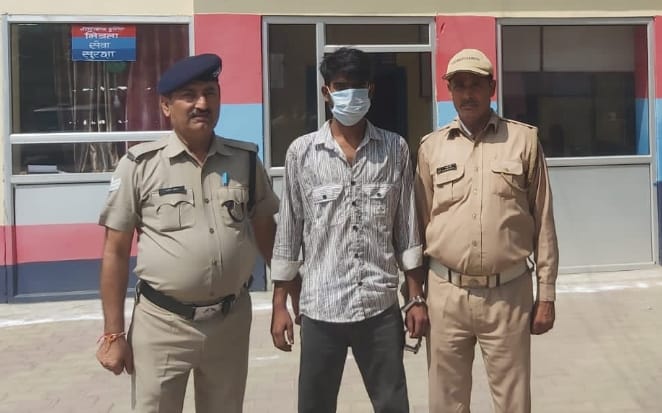
    Mangalore – Nowadays, young men upload different types of videos on social media so that their followers can increase. Some young men also upload such videos on social media due to which they have to go to jail, a similar case has been seen in Mangalore. Mangalore police has arrested Karthik son Sanjay resident Kaillanpur police station Purkaji Muzaffarnagar. To show his status, the accused had uploaded several bullying videos on his Instagram account like beating, threatening to shoot in the court room. By making them viral, the accused was creating fear among the people. In this case, two accused were earlier arrested by the police and sent to jail. The arrested accused was also wanted in attempt to murder. Police has arrested the accused with a pistol. The police team included Narsan outpost in-charge Hemdatt Bhardwaj, constable Pankaj, constable Desh Deepak Bali, constable Sudhir.

  • 67% of Engineers Say AI Is Transforming Their Jobs; 85% Turn to Upskilling for Survival

    67% of Engineers Say AI Is Transforming Their Jobs; 85% Turn to Upskilling for Survival

    67% of Engineers Say AI Is Transforming Their Jobs; 85% Turn to Upskilling for Survival

    Report by: Syed Taskin Ahmed 

    New Delhi, Sept 14, 2025 Artificial Intelligence (AI) is rapidly reshaping India’s engineering workforce, with a majority of professionals acknowledging that their roles are undergoing dramatic changes. According to a new survey conducted by Great Learning to mark Engineers’ Day, 67% of engineers believe AI has already begun altering the nature of their jobs, while 85% are actively pursuing upskilling opportunities to remain competitive.

    AI Disruption in the Workplace

    The survey highlights that engineers across industries are witnessing a transformation in everyday responsibilities. Routine coding, data handling, and testing tasks are increasingly being automated, leaving professionals to focus on more complex, creative, and design-driven work. While this evolution is enhancing productivity, it is also fueling anxiety about job security and career stagnation.

    Surge in Demand for AI & Data Skills

    Engineers are turning towards short, targeted learning programmes to bridge the skill gap. AI & Machine Learning emerged as the most sought-after domains, followed closely by Data Science & Analytics, Cloud Computing, Cybersecurity, and Software Development. Within AI, niche skills such as Generative AI, Agentic AI, Python, and Natural Language Processing (NLP) are gaining strong traction.

    Interestingly, two-thirds of engineers prefer short courses lasting less than six months, prioritizing flexibility and speed over long-term programmes like Master’s or PhDs. Certificate programmes from Indian and global universities are seen as more practical routes for career growth.

    Changing Career Expectations

    Beyond learning, the report reveals a shifting professional mindset. 85% of engineers are either actively exploring new jobs or passively considering a switch. Key drivers include:

    Better work-life balance (33%)

    Improved job security (18%)

    Escaping career stagnation (14%)

    Higher salaries and promotions (20%)

    What Lies Ahead

    Experts believe the Indian engineering landscape is entering a phase of AI-augmented work, where human creativity and problem-solving will be complemented—not replaced—by machines. Employers, meanwhile, are expected to revamp job descriptions, performance metrics, and internal training programmes to align with this transition.

    As one industry analyst noted, “The pace of AI adoption means engineers can no longer rely on traditional degrees alone. Continuous upskilling is the only way to remain relevant in the future of work.”

  • India Launches ₹100 Crore Scheme to Boost Green Hydrogen Startups

    India Launches ₹100 Crore Scheme to Boost Green Hydrogen Startups

    India Launches ₹100 Crore Scheme to Boost Green Hydrogen Startups

    Report by: Syed Taskin Ahmed 

    New Delhi, Sept 13 – In a major push toward clean energy and innovation, the Government of India has rolled out a ₹100 crore funding scheme exclusively designed for startups working in the green hydrogen ecosystem.

    📌 Key Highlights of the Scheme:

    Total Budget: ₹100 crore allocated for innovation in hydrogen technology.

    Grant Size: Each startup or project can avail up to ₹5 crore in funding support.

    Focus Areas:

    Green hydrogen production and storage technologies

    Electrolyzer manufacturing and scaling

    Hydrogen Valley projects

    National Goal: To position India as a global Green Hydrogen Hub and achieve 5 million tonnes of annual production capacity by 2030.

    🚀 Growing Tech Startup Momentum

    The funding boost comes at a time when India’s startup ecosystem is witnessing robust activity across multiple technology verticals:

    Fintech: Digital payments and lending startups continue to attract heavy investor interest.

    AI & Space Tech: Artificial Intelligence and space innovation companies are gaining traction among venture capital firms.

    Sustainability & Clean Tech: Green hydrogen, renewable energy, and climate-tech startups are emerging as priority sectors for both government and private investors.

    🌍 Broader Impact

    The scheme is expected to accelerate India’s journey to Net Zero by 2070, reducing dependence on fossil fuels.

    By offering early-stage financial support, the government aims to de-risk innovation and help startups bring cutting-edge technologies to the market faster.

    This move is also seen as India’s effort to establish itself as a global leader in clean energy innovation.

    📢 In essence, this funding initiative is a significant step toward aligning India’s technology-driven startup ecosystem with the nation’s long-term climate and energy goals.