Author: Nation Pulse 24

  • Tesla’s Robotaxi App Launches for iPhone Users, Expands Service Amid Safety and Regulatory Scrutiny

    Tesla’s Robotaxi App Launches for iPhone Users, Expands Service Amid Safety and Regulatory Scrutiny

    Tesla’s Robotaxi App Launches for iPhone Users, Expands Service Amid Safety and Regulatory Scrutiny

    Report by: Syed Taskin Ahmed

    Austin/San Francisco, Sept 13, 2025 – Tesla has officially rolled out its much-anticipated Robotaxi app for iPhone users, marking a major step in the company’s autonomous mobility ambitions. Available on the Apple App Store, the app allows users to join a public waitlist, though ride availability remains limited to select geofenced zones.

    Limited Rollout and Expansion Plans

    The service debuted in Austin, Texas earlier this year and has since expanded to parts of the San Francisco Bay Area. Tesla has also widened the geofenced operational areas in Austin to cover more neighborhoods, with gradual scaling expected in other U.S. cities.

    Currently, the app is exclusive to iOS users, with an Android version expected at a later date. Due to a small fleet size, wait times for rides range between 12 to 40 minutes, and access is being granted in phases.

    Safety Monitors Still Onboard

    While Tesla envisions fully driverless operations, all Robotaxi rides presently include a human “safety monitor”. Depending on the trip type, the monitor may sit in the passenger seat or behind the wheel, ready to intervene if required.

    For highway routes, monitors are often positioned in the driver’s seat to ensure quick control in emergencies.

    Regulatory and Technical Challenges

    Despite the progress, Tesla faces regulatory hurdles across U.S. jurisdictions. Fully unsupervised rides are not yet permitted in most regions due to concerns over safety, liability, and insurance frameworks.

    Recent reports of occasional glitches—such as incorrect turns or unexpected halts—have also prompted investigations into the system’s reliability.

    Elon Musk’s Goal for 2025

    CEO Elon Musk has reiterated Tesla’s goal of achieving fully autonomous Robotaxi rides without safety monitors by the end of 2025, provided regulators give approval. The company also aims to expand beyond Austin and San Francisco, scaling up its fleet and introducing cross-city services.

    Mixed User Experience

    Early adopters report mixed experiences: some gained access quickly, while others were moved back to the waitlist after initial approval. Despite these setbacks, enthusiasm remains high, with Tesla fans eager to experience the future of autonomous ride-hailing.

    In summary, Tesla’s Robotaxi launch is a milestone in the race toward autonomous mobility, but widespread adoption will depend on fleet expansion, regulatory green lights, and public trust in AI-driven transport.


  • 🏥 Indian Hospitals to Boost IT Innovation Spending by 20–25%

    🏥 Indian Hospitals to Boost IT Innovation Spending by 20–25%

    🏥 Indian Hospitals to Boost IT Innovation Spending by 20–25%

    Report by: Syed Taskin Ahmed 

    New Delhi, Sept 12: India’s healthcare sector is on the brink of a significant digital transformation. Hospitals across the country are preparing to raise their IT and digital innovation budgets by 20–25% over the next two to three years, aiming to integrate cutting-edge technologies that improve efficiency, patient outcomes, and overall care delivery.

    📈 Why Hospitals Are Increasing IT Spend

    The rising burden of chronic diseases, higher patient volumes, and demand for advanced care are pushing hospitals to turn toward technology-driven solutions. Industry insiders say the increased investment is not merely about modernizing hospital operations but also about building resilience, scalability, and patient-centric systems.

    According to an EY India report, over 70% of Indian hospitals have already begun digital adoption initiatives, with priority areas including automation, telemedicine, electronic health records (EHR), and AI-driven diagnostics.

    ⚙️ Areas of Investment

    Automation: Hospitals plan to automate routine tasks such as billing, discharge summaries, lab reporting, and inventory management. This reduces administrative burden, minimizes errors, and frees up medical staff for critical care.

    AI and Data Analytics: By analyzing patient histories, imaging data, and predictive models, doctors can provide faster and more accurate diagnoses. AI tools can also assist in identifying early signs of diseases like cancer or cardiac issues.

    Telemedicine and Remote Care: The pandemic accelerated adoption of teleconsultations, and hospitals are now investing further in virtual care platforms to reach rural and semi-urban areas where medical infrastructure is limited.

    IoT-enabled Devices: Wearable monitors and smart sensors are being introduced to provide real-time patient data, helping doctors track recovery and adjust treatments proactively.

    👩‍⚕️ Impact on Patients and Doctors

    For patients, the upcoming transformation means shorter waiting times, seamless online appointment booking, better transparency in billing, and personalized care plans. Real-time access to health data will also empower patients to take more control of their health.

    For doctors and hospital staff, digitization means faster access to complete medical histories, reduced paperwork, and AI-powered decision support tools that enhance treatment precision.

    🌐 Wider Implications

    Healthcare analysts believe that this 20–25% hike in digital budgets will not only improve hospital efficiency but also:

    Strengthen medical research through big-data insights.

    Improve public health management by enabling hospitals to share data with government health networks.

    Boost India’s health-tech startup ecosystem, as hospitals will increasingly collaborate with local tech firms to implement solutions.

    💬 Expert View

    “India’s hospitals are entering a decisive phase where technology is no longer optional but essential,” said Dr. Ritu Anand, a healthcare technology consultant. “Investments in AI, telemedicine, and IoT will shape the next decade of patient care, making healthcare more predictive, preventive, and personalized.”

    📊 The Road Ahead

    With the government also promoting Digital Health Mission initiatives, experts expect India’s healthcare IT market to grow at over 20% CAGR by 2030. As hospitals push forward with innovation, the sector is poised to set new benchmarks in accessibility, efficiency, and quality of care.

  • RBI Proposes Remote Phone Locking for EMI Defaulters

    RBI Proposes Remote Phone Locking for EMI Defaulters

    RBI Proposes Remote Phone Locking for EMI Defaulters

    Report by: Syed Taskin Ahmed

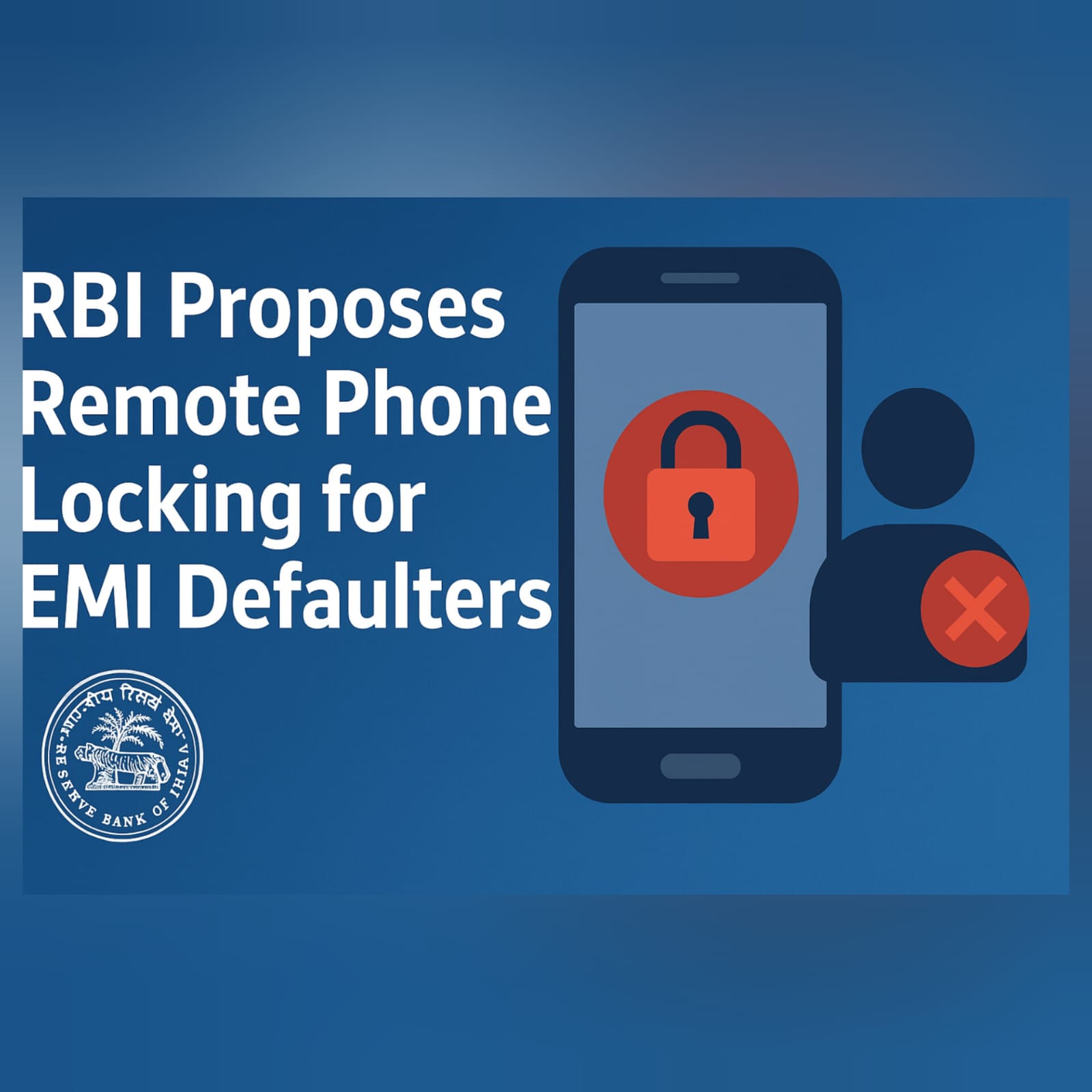
    New Delhi, September 11, 2025 – The Reserve Bank of India (RBI) is considering a controversial proposal that could allow lenders to remotely lock mobile phones purchased on credit if borrowers fail to pay their EMIs.

    According to sources, the move is aimed at curbing rising defaults in small-ticket consumer loans, particularly those under ₹1 lakh, where repayment slippages are becoming a growing concern for banks and NBFCs.

    How the system may work

    Under the proposed framework, lenders will be empowered to disable a borrower’s handset if EMIs remain unpaid. However, the RBI is also planning to introduce strict safeguards to ensure consumer rights are not compromised. These include:

    Prior consent from borrowers before activating the locking mechanism.

    Clear rules under the Fair Practices Code on how and when phones may be locked.

    Assurance that lenders will not gain access to personal data stored on the device.

    Why the move matters

    The central bank believes that enabling such technology could act as a strong deterrent against defaults, especially in the rapidly growing consumer electronics finance segment. Mobile phones are among the most commonly financed items, making them a critical point of leverage for lenders.

    Concerns raised

    While the proposal may improve loan recovery, it has raised serious concerns over consumer rights and digital access.

    A locked phone could prevent borrowers from accessing essential services such as banking apps, health tools, education, and even emergency communication.

    Experts warn of possible misuse if lenders exercise the power too aggressively or without transparency.

    Technical challenges also remain, including how the lock will be implemented — whether via third-party apps, manufacturer support, or OS-level integration.

    Current status

    The RBI is still in the consultation stage, and no final decision has been taken. Once finalized, the framework will be added to the Fair Practices Code for all regulated entities.

    Notably, some digital lenders had earlier experimented with phone-locking apps, but the RBI discouraged such practices in 2024 due to concerns over harassment and misuse. The new proposal seeks to reintroduce the system in a more regulated and transparent form.

  • China Unveils “Brain-Like AI” That Promises 100× Faster Performance

    China Unveils “Brain-Like AI” That Promises 100× Faster Performance

    China Unveils “Brain-Like AI” That Promises 100× Faster Performance

    Report by: Syed Taskin Ahmed

    Beijing, September 2025 — Researchers in China have announced the development of a new artificial intelligence system described as the world’s first “brain-like” large language model (LLM). Dubbed SpikingBrain 1.0, the system is designed to mimic certain mechanisms of the human brain, offering faster, more energy-efficient performance compared to conventional AI models.

    Inspired by the Brain

    Unlike standard AI models that require massive computational resources and power-hungry GPUs, SpikingBrain 1.0 uses spiking neural networks and a concept known as localized attention.

    In practice, this means the model only activates specific “neurons” when needed, rather than processing the entire network for every task.

    The approach reduces energy consumption, lowers training data requirements (reportedly to less than 2% of what mainstream LLMs require), and accelerates computation.

    Performance Claims

    According to the research team at the Chinese Academy of Sciences’ Institute of Automation, SpikingBrain 1.0 can run certain ultra-long sequence tasks 25 to 100 times faster than conventional AI systems.

    The model has been trained on locally developed MetaX processors, bypassing the need for Nvidia GPUs and sidestepping U.S. export restrictions.

    Applications and Potential

    If validated, the technology could transform how AI systems handle:

    Long documents and records, such as legal or scientific texts.

    Resource-constrained environments, where power efficiency is critical.

    Domestic AI ecosystems, particularly in countries seeking independence from foreign chipmakers.

    Skepticism Remains

    Experts caution that the research is still at an early stage. The work is currently available as a non-peer-reviewed paper on arXiv, and independent verification of its claims is pending.

    Critics also argue that while the system is “brain-inspired,” it does not fully replicate the complexity of human cognition.

    Why It Matters

    With AI models growing larger and more expensive to operate, energy efficiency and hardware independence are becoming urgent global priorities. If China’s “brain-like AI” delivers on its promises, it could mark a major leap in the race for next-generation AI, reducing dependence on costly chips and reshaping the competitive landscape.

  • Indian Engineers Drive eVTOL Innovation, Paving the Way for Air Taxis and Air Ambulances

    Indian Engineers Drive eVTOL Innovation, Paving the Way for Air Taxis and Air Ambulances

    Indian Engineers Drive eVTOL Innovation, Paving the Way for Air Taxis and Air Ambulances

    Report by: Syed Taskin Ahmed

    New Delhi, September 10, 2025 – India is fast emerging as a hub for advanced air mobility as homegrown engineers and startups step up efforts in developing electric vertical take-off and landing (eVTOL) aircraft. These next-generation flying vehicles, capable of operating as air taxis and air ambulances, are expected to redefine urban transportation in the coming years.

    Engineers at the Forefront

    Indian engineers are contributing significantly to the global eVTOL ecosystem, working on navigation software, flight control systems, and battery technology to ensure safe and efficient operations. Their expertise is being tapped by both domestic startups and international collaborations.

    Startups Leading the Charge

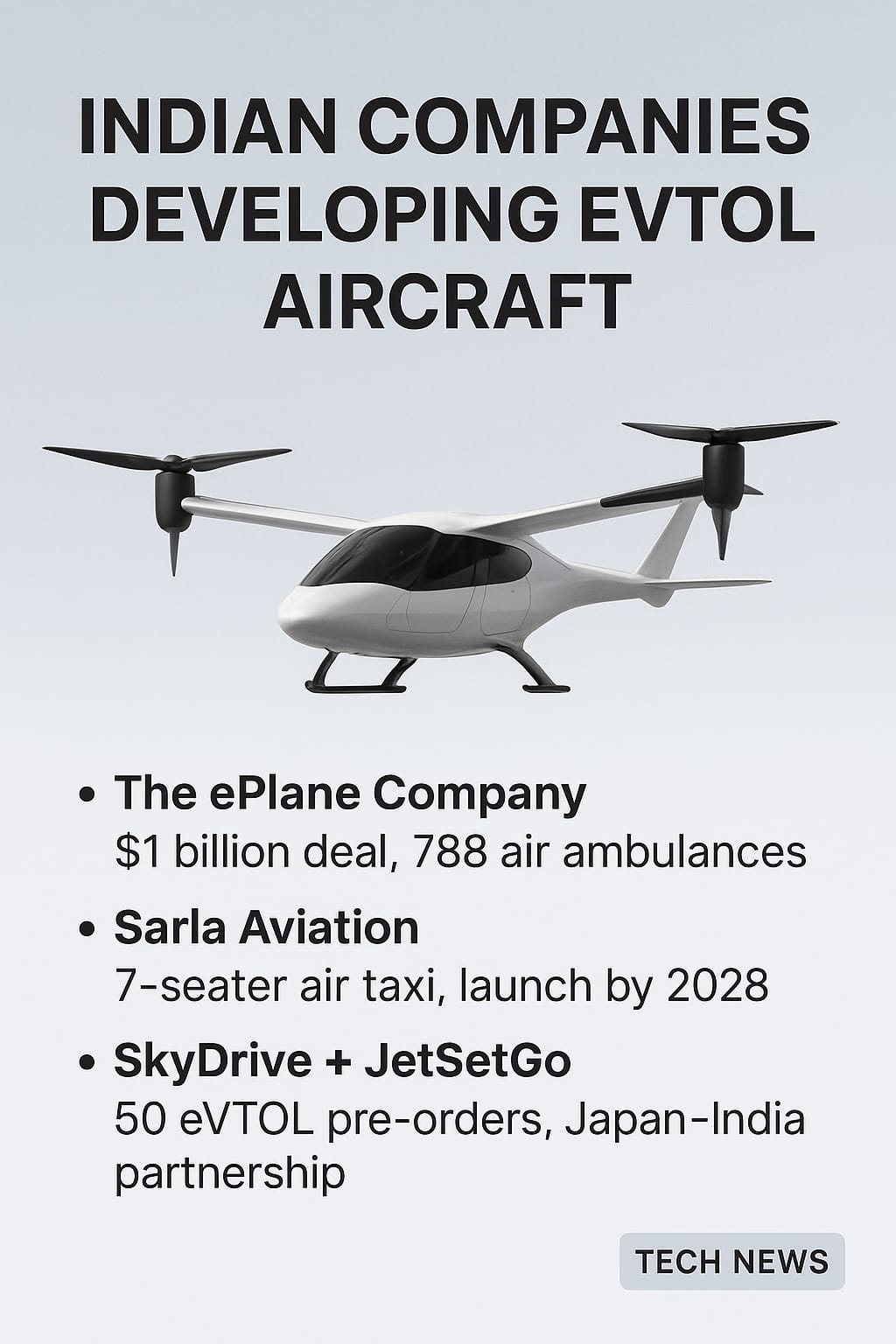
    The ePlane Company (Chennai) has secured over $20 million in funding and recently signed a $1 billion agreement to supply 788 eVTOL air ambulances across India. A certifiable prototype is expected by March 2025, with commercial rollout targeted for late 2026.

    Sarla Aviation (Bengaluru) is developing a seven-seater eVTOL prototype with a range of up to 160 km. Backed by $10 million in funding, the company plans to launch operations by 2028 and is working with Makmor to establish a network of vertiports across Indian metros.

    In a Japan–India partnership, SkyDrive has joined hands with private jet operator JetSetGo, with a pre-order of 50 aircraft. The collaboration also involves Indian engineering major Cyient, marking a major step in technology co-development.

    Infrastructure Support

    The Maharashtra government has also announced plans to build vertiports across districts to support future air taxi services. Cities like Nagpur and Pune are expected to be among the early adopters of this infrastructure.

    A Billion-Dollar Opportunity

    Industry experts believe India could become one of the largest markets for eVTOL technology, thanks to its dense urban centers, traffic congestion issues, and rising demand for faster medical evacuation services. With both domestic innovation and international collaboration, India is well-positioned to be a leader in advanced air mobility by the end of this decade.

  • Starlink to Begin Internet Trials in India, Holds Talks with Jio, Airtel, and Tata Communications

    Starlink to Begin Internet Trials in India, Holds Talks with Jio, Airtel, and Tata Communications

    Starlink to Begin Internet Trials in India, Holds Talks with Jio, Airtel, and Tata Communications

    Report by: Syed Taskin Ahmed

    Elon Musk’s satellite broadband company, Starlink, is preparing to begin trials in India, marking a major step toward expanding satellite-based internet services in one of the world’s largest digital markets. According to reports, the company is in advanced discussions with Reliance Jio, Bharti Airtel, Tata Communications, and several data center operators to finalize partnerships for infrastructure and service rollout.

    The focus of these talks is primarily on ground infrastructure, licensing clarity, and partnership models. While Starlink could provide services directly, bundling with existing telecom players is also being explored to ensure seamless distribution and regulatory compliance.

    Starlink’s entry could prove transformative for India’s rural and remote regions, where over 500 million people still lack reliable internet access. Traditional fiber networks and 5G rollout have struggled to reach challenging terrains such as the North-East, Ladakh, and the Andaman & Nicobar Islands. In such areas, Starlink’s Low Earth Orbit (LEO) satellites can deliver high-speed broadband without the need for extensive physical infrastructure.

    Globally, Starlink has demonstrated speeds of 100–250 Mbps with latency as low as 20–40 milliseconds, making it suitable for video streaming, online education, remote work, and even defense operations. However, affordability remains a challenge: the current hardware kit costs around $599 (₹50,000) with a monthly subscription of $120 (₹10,000). To succeed in India, Starlink may need to offer localized pricing.

    Competition is also heating up. Airtel-backed OneWeb is already working on satellite broadband services, while Jio and Amazon’s Project Kuiper are also eyeing the sector. Additionally, Starlink must overcome regulatory hurdles, as the Department of Telecommunications (DoT) previously halted its pre-booking plans in 2021.

    If approvals are granted, Starlink could begin pilot trials in late 2025, initially targeting rural, hilly, and disaster-prone regions. Its success will depend on government clearance, partnerships, and affordable pricing strategies, but the move signals a potentially disruptive shift in India’s digital connectivity landscape.

  • Actor Sonu Sood reached Punjab and helped the flood victims

    Actor Sonu Sood reached Punjab and helped the flood victims

    Actor Sonu Sood reached Punjab and helped the flood victims

    Mumbai (Shibli Rampuri) Famous Bollywood actor Sonu Sood is very famous for social service. He helped the people of the country a lot even during the Corona crisis and now he has reached there with his sister to help the flood victims in Punjab.

    According to the information, actor Sonu Sood reached Moga with his sister Malvika Sood, where he also talked to the media and he said that the flood has caused heavy damage to Punjab. The condition in many villages of Punjab is very bad. Information about the victims is being taken by talking to the sarpanches and local heads there.

    Actor Sonu Sood said that on behalf of his organization, he will provide all possible help to the flood victims, wherever help is needed, he will help those people as much as he can. Sonu Sood said that essential goods are being continuously delivered to every village by the Sood Foundation and his sister Malvika Sood is handling the responsibility of this work.

    During this time, Sonu Sood also met the flood-affected people and assured them of all possible help from his side. Actor Sonu Sood along with his sister Malvika Sood visited many flood-affected areas where he met the flood-affected people and said that we are with you in this hour of crisis.

  • Nepal Bans 26 Social Media Platforms Including Facebook, WhatsApp, and YouTube

    Nepal Bans 26 Social Media Platforms Including Facebook, WhatsApp, and YouTube

    Nepal Bans 26 Social Media Platforms Including Facebook, WhatsApp, and YouTube

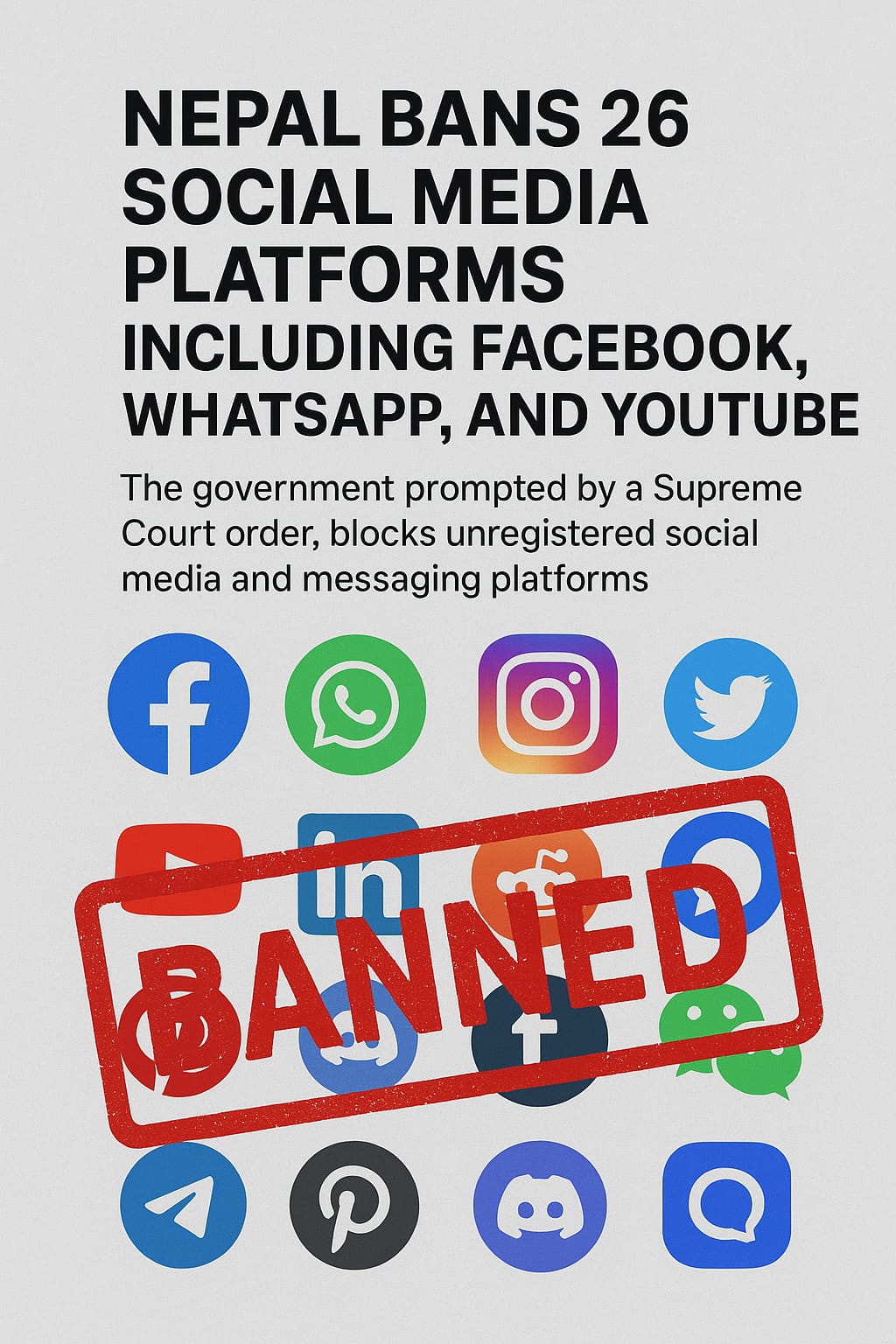
    Kathmandu, September 8, 2025 – In a move that has triggered intense debate over digital freedom, Nepal’s government has imposed a sweeping ban on 26 popular social media platforms, including Facebook, WhatsApp, Instagram, X (formerly Twitter), YouTube, LinkedIn, Reddit, and Signal.

    The decision follows a Supreme Court directive requiring all digital platforms operating in the country to register locally, establish grievance redressal systems, and adopt self-regulation mechanisms. Authorities gave companies a seven-day ultimatum to comply, after which non-registered platforms were ordered to be blocked.

    Platforms Blocked and Allowed

    According to the Ministry of Communications and Information Technology, major Western platforms failed to meet the compliance deadline and were deactivated nationwide.

    Blocked: Facebook, Messenger, WhatsApp, Instagram, YouTube, X, Reddit, LinkedIn, Pinterest, Signal, Threads, and several others.

    Allowed: Platforms like TikTok, Viber, and WeTalk, which had registered with local authorities, continue to operate. Telegram is reportedly in the process of registration.

    Concerns Over Freedom and Business Climate

    The ban has sparked criticism from human rights organizations and press freedom advocates, who argue that the restrictions undermine freedom of expression and access to information. The Committee to Protect Journalists (CPJ) called the move “a serious threat to media freedom in Nepal.”

    Business groups also voiced concerns, warning that the restrictions could harm digital innovation and the investment climate. Many online services and e-governance platforms rely on social media logins, raising fears of disruption for both citizens and companies.

    Government’s Stand

    Officials defended the crackdown, stating that the move was necessary to curb misinformation, ensure accountability, and bring foreign platforms under Nepal’s regulatory framework. A senior government spokesperson said:

    > “No platform is above the law. If companies wish to operate in Nepal, they must comply with national regulations.”

    What’s Next

    It remains unclear whether the ban will be temporary or permanent. Industry experts believe tech giants may seek negotiations with the government, while digital rights groups are already exploring legal avenues to challenge the restrictions.

    For now, millions of Nepalese users are cut off from some of the world’s most widely used digital communication tools — a change that could reshape the country’s online landscape.

  • Dargah Sabir Pak smelled of rose water, ritual of Ghusl Sharif performed

    Dargah Sabir Pak smelled of rose water, ritual of Ghusl Sharif performed

    Dargah Sabir Pak smelled of rose water, ritual of Ghusl Sharif performed

    Report: Pandit Javed

    Piran Kaliyar – Important ritual of Ghusl Sharif was performed on Sunday in the 757th annual Urs of Hazrat Sabir Pak. During this, Mazar-e-Muqaddas and Dargah Sharif were bathed with rose water and kewda water.

    Sajjadanashin Shah Ali Ejaz Sabri Quddusi and Sahibzada Shah Yawar Ejaz Sabri performed the ritual of Ghusl Sharif. After bathing with rose water, the entire Dargah smelled fragrant. After the bath, sandalwood was presented on the Mazar-e-Muqaddas.

    There was a crowd of pilgrims to get the water for Ghusl. Women, elderly and even children were seen desperate to get the water for Ghusl Sharif. Pilgrims were seen taking bottles and utensils to get the water for Ghusl.

    Prayers were echoing all around the Dargah premises. The air was filled with the fragrance of rose and kewda. Meanwhile, the pilgrims stood at their places and performed the ritual of Ghusl Sharif.

    With Ghusl Sharif, all the main rituals of Urs have been completed. However, Urs will continue till the 20th of the moon. During this time, the dargah premises and markets will also remain lively.

    On this occasion, Shah Suhail Mian, Shah Khaliq Mian, Sufi Raja Sabri, Ahmed Mian, Shah Asad Sabri, Shah Ghazi, Nayyar Azim Faridi, Adil Habib, Mohid Khan, Sufi Khadim Safiq Sabri, Sufi Rashid Sabri, Shan Sabri, Nomi Mian, Kaliyar Press Club President Pandit Javed Sabir, Ajju Mian, along with a large number of devotees and pilgrims were present.

  • New UPI Rules: Effective from September 15

    New UPI Rules: Effective from September 15

    📢 New UPI Rules: Effective from September 15

    Report by: Syed Taskin Ahmed

    🔹 What is changing?

    The National Payments Corporation of India (NPCI) has announced changes in the Unified Payments Interface (UPI) rules. These changes mainly apply to high-value online transactions.

    🔹 When will the new rule take effect?

    👉 From September 15, 2025

    🔹 Who will be affected?

    PhonePe users

    Paytm users

    Google Pay (GPay) users

    And all other UPI-based app users

    🔹 What’s the new transaction limit?

    For verified merchants, the daily UPI transaction limit will now be ₹10 lakh per day.

    This will apply to payments such as:

    Stock market investments

    Insurance premium payments

    Credit card bill payments

    Other large online transactions

    🔹 What will remain unchanged?

    Person-to-person (P2P) transactions will still have the same limit of ₹1 lakh per day.

    ✅ Direct benefit

    Users won’t need to split high-value payments into multiple smaller transactions anymore.