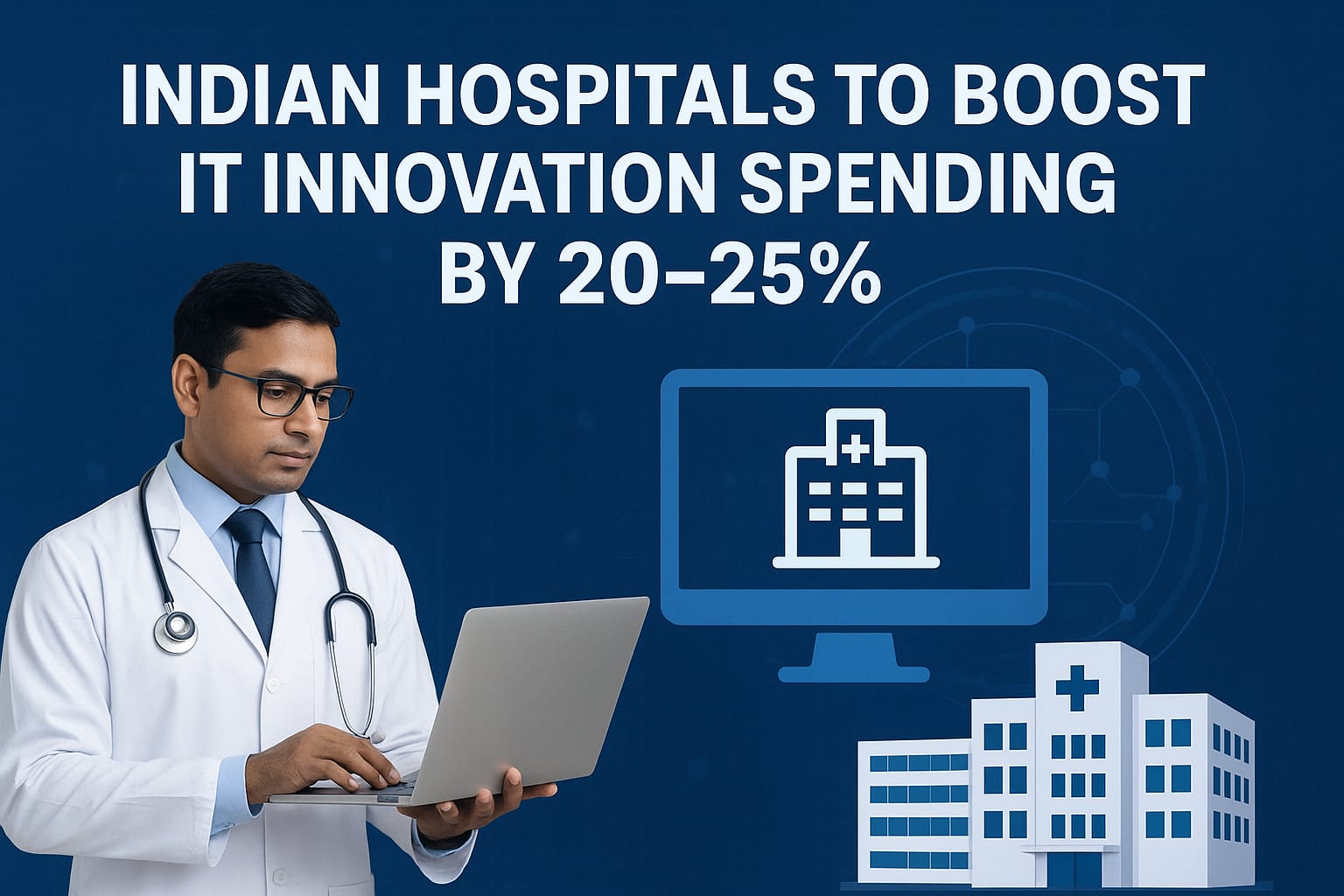
🏥 Indian Hospitals to Boost IT Innovation Spending by 20–25%

Report by: Syed Taskin Ahmed
New Delhi, Sept 12: India’s healthcare sector is on the brink of a significant digital transformation. Hospitals across the country are preparing to raise their IT and digital innovation budgets by 20–25% over the next two to three years, aiming to integrate cutting-edge technologies that improve efficiency, patient outcomes, and overall care delivery.
📈 Why Hospitals Are Increasing IT Spend
The rising burden of chronic diseases, higher patient volumes, and demand for advanced care are pushing hospitals to turn toward technology-driven solutions. Industry insiders say the increased investment is not merely about modernizing hospital operations but also about building resilience, scalability, and patient-centric systems.
According to an EY India report, over 70% of Indian hospitals have already begun digital adoption initiatives, with priority areas including automation, telemedicine, electronic health records (EHR), and AI-driven diagnostics.
⚙️ Areas of Investment
Automation: Hospitals plan to automate routine tasks such as billing, discharge summaries, lab reporting, and inventory management. This reduces administrative burden, minimizes errors, and frees up medical staff for critical care.
AI and Data Analytics: By analyzing patient histories, imaging data, and predictive models, doctors can provide faster and more accurate diagnoses. AI tools can also assist in identifying early signs of diseases like cancer or cardiac issues.
Telemedicine and Remote Care: The pandemic accelerated adoption of teleconsultations, and hospitals are now investing further in virtual care platforms to reach rural and semi-urban areas where medical infrastructure is limited.
IoT-enabled Devices: Wearable monitors and smart sensors are being introduced to provide real-time patient data, helping doctors track recovery and adjust treatments proactively.
👩⚕️ Impact on Patients and Doctors
For patients, the upcoming transformation means shorter waiting times, seamless online appointment booking, better transparency in billing, and personalized care plans. Real-time access to health data will also empower patients to take more control of their health.
For doctors and hospital staff, digitization means faster access to complete medical histories, reduced paperwork, and AI-powered decision support tools that enhance treatment precision.
🌐 Wider Implications
Healthcare analysts believe that this 20–25% hike in digital budgets will not only improve hospital efficiency but also:
Strengthen medical research through big-data insights.
Improve public health management by enabling hospitals to share data with government health networks.
Boost India’s health-tech startup ecosystem, as hospitals will increasingly collaborate with local tech firms to implement solutions.
💬 Expert View
“India’s hospitals are entering a decisive phase where technology is no longer optional but essential,” said Dr. Ritu Anand, a healthcare technology consultant. “Investments in AI, telemedicine, and IoT will shape the next decade of patient care, making healthcare more predictive, preventive, and personalized.”
📊 The Road Ahead
With the government also promoting Digital Health Mission initiatives, experts expect India’s healthcare IT market to grow at over 20% CAGR by 2030. As hospitals push forward with innovation, the sector is poised to set new benchmarks in accessibility, efficiency, and quality of care.
Leave a Reply