
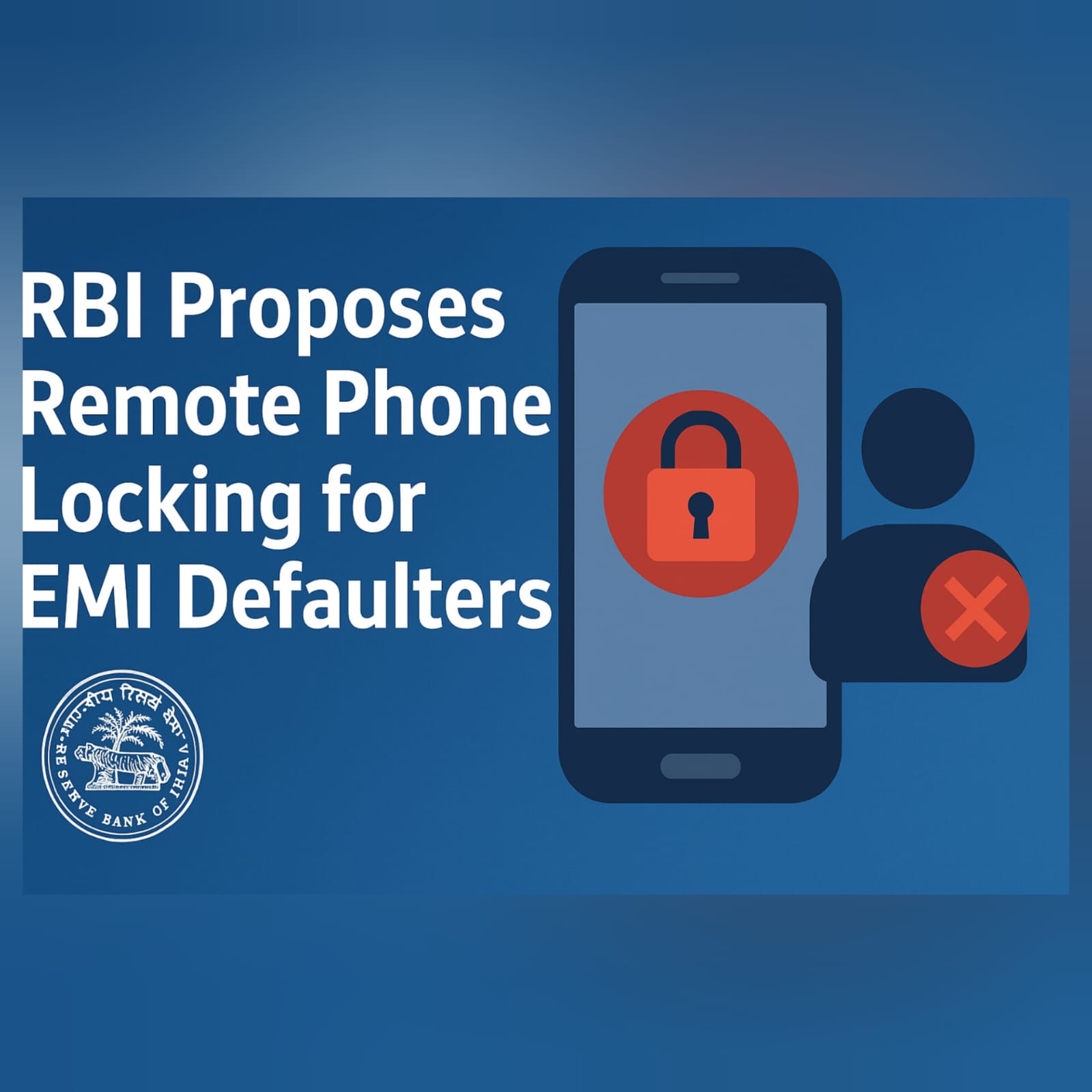
RBI Proposes Remote Phone Locking for EMI Defaulters
RBI Proposes Remote Phone Locking for EMI Defaulters
Report by: Syed Taskin Ahmed
New Delhi, September 11, 2025 – The Reserve Bank of India (RBI) is considering a controversial proposal that could allow lenders to remotely lock mobile phones purchased on credit if borrowers fail to pay their EMIs.
According to sources, the move is aimed at curbing rising defaults in small-ticket consumer loans, particularly those under ₹1 lakh, where repayment slippages are becoming a growing concern for banks and NBFCs.
How the system may work
Under the proposed framework, lenders will be empowered to disable a borrower’s handset if EMIs remain unpaid. However, the RBI is also planning to introduce strict safeguards to ensure consumer rights are not compromised. These include:
Prior consent from borrowers before activating the locking mechanism.
Clear rules under the Fair Practices Code on how and when phones may be locked.
Assurance that lenders will not gain access to personal data stored on the device.
Why the move matters
The central bank believes that enabling such technology could act as a strong deterrent against defaults, especially in the rapidly growing consumer electronics finance segment. Mobile phones are among the most commonly financed items, making them a critical point of leverage for lenders.
Concerns raised
While the proposal may improve loan recovery, it has raised serious concerns over consumer rights and digital access.
A locked phone could prevent borrowers from accessing essential services such as banking apps, health tools, education, and even emergency communication.
Experts warn of possible misuse if lenders exercise the power too aggressively or without transparency.
Technical challenges also remain, including how the lock will be implemented — whether via third-party apps, manufacturer support, or OS-level integration.
Current status
The RBI is still in the consultation stage, and no final decision has been taken. Once finalized, the framework will be added to the Fair Practices Code for all regulated entities.
Notably, some digital lenders had earlier experimented with phone-locking apps, but the RBI discouraged such practices in 2024 due to concerns over harassment and misuse. The new proposal seeks to reintroduce the system in a more regulated and transparent form.