
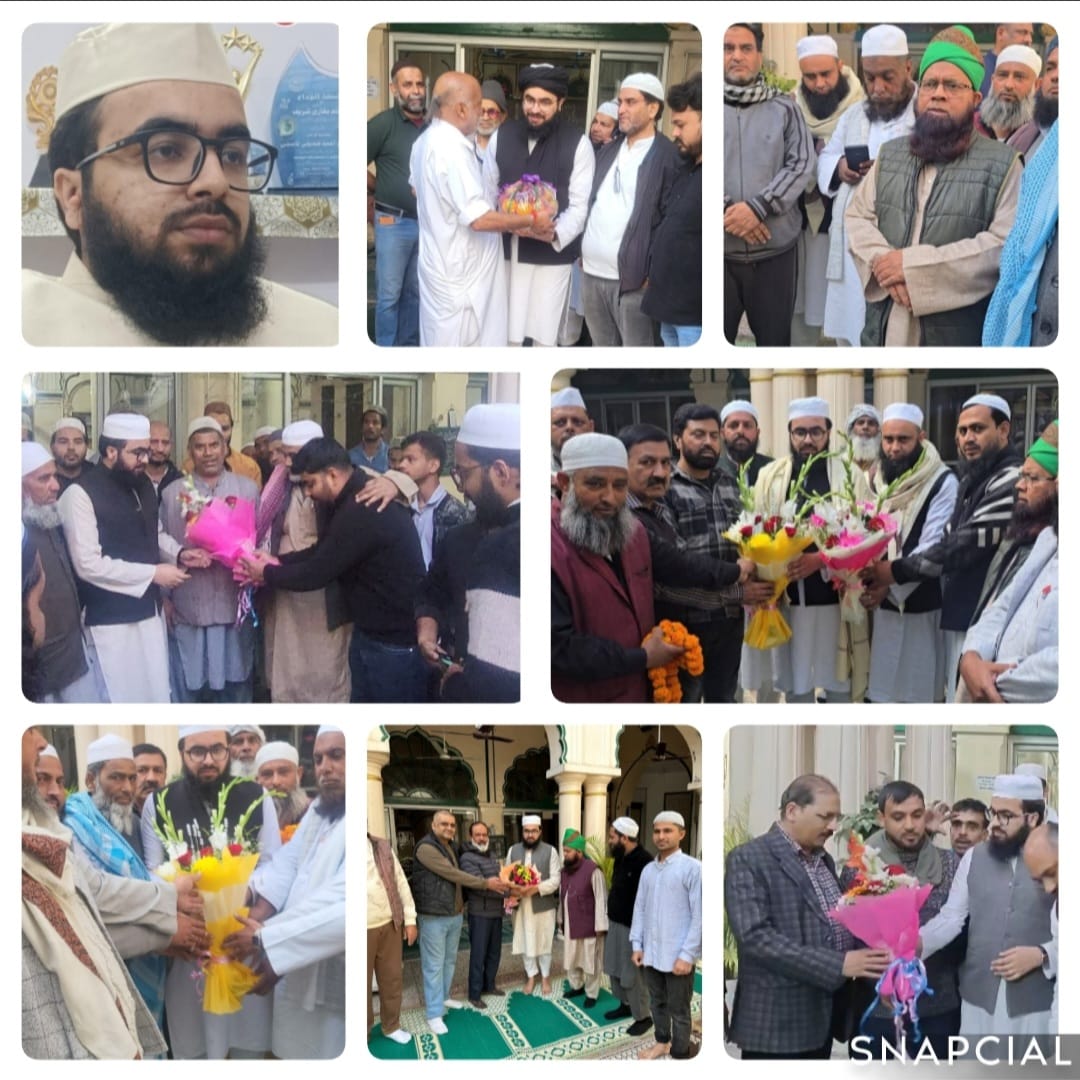
The New Shahar Qazi in Dehradun and the Unnecessary Controversy:
The New Shahar Qazi in Dehradun and the Unnecessary Controversy
A Testament to Ganga–Jamuni Culture, Communal Harmony, and Shared Social Responsibility
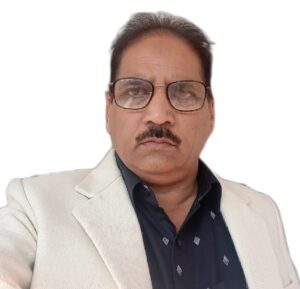
Dr. J. Usmani, Journalist
 Dehradun—long known as a cradle of peace, humanity, and the Ganga–Jamuni cultural ethos—recently passed through a sensitive moment. The demise of Shahar Qazi, Maulana Muhammad Ahmad Qasmi, left the entire city grieving. At the same time, the question of appointing a new Shahar Qazi naturally came to the forefront.
The management committee of Paltan Bazaar Jama Masjid announced the appointment of the mosque’s Naib Imam, Mufti Hasheem Ahmad Qasmi, as the new Shahar Qazi and Imam of Eidgah. This decision was not only an administrative necessity, but also of significant importance to the religious, social, and moral fabric of the city. The announcement was widely accepted by scholars, social organizations, traders, and respected members of the Muslim community. People of other faiths also welcomed the decision wholeheartedly—reflecting Dehradun’s timeless culture, where humanity precedes all distinctions, and where dignity, civility, and mutual respect rise above differences.
However, it was unfortunate that a self-styled social organization and a few vested-interest individuals attempted to stir controversy around this responsible and well-considered step. The noise they created was not only baseless, but also contrary to the inclusive and harmonious atmosphere that Dehradun is known for. Realizing the intentions behind this disruption, the city’s responsible scholars, citizens, and community leaders promptly stood in support of the newly appointed Shahar Qazi and helped stabilize the situation before it could escalate.
What stands out most is that support for Mufti Hasheem Ahmad Qasmi did not come only from the Muslim community. Hindus, Sikhs, Christians, business associations, and various social groups also joined in solidarity. This unity reaffirmed the truth that Dehradun’s true identity is not rooted in division or hostility, but in love, harmony, and social cohesion.
Yet, some critical questions remain:
Why did those who usually appear at the forefront of every Muslim-related issue suddenly react so aggressively to this announcement?
Have all educational, employment, and social challenges of the Muslim community in Dehradun already been resolved?
Or was there a lack of any emotional issue through which they could provoke sentiments and maintain their relevance?
And, perhaps the most significant question—was someone among them personally aspiring to become the Shahar Qazi?
If these suspicions hold any truth, then the mosque committee and the broader Muslim community must remain vigilant in the future. Such individuals often exploit sensitive issues to create division for their personal gains, and it is our collective responsibility to prevent such intentions from taking root.
A position like the Shahar Qazi is not a political crown—it is an amanah (trust) and an ibadah (sacred responsibility). Its standards must be knowledge, sincerity, integrity, and experience—not personal ambition or political maneuvering.
This entire episode offers a valuable lesson:
The unity and harmony of Dehradun is not the responsibility of one community alone—it is a shared trust of all its people.
Once again, the city has demonstrated that no matter how loud the voices of discord may become, the message of love, peace, and brotherhood remains far stronger.

Related Posts
Eid Milad-un-Nabi Procession Conveys Message of Peace and Brotherhood in Dehradun
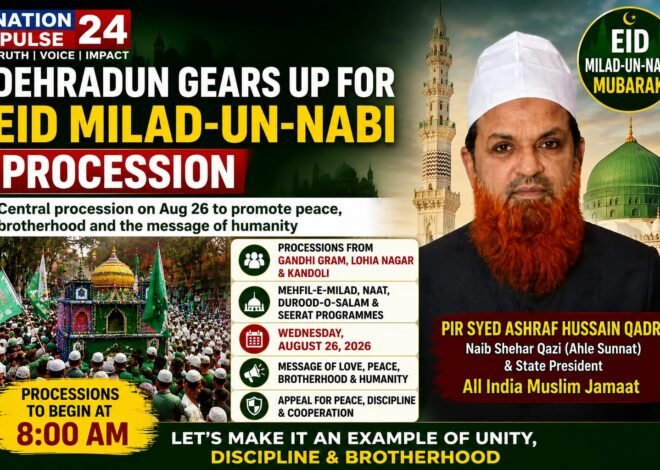
Dehradun Gears Up for Eid Milad-un-Nabi Procession Central Procession to Be Held on August 26; Organisers Highlight Peace, Brotherhood and the Message of Humanity