
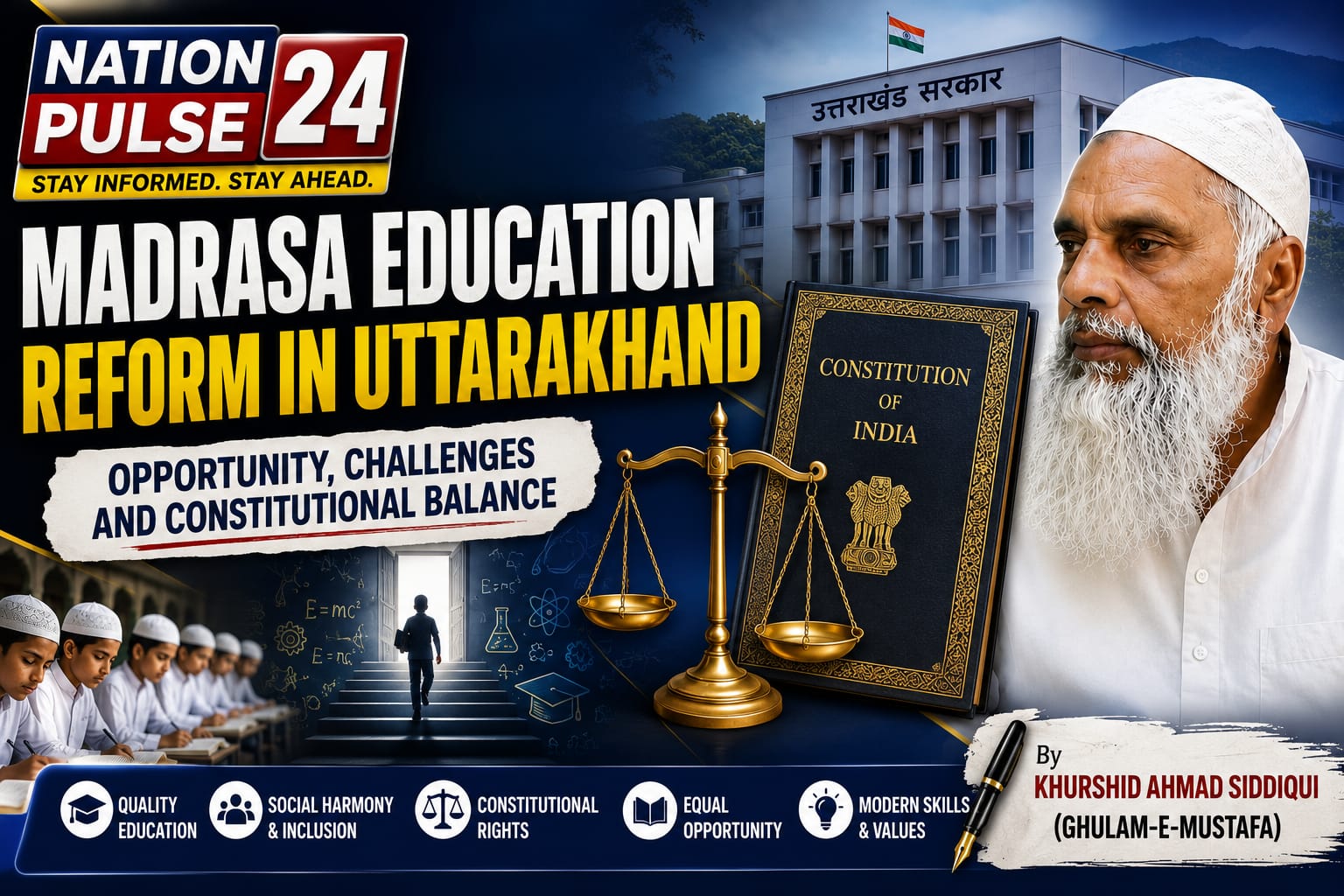
Uttarakhand’s Madrasa Education Reform: A Step Forward or a Constitutional Challenge?
Uttarakhand’s Madrasa Education Reform: A Step Forward or a Constitutional Challenge?
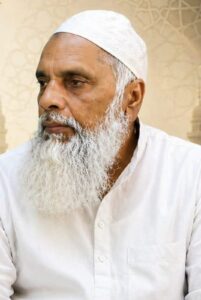
Khurshid Ahmad Siddiqui (Ghulam-e-Mustafa)
The Uttarakhand government’s initiative to activate the State Minority Education Authority has sparked an important debate across the education sector. According to the government, the move aims to improve the quality of education in minority institutions, particularly madrasas, by introducing modern, skill-based, and employment-oriented learning alongside religious education.
The vision is ambitious: to ensure that madrasa students have opportunities to become doctors, engineers, scientists, teachers, civil servants, and responsible citizens while preserving their religious identity.
There is little disagreement that modern education—including science, mathematics, computer literacy, and vocational skills—is essential in today’s world. If these subjects are effectively integrated into madrasa education, students will undoubtedly gain broader career opportunities.
However, the real challenge lies in implementation. Educational reform requires qualified teachers, updated curricula, technological infrastructure, and sustainable financial support. Most madrasas are primarily funded through community donations intended for religious education rather than mainstream schooling. Without adequate financial assistance, questions remain about how institutions will recruit qualified teachers and deliver high-quality modern education.
Another important concern is whether the state’s broader education system should receive equal attention. Many government schools in Uttarakhand continue to struggle with teacher shortages, inadequate infrastructure, and declining learning outcomes. A comprehensive education policy should address these challenges alongside reforms in minority institutions.
Education should serve as a bridge that promotes equality, social harmony, and democratic values. Therefore, reforms should be based on dialogue, trust, and participation rather than perceptions of administrative control. If any community feels that its educational or cultural identity is being unnecessarily influenced, it may create distrust instead of cooperation.
There is also concern about the academic burden on students. If madrasa children are expected to attend regular schools during the day and religious classes before or after school, they could face extremely long study hours, potentially affecting their mental well-being and overall development.
India’s cultural diversity is one of its greatest strengths. The Constitution guarantees every community the right to preserve its language, culture, and educational traditions while ensuring that all institutions promote scientific temper, constitutional values, national unity, and modern knowledge.
Articles 29 and 30 of the Indian Constitution provide religious and linguistic minorities with the right to establish and administer educational institutions of their choice. At the same time, the State has the authority to regulate education in the interest of quality, child welfare, and national academic standards. Maintaining a constitutional balance between institutional autonomy and educational reform is therefore essential.
Ultimately, the most important stakeholders are the students. If reforms provide quality education, equal opportunities, and respect for cultural identity, students can contribute meaningfully to society and nation-building. But if reforms generate uncertainty, identity concerns, or excessive academic pressure, their educational outcomes may suffer Conclusion
Education reform in Uttarakhand should not be limited to one category of institutions. Government schools, madrasas, and all educational institutions deserve equal access to quality teaching, modern technology, trained educators, and constitutional values.
The true purpose of education is not to change a community’s identity, but to empower every student according to their potential. Only an inclusive, balanced, and constitutionally guided education policy can prepare future generations to become scholars, professionals, innovators, and responsible citizens.

Related Posts

OUN Foundation Welcomes Sabri Chadar Procession, Organises Grand Langar on Eid Milad-un-Nabi ﷺ

Dehradun to Host Consultation on Constitutional Governance, Democratic Rights and Institutional Independence