Governor approves Uttarakhand Minority Education Bill 2025
One law will apply to all minority educational institutions, not just madrasas
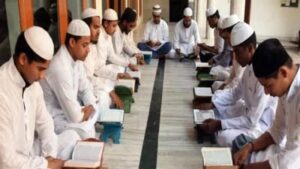
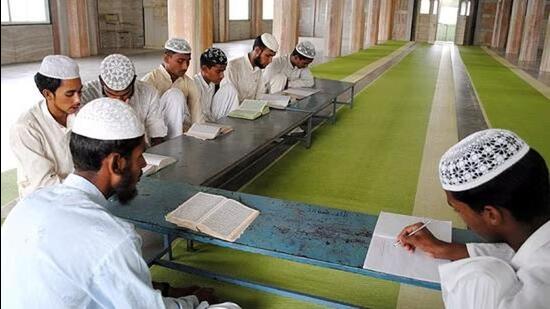
Dehradun (Amaanullah Usmani) Uttarakhand will now have a uniform law applicable not only to madrasas but also to educational institutions of other minority communities. Governor Lieutenant General Gurmeet Singh (Retd.) has approved the Uttarakhand Minority Education Bill 2025. This law will become applicable across the state after gazette notification.
The Uttarakhand Madrasa Education Board Act 2016 and the Uttarakhand Non-Government Arabic and Persian Madrasa Recognition Rules 2019 will be repealed from July 1, 2026. Following this, all institutions seeking minority status from the state government will be required to obtain recognition from the authority. Educational institutions belonging to the Muslim, Christian, Sikh, Buddhist, Jain, and Parsi communities will receive recognition.
Under the new law, an authority (the Uttarakhand State Minority Education Authority) will be established to grant minority educational institution status. Any educational institution established by the Muslim, Christian, Sikh, Buddhist, Jain, or Parsi community will be required to obtain recognition from the authority to qualify for minority educational institution status.
After the Dhami government approved this bill in the cabinet in August, it was passed in the monsoon session of the Bhararisain Assembly and sent to the Raj Bhavan. The Raj Bhavan approved it on Monday. A gazette notification will now be issued at the government level, after which the law will come into effect.
After the law comes into effect, the Uttarakhand State Minority Education Authority will be established, consisting of a nominated chairperson and 11 members. The chairperson will be an academic from a minority community with 15 years or more of teaching experience, with a minimum of five years of experience in a higher educational institution. Six of the 11 members will be from minority communities. This includes one member each from the Muslim, Sikh, Christian, Buddhist, Jain, or Parsi communities, who belong to that religion or speak that language. Of the other five members, one will be a retired state government official, a secretary or equivalent. The second will be a social worker having 10 years or more experience in the field of school education, the third will be the Director General of School Education, the fourth will be the Director of SCERT, the fifth will be the Director of Minority Welfare.

Related Posts
Need for a New Initiative in Higher Education in Dehradun: An Open Letter Inspiring Collective Action
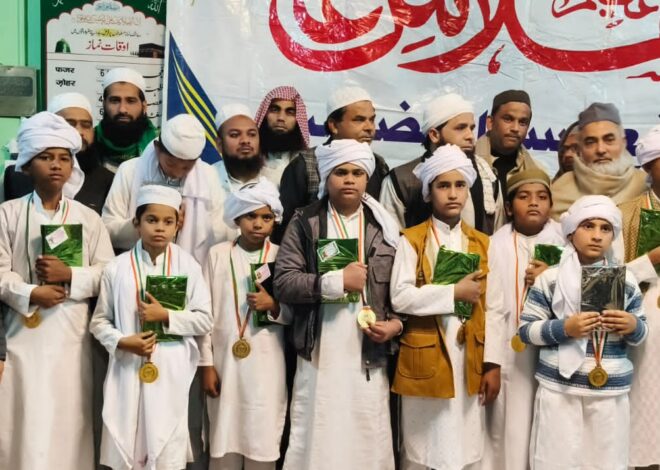
13 Children Awarded Turbans at Madrasa Jamalul Quran