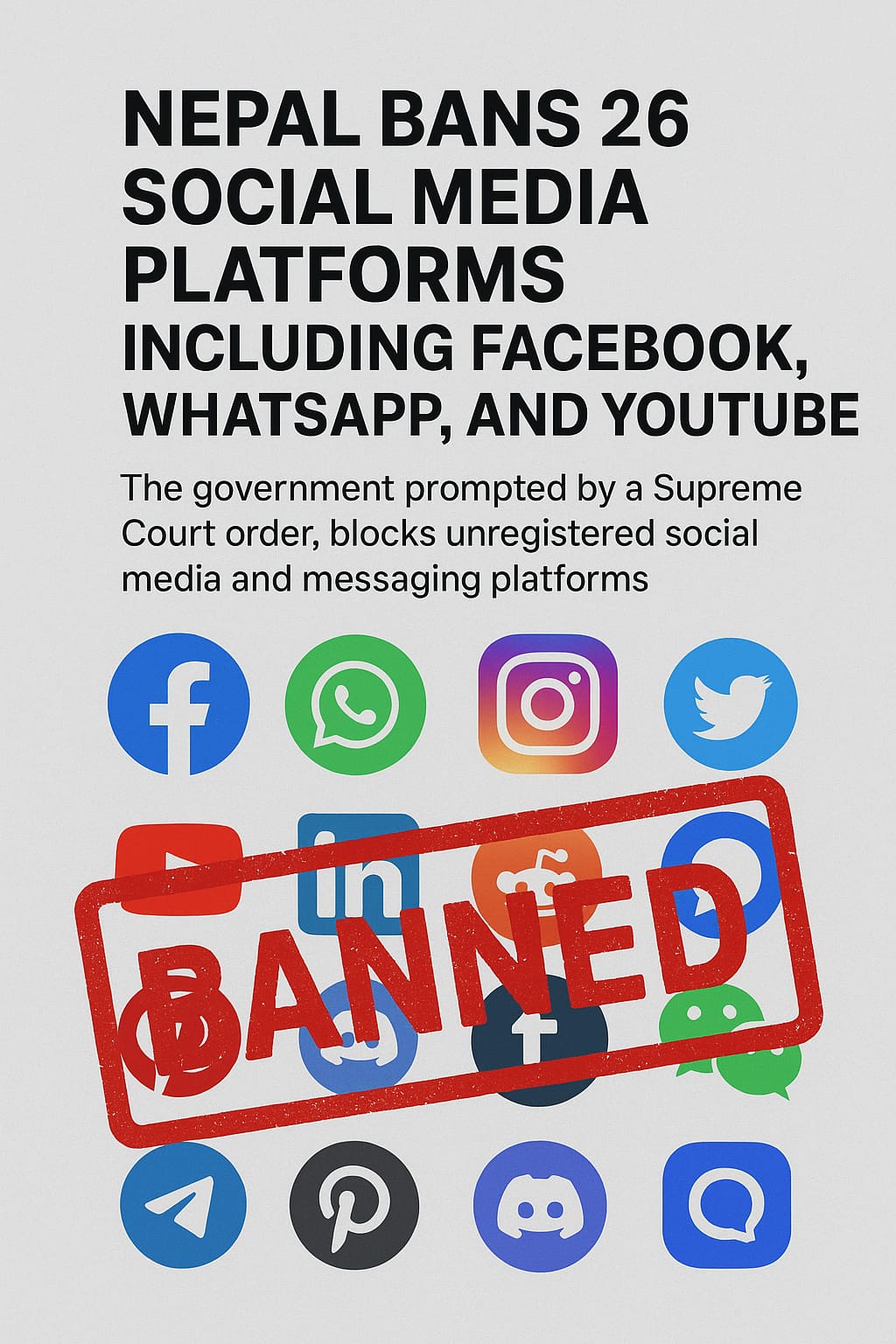
Nepal Bans 26 Social Media Platforms Including Facebook, WhatsApp, and YouTube
Nepal Bans 26 Social Media Platforms Including Facebook, WhatsApp, and YouTube
Kathmandu, September 8, 2025 – In a move that has triggered intense debate over digital freedom, Nepal’s government has imposed a sweeping ban on 26 popular social media platforms, including Facebook, WhatsApp, Instagram, X (formerly Twitter), YouTube, LinkedIn, Reddit, and Signal.
The decision follows a Supreme Court directive requiring all digital platforms operating in the country to register locally, establish grievance redressal systems, and adopt self-regulation mechanisms. Authorities gave companies a seven-day ultimatum to comply, after which non-registered platforms were ordered to be blocked.
Platforms Blocked and Allowed
According to the Ministry of Communications and Information Technology, major Western platforms failed to meet the compliance deadline and were deactivated nationwide.
Blocked: Facebook, Messenger, WhatsApp, Instagram, YouTube, X, Reddit, LinkedIn, Pinterest, Signal, Threads, and several others.
Allowed: Platforms like TikTok, Viber, and WeTalk, which had registered with local authorities, continue to operate. Telegram is reportedly in the process of registration.
Concerns Over Freedom and Business Climate
The ban has sparked criticism from human rights organizations and press freedom advocates, who argue that the restrictions undermine freedom of expression and access to information. The Committee to Protect Journalists (CPJ) called the move “a serious threat to media freedom in Nepal.”
Business groups also voiced concerns, warning that the restrictions could harm digital innovation and the investment climate. Many online services and e-governance platforms rely on social media logins, raising fears of disruption for both citizens and companies.
Government’s Stand
Officials defended the crackdown, stating that the move was necessary to curb misinformation, ensure accountability, and bring foreign platforms under Nepal’s regulatory framework. A senior government spokesperson said:
> “No platform is above the law. If companies wish to operate in Nepal, they must comply with national regulations.”
What’s Next
It remains unclear whether the ban will be temporary or permanent. Industry experts believe tech giants may seek negotiations with the government, while digital rights groups are already exploring legal avenues to challenge the restrictions.
For now, millions of Nepalese users are cut off from some of the world’s most widely used digital communication tools — a change that could reshape the country’s online landscape.


