BSNL Launches Indigenous 4G Network; Nearly 98,000 Towers Commissioned Nationwide
BSNL Launches Indigenous 4G Network; Nearly 98,000 Towers Commissioned Nationwide
Report by: Syed Taskin Ahmed
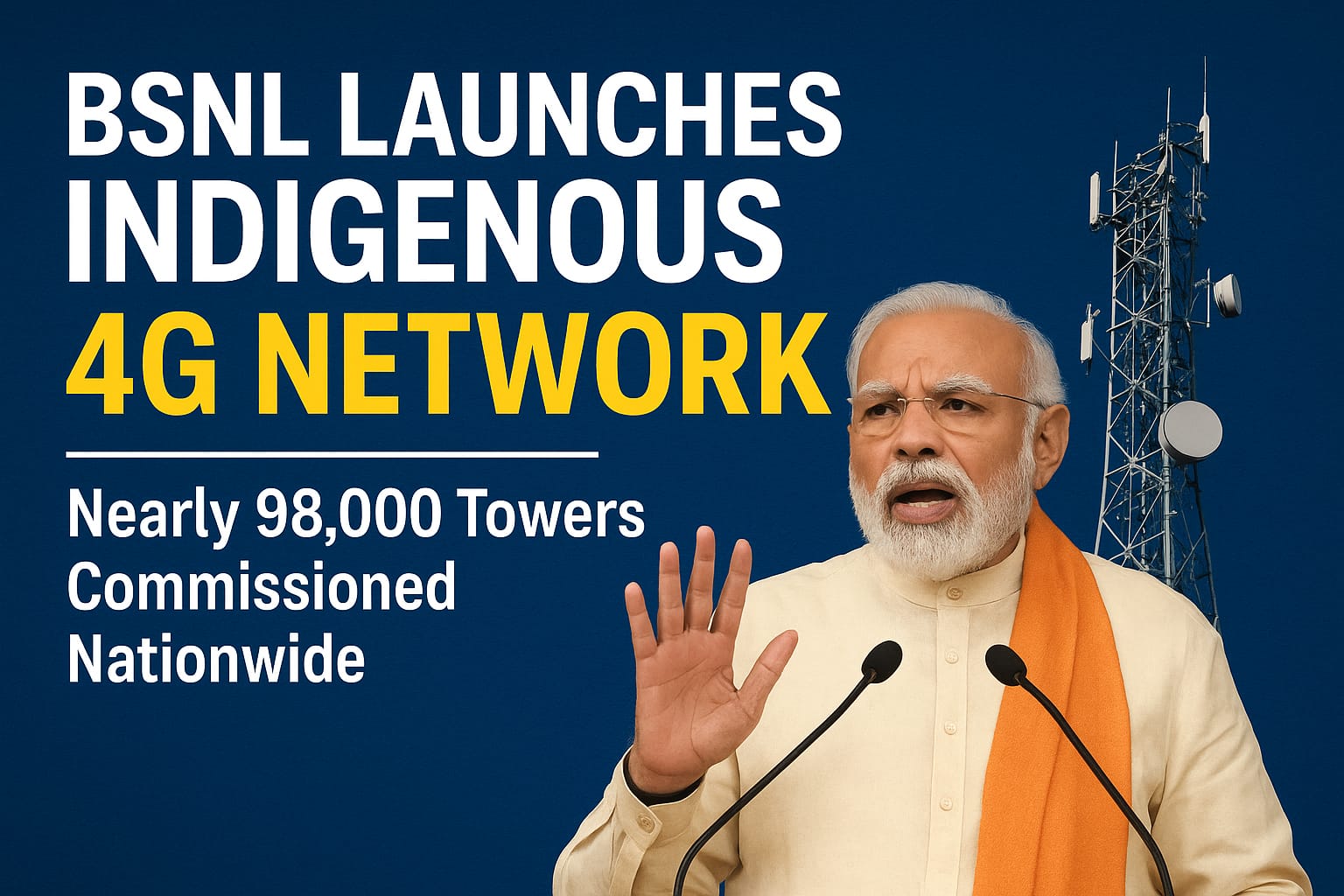
New Delhi, September 27, 2025: In a landmark push towards self-reliance in the telecom sector, Prime Minister Narendra Modi on Saturday inaugurated Bharat Sanchar Nigam Limited’s (BSNL) fully indigenous 4G network from Jharsuguda, Odisha. The launch marks a historic milestone as India deploys a homegrown telecom stack at a national scale.
According to officials, nearly 97,500 mobile towers have been commissioned across the country under this rollout, developed entirely through domestic innovation and collaboration. The network is built by a consortium including the Centre for Development of Telematics (C-DOT), Tejas Networks, and Tata Consultancy Services (TCS).
Of the total, around 92,600 towers will run on BSNL’s new indigenous 4G technology stack. The initiative is expected to provide coverage to over 26,700 previously unserved villages, particularly in remote, border, and extremism-affected regions. Several towers have also been funded under the Digital Bharat Nidhi (DBN) to expand rural connectivity.
The project, with an estimated investment of ₹37,000 crore, is designed to be software-upgradable, enabling a seamless transition to 5G in the future. In addition, many of the towers are solar-powered, supporting India’s commitment to green and sustainable infrastructure.
Bridging the Digital Divide
Officials said the initiative will significantly reduce India’s reliance on foreign telecom equipment while ensuring last-mile connectivity in underserved regions. “This rollout is not just about faster internet; it is about empowering villages, boosting local industries, and ensuring digital inclusion,” the Prime Minister said during the launch event.
Industry Impact
The indigenous 4G rollout is also expected to energize India’s telecom manufacturing ecosystem. By relying on local companies for critical infrastructure, the government aims to strengthen the “Atmanirbhar Bharat” mission while creating new opportunities for innovation, R&D, and employment.
Challenges Ahead
Despite the ambitious scale, experts highlight potential challenges such as timely deployment across difficult terrains, maintenance in remote areas, and competition from private telecom operators that already provide 4G and 5G services. Financial sustainability and network quality will also determine user adoption in the long run.
With this rollout, BSNL seeks to regain its position in India’s highly competitive telecom market, while simultaneously laying the foundation for a future-ready, sovereign digital infrastructure.